






A illuminated two-story red brick house on a quiet residential street at dusk, flanked by mature trees under a deep blue evening sky.

Heat Pump Repair in Guttenberg, IA

Tell us about the job

Takes about a minute. No obligation.

RepairHeat PumpClayton County, IA
Step 1 of 2

What ZIP code is the job in?

Guttenberg winters are the long part of the job for a heat pump. The overnight low averages 13°F across December, January and February, and that stretch is where a unit low on charge or losing its defrost cycle starts to show it. Nothing about this area runs a heat pump harder than normal. When one stops keeping up, it's usually a known problem. A failing defrost board, a worn reversing valve, a refrigerant leak. Find the actual cause and the fix is straightforward.

8 months
October through May, your system heats
3 months
June through August, it cools
13°F
the average winter night it heats against
80°F
the average summer afternoon it cools against
Isometric cutaway illustration of a house showing interior ductwork, an indoor air handler, and beds, with an outdoor condenser unit connected by lines outside the wall.
Your system heats October through May and cools June through August.

NOAA nClimDiv, 1991–2020 normals

October is the first real test for a heat pump that limped through last spring.

Guttenberg heads into eight months of heat starting then, and a weak part shows itself fast once it has to run.

Ask for the years left on it before paying for another repair call

Half the homes here were built by 1960
60 damaging wind events from 2015 to 2024
28 hail events from 2015 to 2024
Electricity here runs 13.40 cents a kilowatthourA heat pump that's struggling pulls more power every month it runs.

If the heat pump outside your house is the one that came with it, ask the contractor straight out how many years it has left before this happens again. A unit old enough to match an older Clayton County home has likely already put in more years than a compressor is built for. That matters more once you're on a second or third service call for the same system. A contractor can check the compressor and the refrigerant charge and tell you whether this is a repair or a stopgap.

Fix it now, before it runs up every bill until spring

A heat pump pulling extra power every month it runs isn't a small drag on a bill at 13.40 cents a kilowatthour. Get the cause found and fixed now instead of paying for a struggling unit all winter.

Find a contractor
A gray heat pump condenser unit mounted on a concrete pad against the gray lap-siding exterior wall of a house.

What to check before you call anyone

Before anyone comes out, take a look at the outdoor unit. If it's caked in ice beyond the thin frost that melts off during a normal defrost cycle, that's worth noting. Check that nothing is blocking airflow around it, no leaves, no snow drift, no bush grown in too close. Inside, check your thermostat is actually set to heat and not stuck on a schedule you forgot about, and change the air filter if you haven't in a while. A clogged filter starves the system of airflow and can make it seem like the heat pump itself is failing. Check your breaker panel for a tripped switch before assuming the worst. If the outdoor fan isn't spinning at all, or you hear it humming without turning, stop there. That's not something to poke at yourself.

A refrigerant leak only gets bigger

A heat pump low on charge will keep running, just worse. The compressor works harder to move what refrigerant is left, and it runs hotter doing it. Left alone, that heat is what kills a compressor. A leak never seals itself. It gets found now or it gets found after the compressor goes with it.
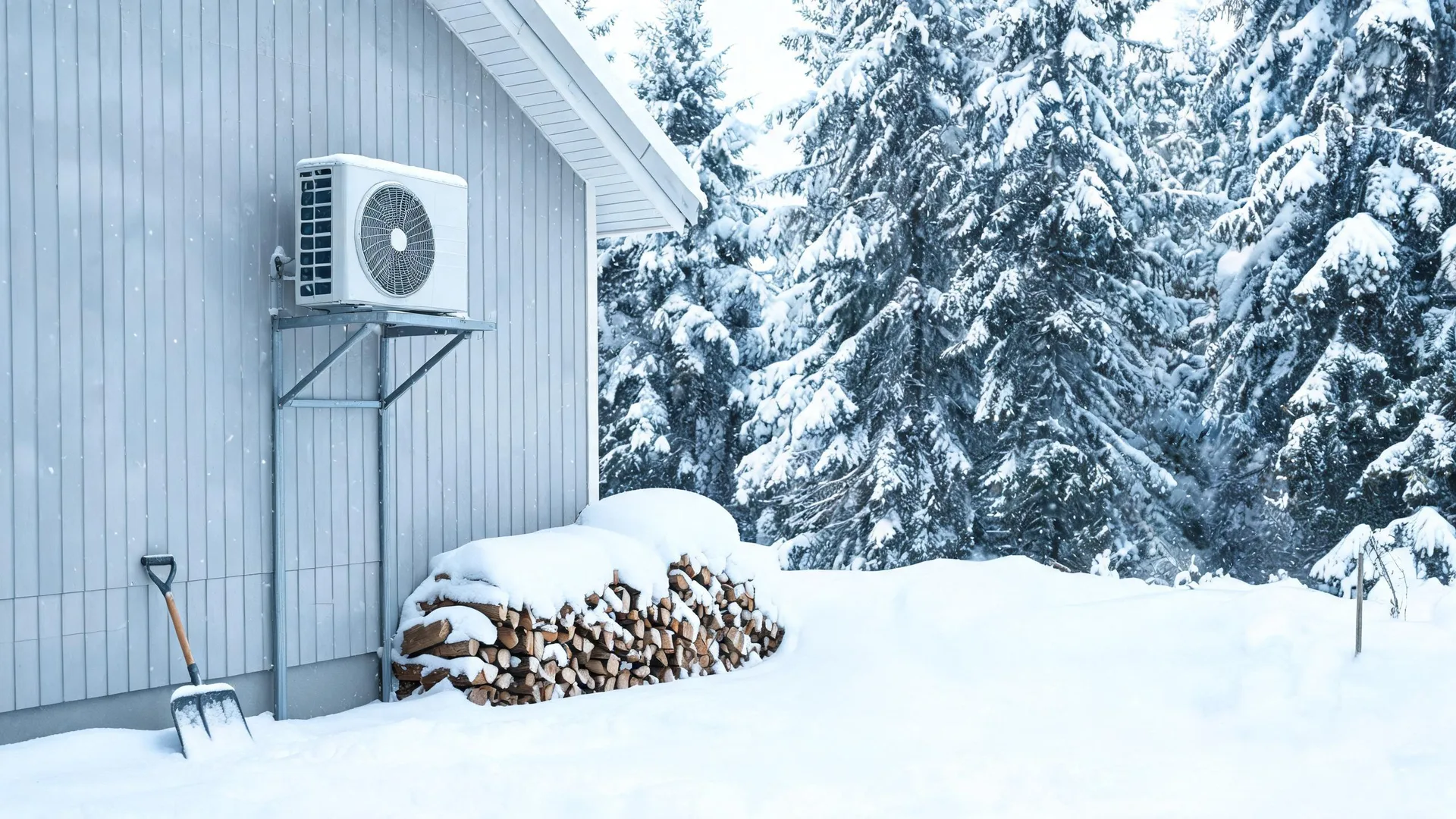
A bad defrost cycle buries the coil

If the defrost board or sensor has failed, frost keeps building on the outdoor coil instead of clearing on schedule. Thick ice blocks airflow across the coil, so the system pulls in less heat each cycle and runs longer to make up for it. Run it like that for weeks and the coil can take damage that a simple board swap would have prevented.

Most heat pump failures trace back to one of a few parts. The reversing valve is a common one. It's what switches the system between heating and cooling, and when it sticks, the unit can get stuck blowing cold air or stop responding to the thermostat altogether. The defrost board is another. It tells the system when to melt frost off the outdoor coil, and when it fails, ice builds up unchecked until the coil can't pull in heat anymore. Capacitors wear out too, usually the small part that gets blamed for a fan that hums but won't spin. And refrigerant leaks, often at a fitting or a worn line, show up as a system that runs constantly but never quite keeps up. None of these happen because a heat pump was used too hard. They happen because a part finally wore through.

A diagnostic call starts outside, at the unit itself. The contractor checks the reversing valve, reads the refrigerant charge, and watches whether the outdoor fan spins freely or hesitates. Gauges go on the lines to see if the charge is where it should be, since low refrigerant points straight to a leak somewhere in the system. Inside, they'll check the air handler, the thermostat signal, and whether the system is actually switching between heating and cooling when it's told to. A lot of this comes down to watching the unit run through a full cycle, because some failures only show themselves once the defrost cycle kicks in or the compressor has been working for a few minutes. By the end, the contractor should be able to point to the part that failed and explain why, not just that something's wrong.