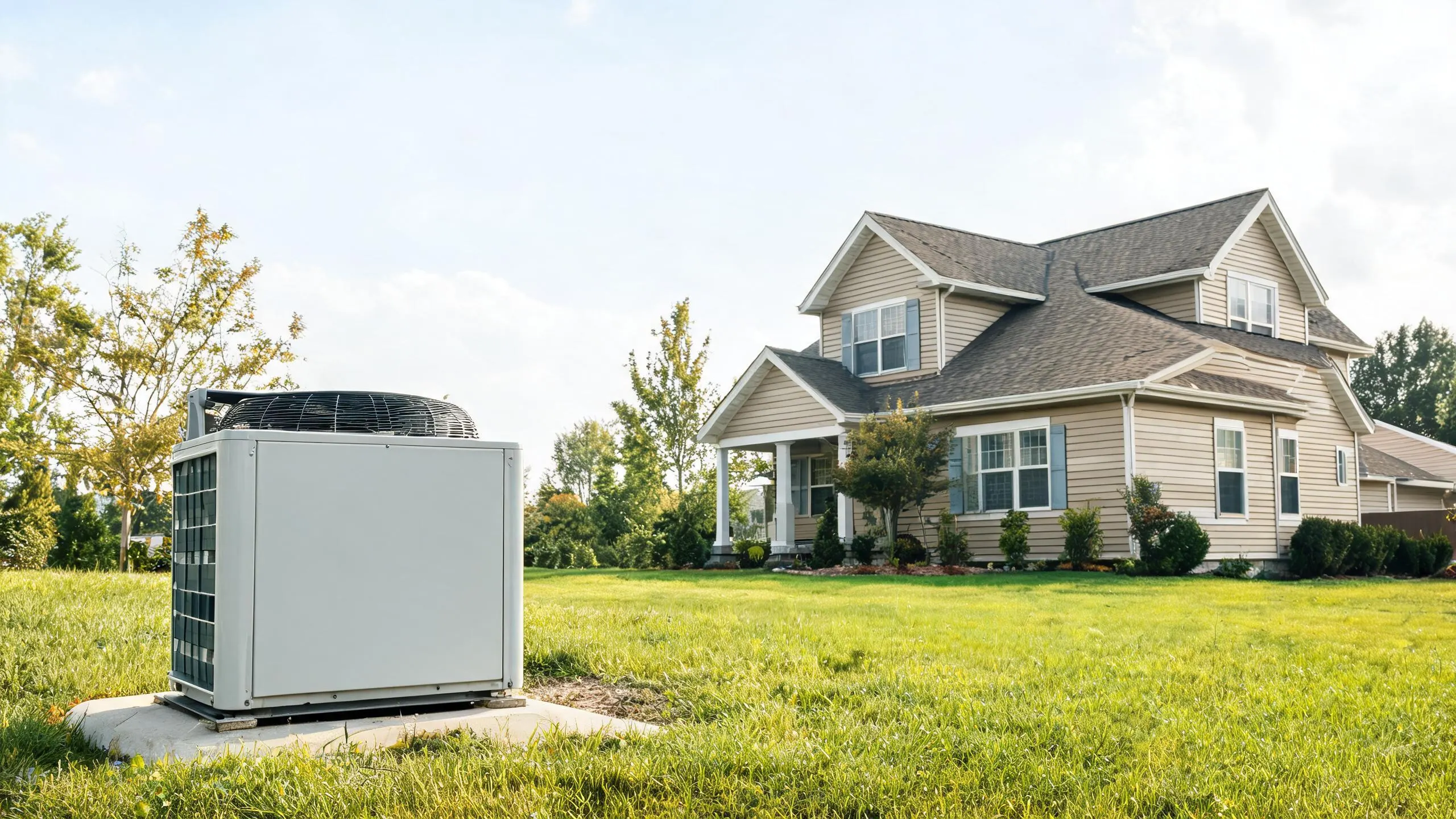






An outdoor HVAC condenser unit on a concrete pad in front of a two-story suburban house.

Heat Pump Repair in Independence, IA

Tell us about the job

Takes about a minute. No obligation.

RepairHeat PumpBuchanan County, IA
Step 1 of 2

What ZIP code is the job in?

A heat pump here runs heat from October through May, then switches over to cooling in June. Trouble tends to show up right at that switch, not during the months the system just sits on autopilot. September is a good time to have one looked at before it has to carry the house through a cold stretch. May works the same way, before the first hot days hit in June. A low charge or a weak reversing valve can get through light duty without acting up, but the first real demand on the system finds it. Catching that in September or May beats finding out the hard way once the house actually needs the heat or the cooling.

8 months
October through May, your system heats
3 months
June through August, it cools
13°F
the average winter night it heats against
81°F
the average summer afternoon it cools against
Isometric cutaway illustration of a two-room house showing an indoor air handler with ductwork connected by lines to an outdoor condenser unit on a pad.
Your system heats October through May and cools June through August.

NOAA nClimDiv, 1991–2020 normals

A heat pump outlasts most of its parts if the compressor stays healthy.

If the compressor is still good, a repair is worth it. If the compressor is failing too, that repair just delays the bigger bill.

Buchanan County weather doesn't single out your heat pump

161 severe weather events from 2015 to 2024
15% of homes statewide lost power a day or more in 2024
93 damaging wind events from 2015 to 2024

Buchanan County sees its share of wind, hail and winter storms, same as most of this part of Iowa, and none of it is aimed at an outdoor unit any harder than elsewhere. The overnight average of 13°F in December, January and February is ordinary cold for this area, the kind a heat pump is built to run heat through. So storm damage usually isn't the explanation when one is struggling. The more common cause is a system that was already due for attention, caught out by the load the cold or the heat puts on it. That's worth knowing because it points a contractor straight at the charge, the reversing valve and the defrost control, not at guessing what the weather did to it.

Your heat pump's age matters as much as the repair

Half the homes in Buchanan County were built in 1973 or earlier. A heat pump doesn't last that long, so if yours came with the house, it's not on its original system, but whatever's in there now still has a lifespan. An older unit nearing the end is more likely to need a bigger repair, and worth asking how much life is actually left in it before paying for one.

Find a contractor
A man in a cap, dark jacket and olive pants climbs porch steps toward a green front door, carrying a canvas tool bag filled with hand tools, with a potted shrub to the right.
A dark gray heat pump unit mounted on a concrete pad next to a house with gray siding and a stone veneer wall.

Ask about the age before you ask about the fix

A contractor can check the unit's age off the nameplate in a couple minutes. Worth doing before any repair gets scheduled, not after. If it's old enough that nobody's sure how many years it has left, ask for that answer alongside the repair estimate.

A small fault asks the rest of the system to cover for it

A low refrigerant charge makes the compressor run longer to reach the same temperature. A dirty coil makes the fan push harder to move the same air. The system doesn't shut down over this, it just leans on whatever part can compensate, and that part wears faster than it was built to.
Waiting usually trades a part for a system

A reversing valve stuck halfway or a failing capacitor can still be a single repair if it's caught early. Left running, the strain reaches the compressor, and a compressor failure on a heat pump is rarely a single-part fix. The longer it runs wrong, the more of the system ends up needing attention.

Most heat pump trouble announces itself before it's an emergency. Heat that runs but never quite reaches the thermostat setting is a common one, the system cycling on and on without catching up. Ice building up on the outdoor unit and not clearing on its own is another sign. A heat pump is supposed to defrost itself, and a frozen coil means that cycle isn't working right. Listen for it too. A clanking or grinding from the outdoor unit usually means a motor or compressor part is wearing out, not just loose. Short cycling, where it kicks on and off in quick bursts instead of running a full cycle, strains the compressor every time it happens. Air blowing that's barely warm in winter or barely cool in summer often means the reversing valve isn't switching all the way. None of these fix themselves, and all of them are worth a call before they get worse.

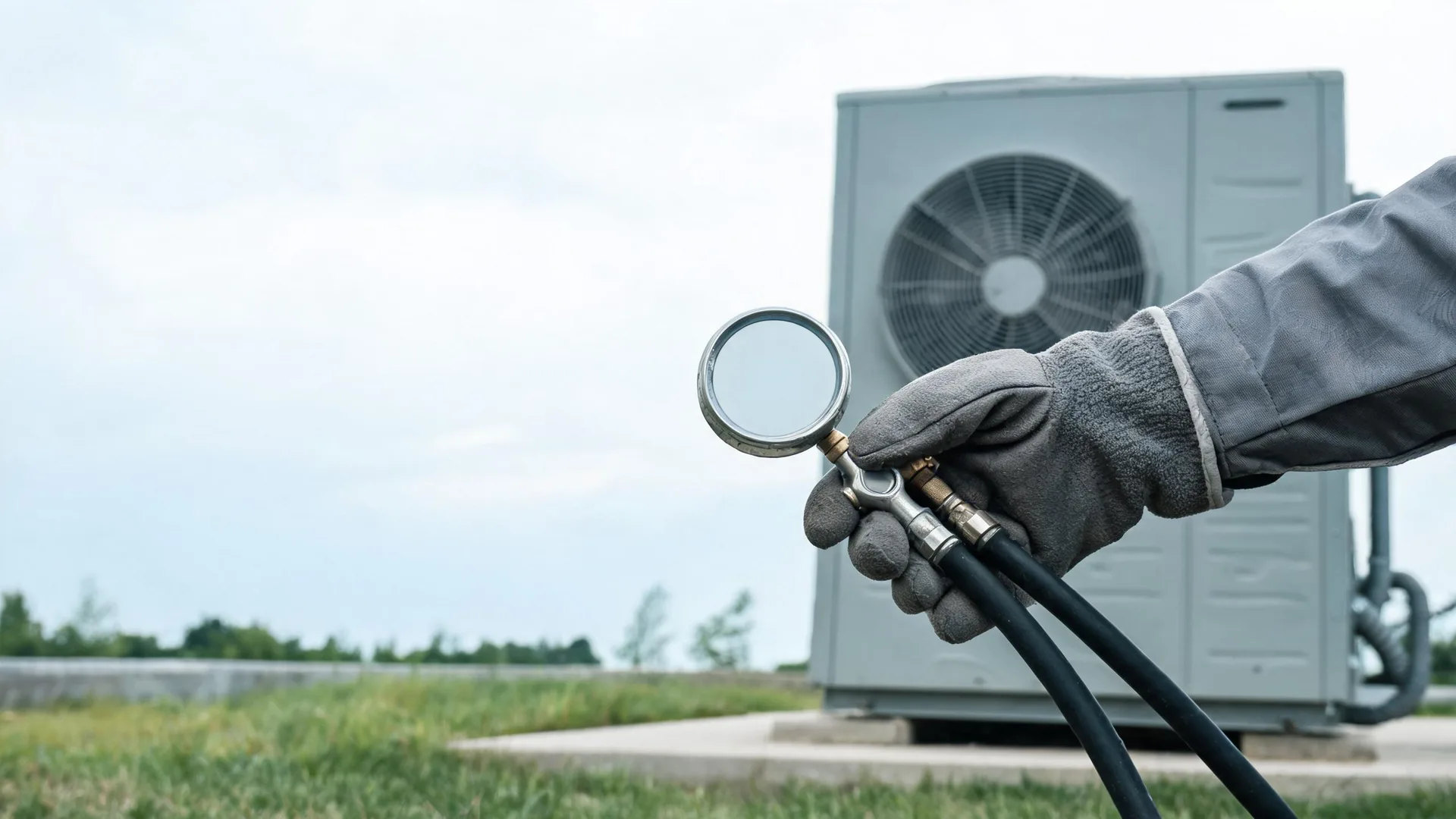
A diagnostic call starts outside at the unit itself, checking the refrigerant charge and the pressures on both the high and low side. From there the contractor runs the system in each mode, heating and cooling, to see whether the reversing valve actually switches all the way or hangs up partway. The defrost cycle gets checked too, since a board or sensor telling the unit when to defrost can fail without the compressor itself being at fault. Electrical readings on the compressor and fan motor come next, since a motor that draws more current than it should is usually close to failing even if it still runs. Airflow gets checked last, because a coil that's dirty or a filter that's clogged can mimic a refrigerant problem and send someone chasing the wrong fix. The point of going in this order is to find the actual failure instead of replacing the first part that looks suspicious.