A nighttime view of a tree-lined residential street with illuminated two-story brick houses and street lamps.

Heat Pump Repair in Marshalltown, IA

Tell us about the job

Takes about a minute. No obligation.

RepairHeat PumpMarshall County, IA
Step 1 of 2

What ZIP code is the job in?

Built for a cold winter, not a strange one

Marshall County sits in zone 5A, where heating carries the bigger load and winter nights average 14°F. A heat pump here runs hard for months at a time. That's normal for this climate. It's not a sign of a bad install or a bad unit.


So the fix is usually the ordinary one

When a heat pump in Marshalltown stops keeping up, the cause is almost always something a tech sees all the time. Low refrigerant. A failing defrost control. A dirty coil. A worn contactor. Find which one it is and repair it, and the system goes back to doing what it was built to do.

8 months
October through May, your system heats
3 months
June through August, it cools
14°F
the average winter night it heats against
82°F
the average summer afternoon it cools against
Isometric illustration of a cutaway single-family house showing interior ductwork and an air handler, with an outdoor condenser unit connected by lines along the exterior wall.
Your system heats October through May and cools June through August.

NOAA nClimDiv, 1991–2020 normals

Heat pumps here work hardest in the first cold snap of October and the first hot stretch of June.

A weak part that made it through last season often fails right when the load hits it again.

Half the homes here were built by 1958, and the heat pump wasn't

Half the homes here were built by 1958
65 damaging wind events from 2015 to 2024
31 hail events from 2015 to 2024
Electricity here runs 13.40 cents a kilowatt-hourA heat pump that's struggling to heat or cool still runs the whole time it's trying.

If your heat pump came with the house, ask the tech straight out how much life it has left. A unit that's limped through a few winters on an aging system can be fixed again, but at some point the honest answer is that the next repair won't be the last one. That's worth knowing before you pay for this one. A tech who's just diagnosed the problem is in the best position to tell you whether you're looking at years of use left or another call like this one come spring.

A struggling heat pump still runs up the bill

A heat pump that's running but not keeping up is still drawing power the whole time it struggles. At 13.40 cents a kilowatt-hour, that's not a cost worth carrying longer than you have to. Getting the actual part diagnosed and repaired stops the waste.

Find a contractor
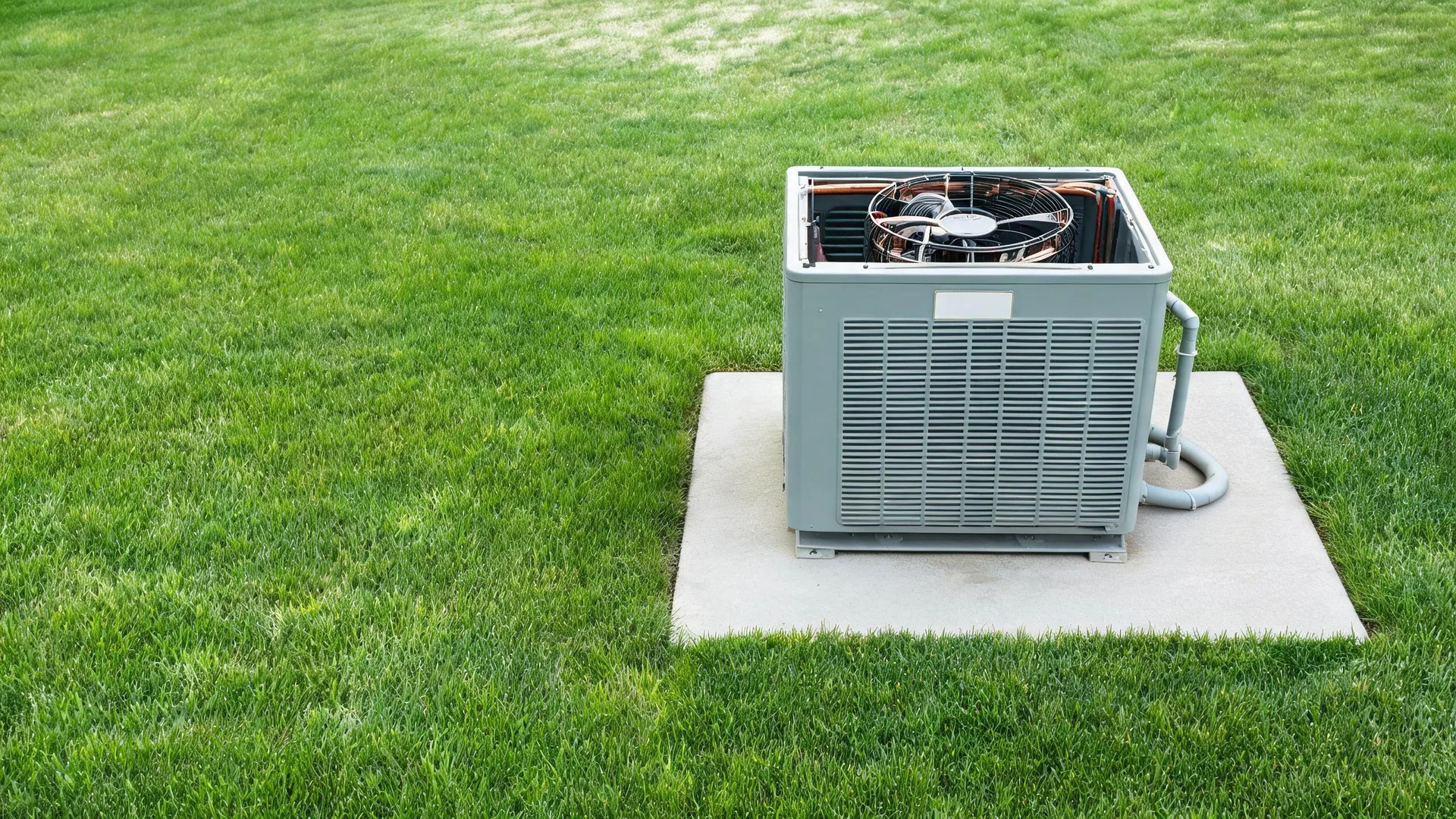
A residential heat pump outdoor unit mounted on a concrete pad next to a house with gray vinyl siding.

What to check before you call

Before anyone comes out, check the thermostat first. Make sure it's set to heat, and set low enough that the system should be running at all. Then look at the outdoor unit. If the coil is caked in ice or buried under snow, that's worth mentioning when you call, but don't chip at it or hose it down. Walk around the cabinet and check that nothing is crowding it, no bushes grown in close, no firewood stacked against it, nothing piled on top. Inside, pull the air filter and hold it up to a light. If light doesn't pass through, it's choking airflow to the whole system, and that's something you can fix yourself. Check that the supply vents around the house are open and not blocked by furniture or rugs. If the system is running but the air coming out feels cool when it should feel warm, say so when you call. That points a tech toward the reversing valve or the refrigerant charge before they even walk in. None of this fixes a failing part, but it clears out the causes that aren't a repair at all.

Where the wear shows up first

The outdoor unit takes the beating. It sits outside through every freeze and every heat wave, so the fan motor, the compressor and the reversing valve wear long before anything indoors does. The reversing valve is the part unique to a heat pump, the one that switches it between heating and cooling, and a valve that's starting to stick often shows up as a system blowing the wrong temperature air or stuck in one mode.

Why defrost problems are so common

A heat pump has to melt frost off its outdoor coil all winter, so it relies on a defrost control board and sensor to run that cycle on schedule. When that control fails, frost keeps building until the coil is iced over and airflow stops. It's one of the most common reasons a heat pump heats fine one week and can't keep up the next.

A heat pump rarely quits all at once. It gives you a warning first, if you know what to listen for. Short cycling is one, the system kicking on and shutting off again within a few minutes instead of running a full cycle. Air that's blowing but never quite feels warm enough is another, especially if the system runs constantly trying to catch up. Listen for new noise too. A hard clunk when it switches between heating and cooling points at the reversing valve. A grinding or squealing from the outdoor unit points at the fan motor or the compressor itself. Ice on the outdoor coil that doesn't clear on its own, even on a milder day, means the defrost cycle isn't doing its job. Any of these is worth a call before the part it's warning about fails for good.

A tech weighing repair against replacement is really asking one thing. Is this part failing on its own, or is the whole system wearing out at the same time. A single bad capacitor or a failed sensor is an easy call. Replace the part and the heat pump runs like it did before. It gets harder when the compressor itself is failing, or when a tech finds one worn part after another over a couple of seasons. That pattern usually means the rest of the system is aging the same way, even if nothing else has failed yet. Refrigerant type matters too. An older system built around a phased-out refrigerant can still be repaired, but a major part for it often costs more and takes longer to find than the same part for a newer unit. None of that makes repair the wrong call. It just means the real question is whether you are fixing a part or patching a system that is already failing all over.