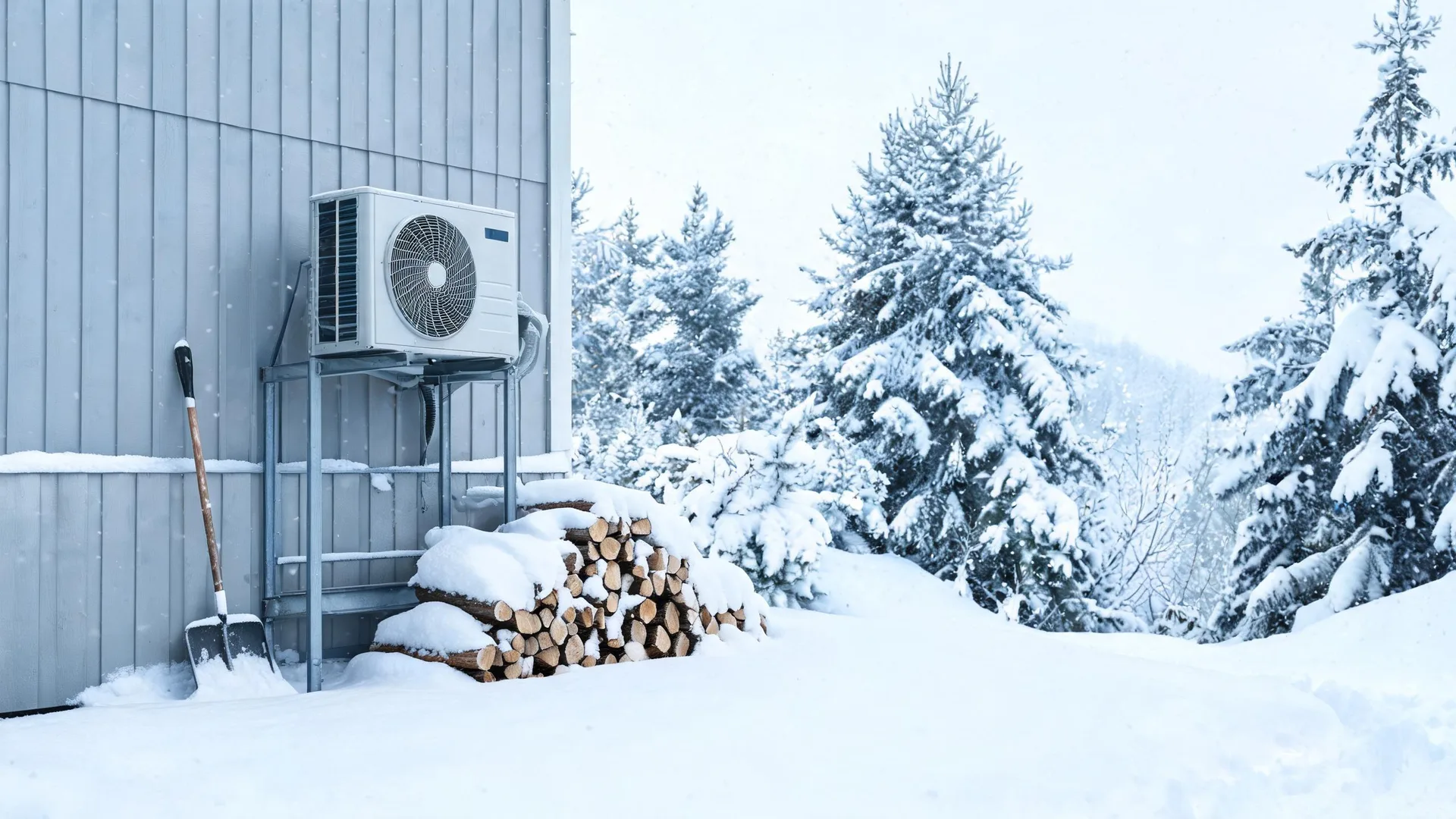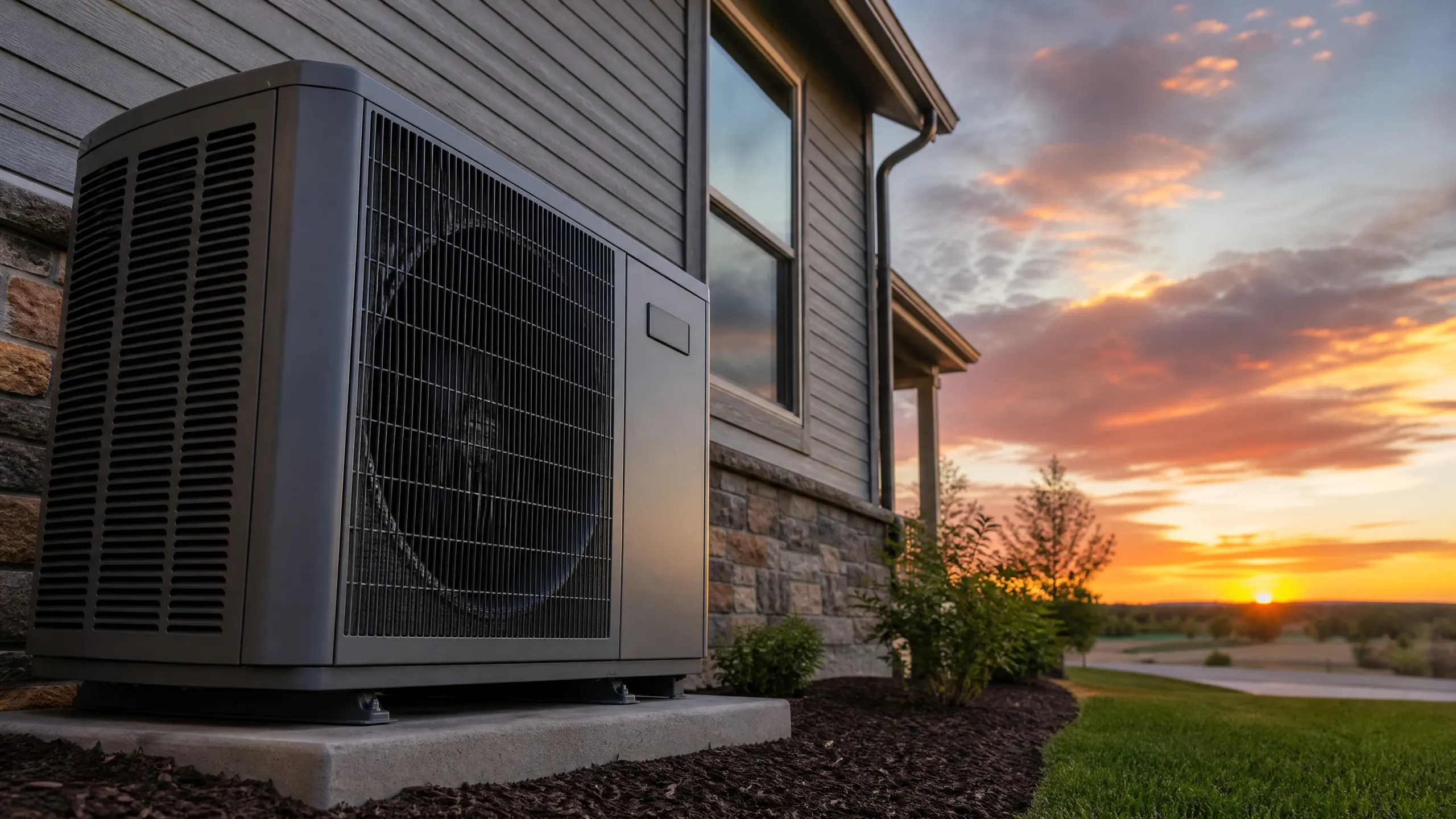
An outdoor air conditioning condenser unit mounted on a concrete pad next to a residential house at sunset.

Heat Pump Repair in Mason City, IA

Tell us about the job

Takes about a minute. No obligation.

RepairHeat PumpCerro Gordo County, IA
Step 1 of 2

What ZIP code is the job in?

Winters here work the heat pump hard

Mason City gets cold, with overnight lows averaging 12°F across December, January and February. A heat pump run that hard all winter puts real hours on the defrost control board and the reversing valve. When one of those wears down, the unit struggles to keep up or starts blowing cold air.


The cause is usually ordinary

Nothing about Cerro Gordo County pushes a heat pump harder than the cold already does. When one stops heating right, the fix is almost always a known part worth repairing, not a system failing because of where it sits.

8 months
October through May, your system heats
3 months
June through August, it cools
12°F
the average winter night it heats against
80°F
the average summer afternoon it cools against
Isometric cutaway illustration of a small house showing ducted air distribution, an indoor air handler, and an outdoor condenser unit connected by lines, with a sofa and bed in the rooms.
Your system heats October through May and cools June through August.

NOAA nClimDiv, 1991–2020 normals

A heat pump that won't switch out of cooling mode will keep fighting itself until the reversing valve is replaced.

Let it run like that and the compressor is doing the work while getting none of the relief it needs.

Nothing here puts more strain on a heat pump than the cold already does

180 severe weather events from 2015 to 2024
15% of homes statewide lost power a day or more in 2024
76 damaging wind events from 2015 to 2024

Heat here runs October through May, so September is when a weak heat pump gets found out. The first cold mornings put real load on the defrost board and the reversing valve, and if one was already marginal, that's when it quits. Summer is different. Cooling only runs June through August, and a unit that limped through a hot August can seem fine once the weather turns. It isn't fixed, it's just not being asked to work. The same part that struggled in August is still there in September, now switching modes and running far more hours a day.

A broken heat pump costs more to run here

Electricity in Iowa ran 13.40 cents per kilowatthour in 2024. A reversing valve or defrost board that's failing makes the system work harder for less heat, and that shows up on the bill before it shows up as a breakdown. Fixing the part that's actually worn costs less than paying for the one that's struggling in its place.

Find a contractor
A man in a dark long-sleeved shirt and tan pants, seen from behind, carries a worn canvas tote bag as he climbs wooden steps toward a dark green front door flanked by a potted shrub.
A white mini-split heat pump outdoor unit mounted on a concrete pad beside a gray-sided house, surrounded by gravel and green shrubs.

Ask how much life is left before you fix it

If the heat pump outside is the one the house was built with, it's had decades of winters like this one already. Before paying to replace the reversing valve or the defrost board, ask the contractor how much life the rest of the unit has left. A repair on a system that old is only worth it if the compressor and the rest of it are good for more years after.

What you can check safely

Look at the outdoor unit and clear away anything piled against it, leaves, snow, a fence line too close. Check the air filter inside and swap it if it's gray with dust. Walk around the house and make sure no vents are blocked by furniture or rugs. At the thermostat, confirm it's set to heat and the temperature is actually above room temperature. None of this calls for opening the unit or touching refrigerant lines.

What to leave alone

Don't pull the panels off the outdoor unit or touch the wiring inside it. Don't try to deice a frozen coil with anything sharp or hot, a stuck defrost cycle has a cause that needs diagnosing, not melting off. If the unit is making a new noise or tripping a breaker, leave the breaker off and don't reset it more than once. Forcing a system to keep running past that point usually turns a part replacement into a compressor problem.

A few things cause most heat pump failures, and the reversing valve and defrost board are only part of it. Capacitors wear out from the start and stop the compressor or the outdoor fan from getting going, usually without warning. Refrigerant leaks show up slowly, the system runs longer and longer to hit the same temperature before it finally gives up. Contactors pit and stick from years of cycling on and off, which can leave a unit running nonstop or not starting at all. The outdoor coil gets coated with dirt and cut grass over the years, and once it can't shed heat properly in summer or pull it in during winter, everything downstream works harder to compensate. Most of this comes from ordinary wear, not one bad event, which is why a unit can seem fine for years and then need several things looked at once.

A diagnostic visit starts outside, at the unit itself. A tech checks refrigerant pressure, looks at the reversing valve and defrost board, and watches how the contactor and capacitor are holding up under a running load. Readings tell most of the story. Low pressure points to a leak somewhere in the line. A compressor pulling too many amps points to a failing capacitor or a motor on its way out. Inside, the tech checks the air handler and the thermostat signal, because a heat pump that won't switch modes sometimes has a control problem rather than a mechanical one. The goal is to find which part is actually failing, not to replace parts until something works.