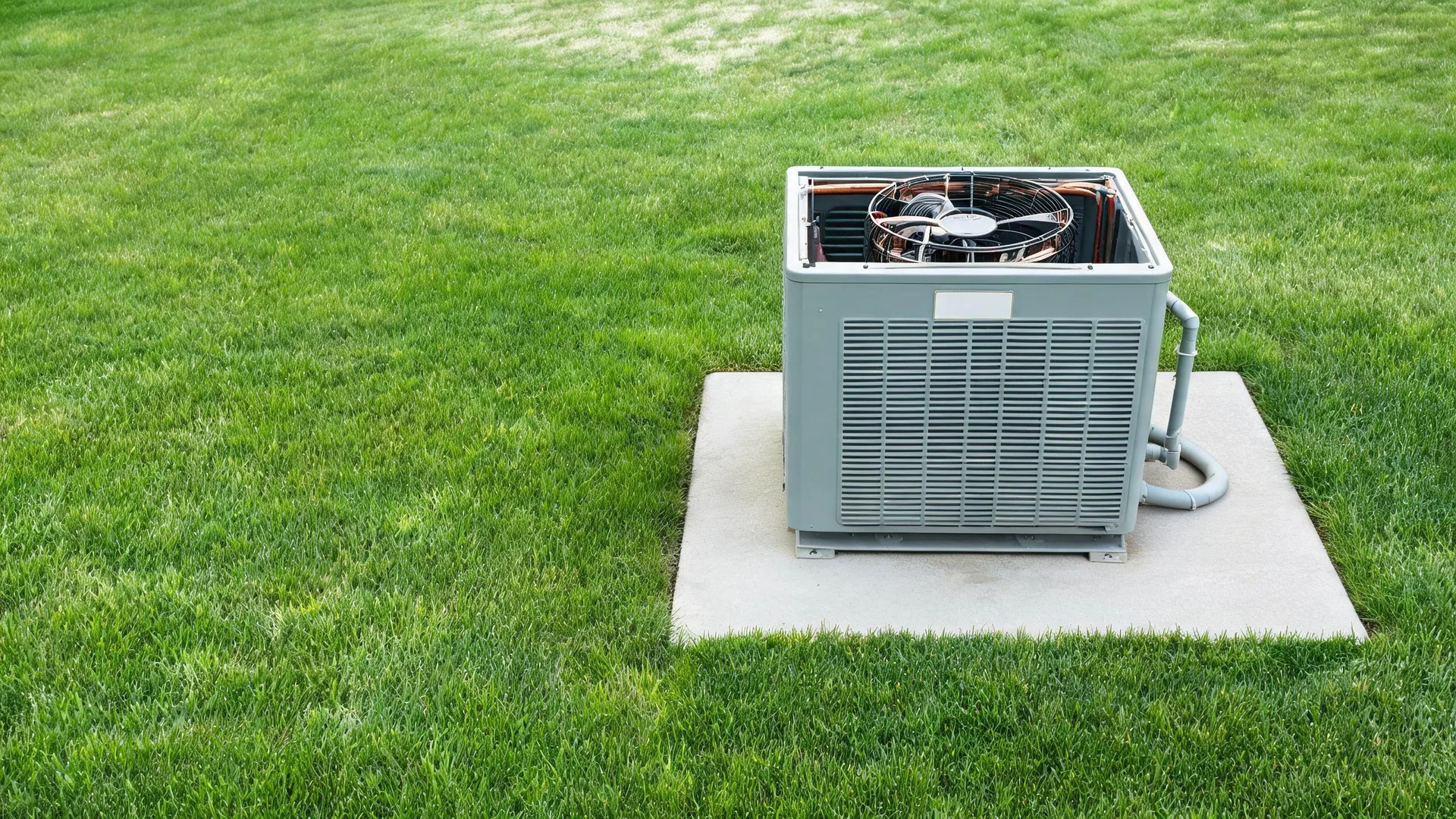
An outdoor heat pump unit mounted on a concrete pad in front of a two-story suburban house with a landscaped lawn.

Heat Pump Repair in Muscatine, IA

Tell us about the job

Takes about a minute. No obligation.

RepairHeat PumpMuscatine County, IA
Step 1 of 2

What ZIP code is the job in?

Winters here ask a lot of a heat pump

Muscatine County averages 17°F overnight through December, January and February, and heating is the bigger job for a system here than cooling. A heat pump working that hard every winter will eventually need a repair, same as it would anywhere else with a real winter.


So look for the ordinary cause first

A heat pump that's struggling or short cycling in Muscatine usually has a normal problem behind it, a low refrigerant charge, a failing defrost control, a worn contactor. Nothing about the county points to anything unusual. The fix is finding which ordinary part failed and replacing it.

8 months
October through May, your system heats
3 months
June through August, it cools
17°F
the average winter night it heats against
83°F
the average summer afternoon it cools against
Isometric line illustration of a cutaway single-story house showing interior rooms, ceiling ductwork connected to an indoor air handler, and refrigerant lines running to an outdoor condenser unit on a pad.
Your system heats October through May and cools June through August.

NOAA nClimDiv, 1991–2020 normals

September is the month to get a heat pump looked at, before heat starts running in October.

A weak part that made it through last winter often fails in the first cold stretch, right when the system switches over.

Ask how many winters the unit has left before paying for the repair

Half the homes here were built by 1970
59 damaging wind events from 2015 to 2024
46 hail events from 2015 to 2024
Electricity here runs 13.40 cents a kilowatt hourIowa homes paid that rate in 2024, part of what a heat pump costs to run.

A heat pump that keeps running without ever warming the house is usually stuck in the wrong mode or losing the battle to a dying compressor. If it's blowing cold air instead of warm, check whether it's stuck in defrost. a heat pump that can't get out of defrost will run the outdoor fan and never switch back to heating. Ice building up on the outdoor unit that doesn't clear on its own points to the same thing, a failed defrost control or a bad sensor. Short cycling, where it turns on and off every few minutes, often comes from a dirty filter restricting airflow or a refrigerant charge that's dropped. A unit that runs constantly without shutting off and still can't keep the house at temperature is usually low on refrigerant or losing capacity in the compressor itself. Any of these call for a look before the part fails completely.

If your heat pump came with an older home, find out what it's worth fixing

A repair only makes sense if the system has some life left in it. Before paying for the part, ask the contractor how old the unit is and how much longer it should last.

Find a contractor
A residential heat pump outdoor unit mounted on a concrete pad next to a house with gray vinyl siding.

A small problem now is a compressor later

A heat pump low on refrigerant does not just heat less. The compressor has to run longer to move the same amount of heat, and it was not built for that extra load. Keep it running that way and the compressor wears down faster than it should. A dirty filter causes a similar problem. Airflow across the coil drops, the coil runs colder than it should, and the compressor strains against that every time it cycles on. A stuck defrost control does the same damage a different way. The outdoor coil keeps icing over, the system keeps trying to work through it, and the compressor absorbs the strain. None of these stay minor on their own. A heat pump will often keep running in that state for a while, and that is the real risk, because every day it runs that way is a day closer to the compressor failing for good.

Most failures start outside

The outdoor unit does the harder job all winter, pulling heat from cold air, and it takes the weather straight on. Rain and ice work into the fan motor bearings. Sticks and leaves get pulled into the coil and block airflow. A contactor pitted from years of cycling on and off is one of the most common reasons a heat pump won't start at all.

Refrigerant doesn't run out, it leaks out

A heat pump is sealed. It shouldn't ever need refrigerant added. If a system is low, there's a leak somewhere in the lines or the coil, usually at a joint or a rubbed-through spot in the copper. Topping it off without finding the leak just means the same call again next year, and the compressor keeps absorbing damage in the meantime.

Before calling anyone, go outside and look at the unit. If the outdoor coil is caked in ice or buried in leaves, that alone can stop a heat pump from heating right, and it's safe to clear leaves and debris away by hand. Check the thermostat is actually set to heat and not fan only. Go to the air handler or furnace closet and pull the filter. Hold it up to a light. If you can't see light through it, that's restricting airflow and it's worth replacing before anything else. Check that the vents around the house are open and not blocked by furniture or rugs. None of this needs tools, and none of it can hurt the system. If the unit still won't heat after that, the problem is inside it, and that's where a homeowner should stop and let someone else take over.

A diagnostic visit starts outside at the outdoor unit. A tech hooks up gauges and checks the refrigerant charge, since a system running low will show it in the pressures right away. Next comes the electrical side. The contactor, the capacitor, the defrost board, each gets checked against what it should read. Inside, the tech pulls the filter and checks airflow across the coil. The reversing valve gets a look too, since a valve that's stuck is an easy thing to mistake for a bigger problem. Most of the visit is ruling things out one at a time until only one explanation still fits. By the end, the tech should be able to point to the one part that failed and say why, not just that the system is low or running rough.