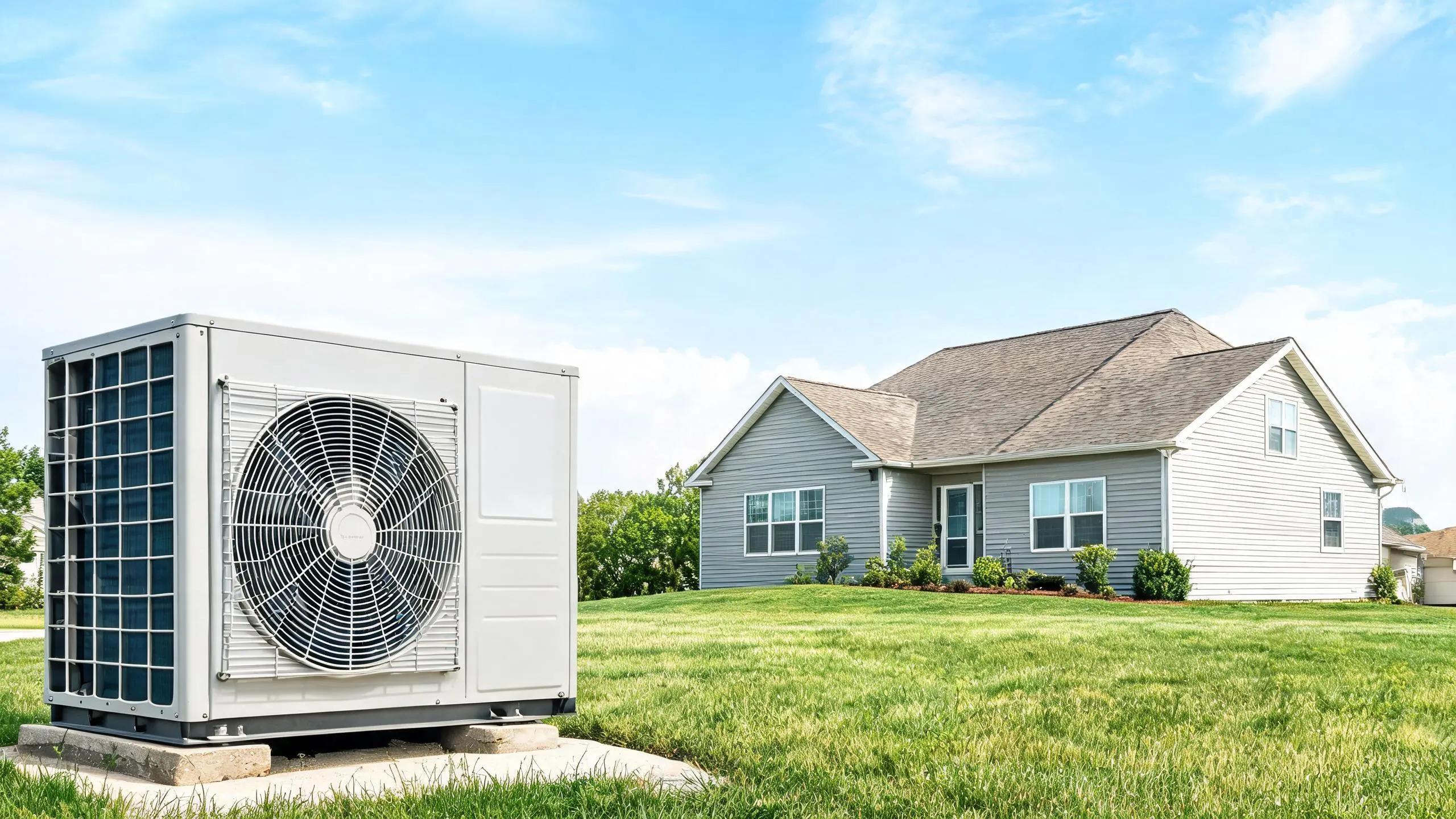
An outdoor HVAC condenser unit on a concrete pad in front of a single-story house with gray siding and a shingle roof.

Heat Pump Repair in Pella, IA

Tell us about the job

Takes about a minute. No obligation.

RepairHeat PumpMarion County, IA
Step 1 of 2

What ZIP code is the job in?

October is when heat pumps show their weak spots

Your heat pump switches over to heat mode in October after months of sitting idle on the cooling side. Whatever was marginal in August, a weak capacitor, a sluggish reversing valve, tends to fail once it has to carry a full heating load.

September is worth a call before the switch

If your heat pump has been acting up, September is the month to get it looked at. A contractor can catch a failing part while the system is still in cooling mode, before the first cold morning in Pella asks it to do more.

8 months
October through May, your system heats
3 months
June through August, it cools
17°F
the average winter night it heats against
83°F
the average summer afternoon it cools against
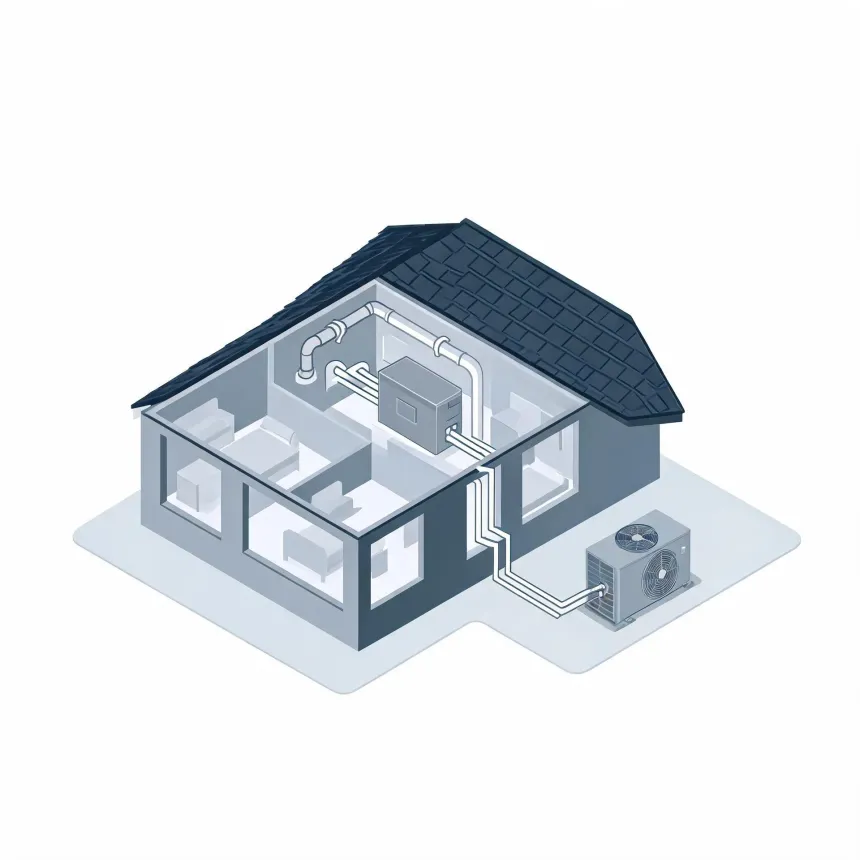
Isometric cutaway illustration of a gray house showing interior rooms, a central air handler with ducts in the attic, and refrigerant lines running to an outdoor condenser unit beside the building.
Your system heats October through May and cools June through August.

NOAA nClimDiv, 1991–2020 normals

Marion County winters average 17°F overnight through December, January and February.

A heat pump struggling on cold mornings in Pella usually has a specific part failing, not a losing battle with the weather.

Marion County doesn't put unusual strain on a heat pump

193 severe weather events from 2015 to 2024
15% of homes statewide lost power a day or more in 2024
79 damaging wind events from 2015 to 2024
Iowa electricity ran 13.40 cents a kilowatt-hour in 2024That's the rate behind any repair that has your heat pump running harder than it should.

Half the homes in Marion County were built in 1975 or earlier, half in 1975 or later. That split doesn't point to one likely cause when a heat pump stops working right. An older house can have a heat pump installed last year, and a new build can still have the one it came with. A contractor checking a heat pump in Pella is looking at the refrigerant charge, the reversing valve, the capacitor, the same parts no matter which decade the house was framed. If your system came with the house, that's worth mentioning when you call, but it's the symptom that points to the fix.

Get it looked at early

Problems tend to show up in the first weeks of the season, when the load hits a part that was already weak.

Find a contractor
A man in a cap, gray shirt and brown work pants walks up steps toward a dark green front door, carrying a canvas tool bag beside a potted shrub.
A gray air-source heat pump mounted on a concrete pad next to a house with gray vinyl siding, surrounded by gravel and flanked by green shrubs and white hydrangea flowers.

The wear shows up before the breakdown does

A heat pump runs nearly every day of the year, cooling in summer and heating the rest of the time, so the compressor rarely gets a long rest. That kind of duty cycle wears parts gradually, and the signs show up as small changes before they show up as a breakdown. Listen for a change in the sound it makes starting up or shutting off. Watch for ice building up on the outdoor unit that doesn't clear in defrost. Notice if one room runs warmer or colder than the rest, or if the air coming out feels lukewarm instead of hot. A system that short cycles, turning on and off in quick bursts, is usually telling you a sensor or a control board is failing. None of these mean the unit is done. They mean a part is wearing out while the rest of the system keeps compensating for it.

A weak part makes the rest work harder

A heat pump has no slack in it. If the capacitor is weak, the compressor draws harder to start and runs hotter than it should every time it cycles. If the refrigerant charge is low, the compressor has to run longer to move the same heat, straining a part that was never the problem to begin with. The system keeps delivering warm air for a while, so the extra strain goes unnoticed until the part it was leaning on gives out too.

Waiting lets one failure cause another

A reversing valve that's sticking will keep sticking worse each cycle until it stops switching over at all. A failing sensor will keep sending bad signals to the control board until the board starts making bad calls too. The part that fails first is usually simpler to deal with on its own, before it takes something else down with it.

Before you call anyone, there are a few things worth checking yourself. Look at the thermostat first. Make sure it's set to heat, not auto, and that the temperature you want is actually above room temperature. Check the breaker for the outdoor unit and the one for the indoor air handler, since a tripped breaker on either side will stop the system cold. Walk outside and look at the outdoor unit. If it's buried in leaves, snow, or anything blocking airflow, clear it, since restricted airflow can look exactly like a failing part. Check your air filter too. A clogged filter chokes airflow across the indoor coil and can bring on symptoms that mimic a bigger problem. If the system is running but the air feels cool rather than warm, that's worth noting for whoever comes out, not something to chase down yourself.

A diagnostic visit starts with the complaint, not the unit. The tech wants to know what you noticed first, when it started, and whether it's constant or comes and goes. That narrows down where to look before any panel comes off. From there it's gauges and a meter. Refrigerant pressures get checked. The capacitor gets tested against its rating. The reversing valve gets told to shift and watched to see that it actually does. Electrical readings matter too, since a motor drawing more current than it should will quit outright later even if it still runs fine today. Airflow gets checked as well, because a coil that's starved for air can look like a refrigerant problem that isn't really there. The point isn't to start swapping parts and see what helps. It's to find the one reading that's off and explain what it means before anything gets fixed.