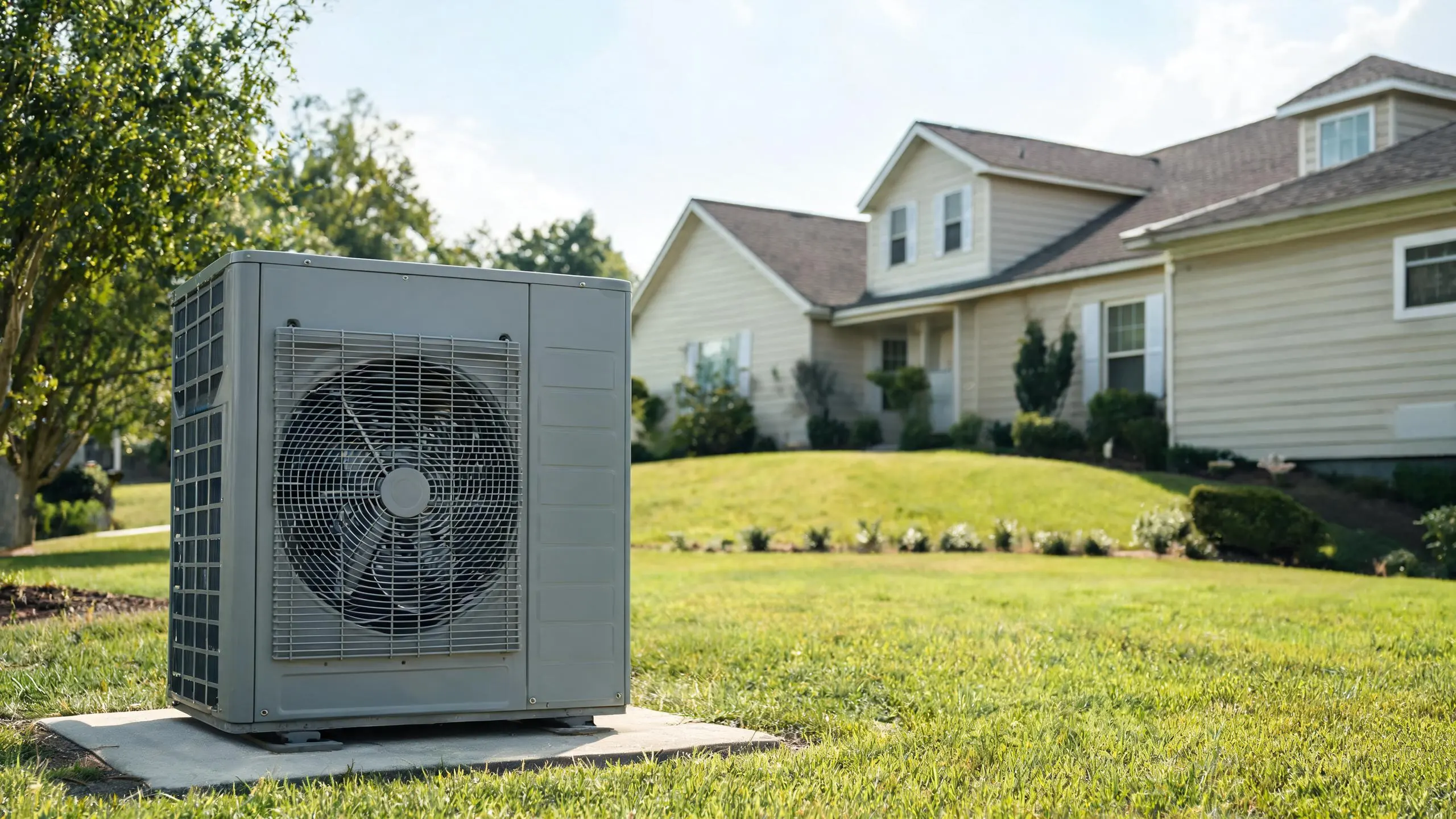






A gray outdoor HVAC condenser unit mounted on a concrete pad in the front yard of a two-story suburban house.

Heat Pump Repair in Sioux Center, IA

Tell us about the job

Takes about a minute. No obligation.

RepairHeat PumpSioux County, IA
Step 1 of 2

What ZIP code is the job in?

A heat pump out here deals with more than cold air. Zone 6A winters push it to run long hours just to hold a temperature, and the outdoor unit sits through whatever the weather does on top of that. Sioux County has had damaging wind 67 times and hail 42 times between 2015 and 2024, and both land right on the coils and fan of that outdoor unit. Summer adds its own strain. The dew point here runs lower than most of the country, but a heat pump pulling moisture out of the air all summer is still working against something. A system under that much load shows its weak points sooner, so a repair call now is worth taking seriously rather than patching over.

8 months
October through May, your system heats
3 months
June through August, it cools
11°F
the average winter night it heats against
82°F
the average summer afternoon it cools against
Isometric line illustration of a cutaway house showing interior rooms with furniture, ceiling ductwork under a dark shingled roof, and an outdoor condenser unit connected by lines on the right.
Your system heats October through May and cools June through August.

NOAA nClimDiv, 1991–2020 normals

A heat pump that's low on refrigerant won't just cool or heat less, it can damage the compressor by running that way for months.

Catching a refrigerant leak now instead of topping it off and moving on is what keeps a repair from turning into a compressor replacement.

Half the homes here were built before most heat pumps were even common

Half the homes here were built by 1973
67 damaging wind events from 2015 to 2024
42 hail events from 2015 to 2024
Heat pumps break at the start of the seasonHeat here runs October through May, and September is when a weak part gets found out.

A heat pump losing refrigerant will keep running, just worse, and that's the problem. The compressor needs a certain amount of refrigerant flowing through it to stay cool while it works. Short it on charge and the compressor runs hotter than it was built to, every hour it's on. Ice on the outdoor coil is another one people leave alone because the system still blows air. That ice blocks airflow across the coil, so the compressor works harder to move heat that isn't getting through, and it can pull liquid refrigerant back into itself, which it isn't built to handle. A failing contactor or capacitor is the same story. The motor it's feeding keeps starting, just with more strain each time, until it doesn't start at all. None of these get better by running longer. They get better when someone shuts the system off and fixes the part that's actually failing.

Out here, a heat pump earns its repair bill. Get it diagnosed right.

A heat pump working this hard doesn't fail cleanly. It loses a little capacity, then a little more, until the part behind it gives out. Wind and hail have had plenty of chances to reach that outdoor unit, and long winters keep the system running most of the year. Have it looked at now, so the diagnosis is right and the repair holds.

Find a contractor
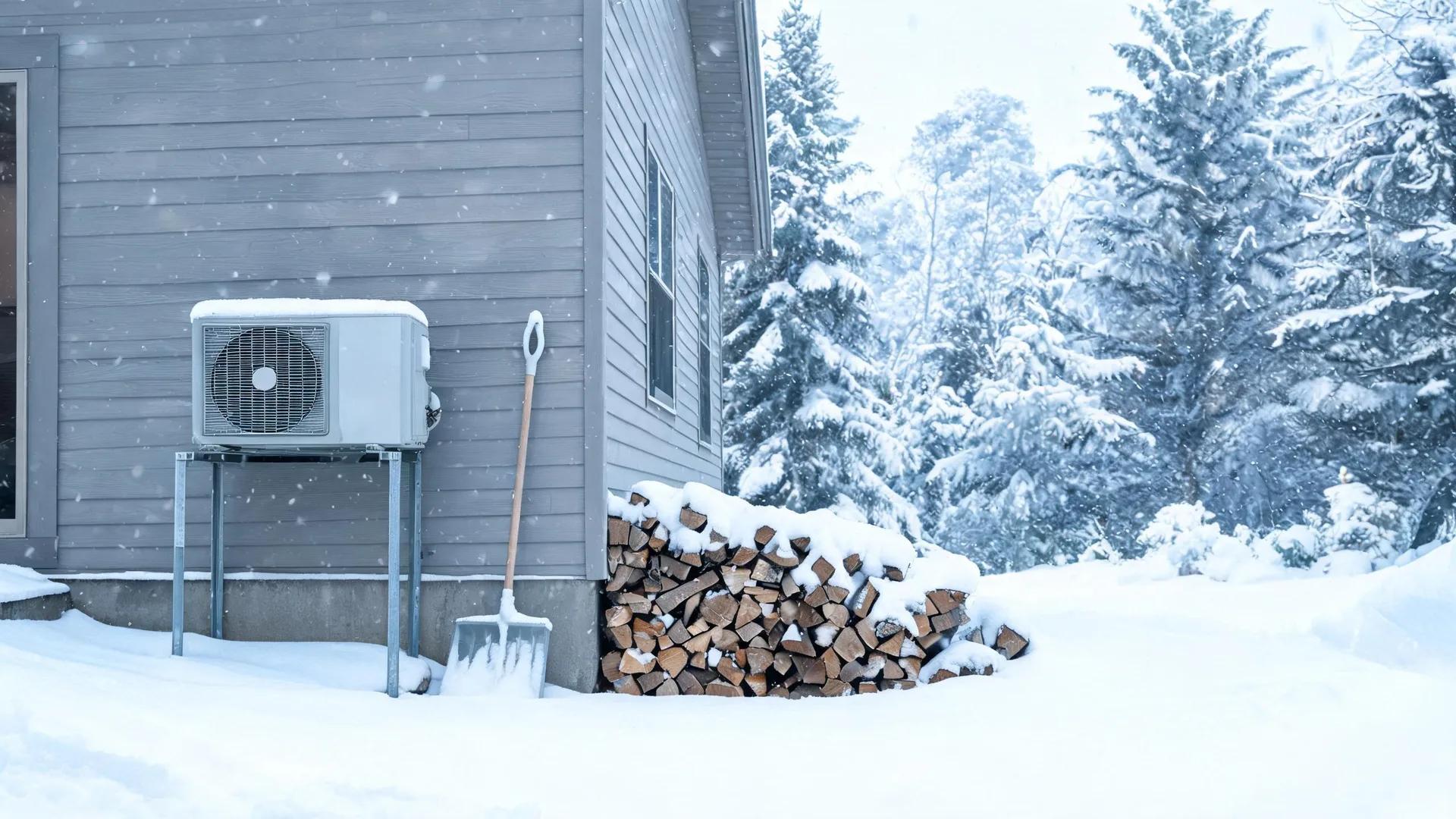
A residential heat pump outdoor unit mounted on a concrete pad next to a house with gray vinyl siding.

How many years has it already put in

If the heat pump came with the house, find out how old that makes the system before paying for a major repair. Houses here built more recently are more likely to have one installed new, so this is worth checking rather than assuming either way. A compressor replacement on a system already well into its working life is money spent to keep an old machine going a little longer. The same money toward a new system buys one built for how hard this climate runs it. Ask the contractor diagnosing the problem what the repair costs against what's left in the system, and let that answer decide.

What you can check before you call

Go outside and look at the outdoor unit. If the coil is caked in ice or snow, or the fan is jammed with leaves or debris, clear what you can reach and see if that was the whole problem. Check that nothing is blocking airflow around the cabinet, no bush grown up against it, no snow drift piled on top. Inside, swap the air filter if it's dirty. A clogged filter starves the system of airflow and can make a working heat pump act like a broken one. Check the thermostat batteries and make sure it's set to the right mode, since a heat pump stuck in the wrong mode blows air that just doesn't feel right. Look at the breaker panel too. A tripped breaker will shut the whole system down and looks exactly like a dead unit from the thermostat.
What to leave alone

Don't take the cabinet apart or touch anything inside the outdoor unit. Refrigerant lines, capacitors and the compressor itself can hurt you, and opening the system without the right gauges and tools usually turns a small problem into a bigger one. If you smell something burning, hear a loud grinding or clicking that wasn't there before, or see ice that keeps coming back after you clear it, that's a part failing, not a filter or a breaker. Shut the system off instead of running it to see what happens. A compressor straining against a bad part gets worse the longer it keeps starting, and running it in that state is how a repair turns into a replacement.

A heat pump that needs repair usually tells on itself in small ways before it quits outright. Air coming out the vents feels wrong, cooler than it should in heating mode or not quite cold enough in summer, and that's usually airflow or refrigerant charge rather than anything electrical. A system that short cycles, turning on and off in quick bursts instead of running a full cycle, is often a sign the compressor is struggling to start or a sensor is misreading the temperature. Listen for it too. A new rattle, a hum that wasn't there before, or a clicking that repeats every time it tries to start all point to a part wearing out, not a part that's simply dirty. Rising bills with no change in how the system is used mean it's working harder to do the same job, and that's worth a look before the part behind it fails completely.

A diagnostic visit starts outside at the unit itself, not with a clipboard. A tech checks refrigerant pressure and temperature split, since those two numbers together say whether the system is actually moving heat the way it should. They'll pull the access panel and look at the contactor and capacitor, because a pitted contactor or a swollen capacitor explains a lot of the starting trouble homeowners describe over the phone. Electrical readings come next, checking that the compressor and fan motor are drawing the amperage they're supposed to, not more. Airflow gets checked too, since a reading that looks like a refrigerant problem is sometimes just a dirty coil or a blocked return choking off the air the system needs to work with. None of this is guesswork. Every reading either matches what a healthy system should show or it doesn't, and that's what points to the part that's actually failing.