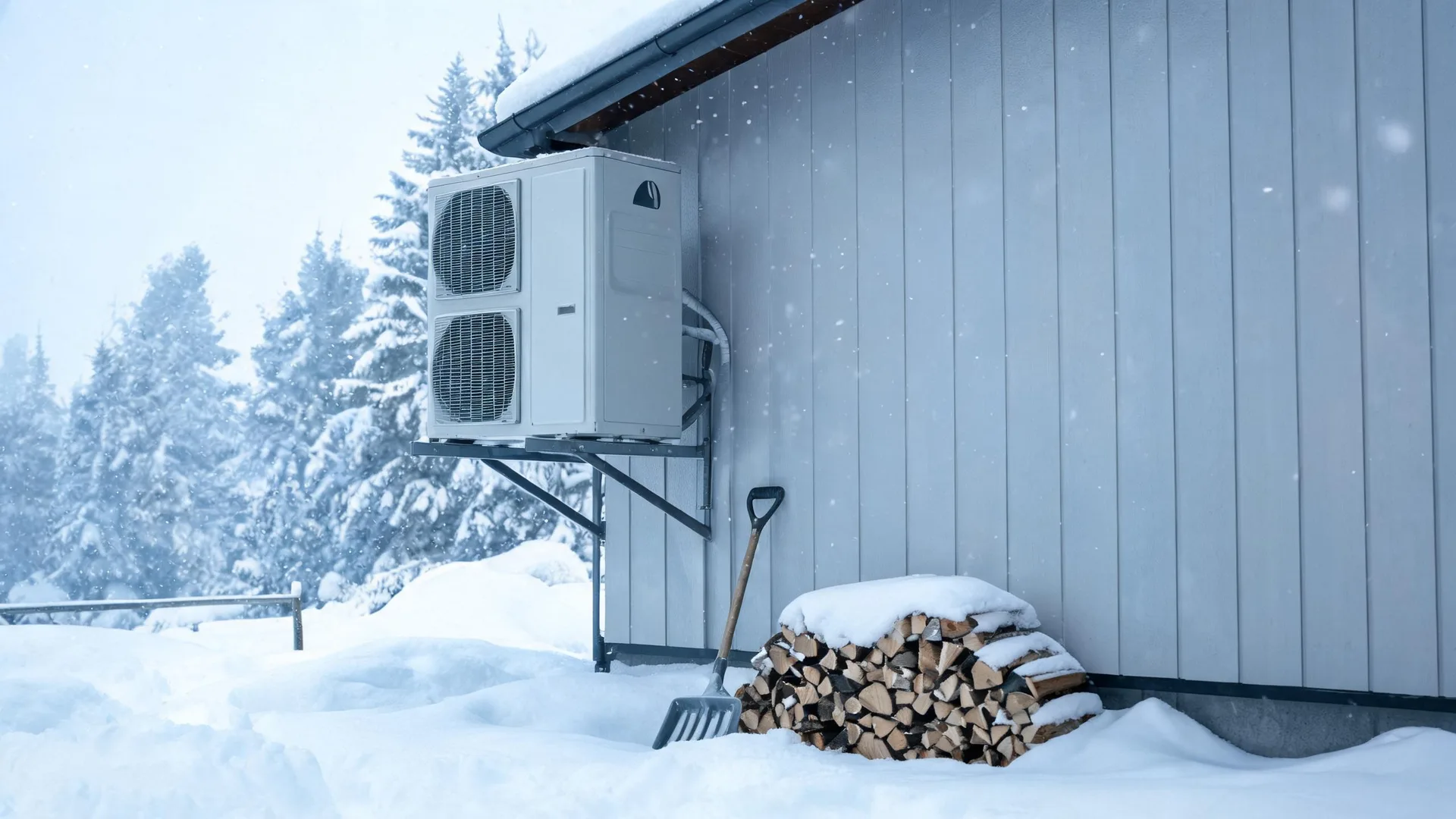
A grey outdoor HVAC unit mounted on a concrete pad beside the beige-sided exterior wall of a suburban house.

Heat Pump Repair in Sioux City, IA

Tell us about the job

Takes about a minute. No obligation.

RepairHeat PumpWoodbury County, IA
Step 1 of 2

What ZIP code is the job in?

September is when a weak system shows itself

Heat here starts up in October, and a heat pump that struggled last winter will show the same trouble again once it switches over from cooling. If yours has been making an odd noise or not keeping up, September is when to get it looked at, before it has to run every day.


The same unit has to work until May

A heat pump in Woodbury County carries the house for about eight months, October through May. Whatever is wrong with it now has to hold up through the coldest stretch, not just the first cold snap, so it's worth fixing right rather than patching for the moment.

8 months
October through May, your system heats
3 months
June through August, it cools
14°F
the average winter night it heats against
83°F
the average summer afternoon it cools against
Isometric cutaway illustration of a small house showing interior rooms with furniture, an indoor air handler with ductwork, and lines running to an outdoor condenser unit beside the building.
Your system heats October through May and cools June through August.

NOAA nClimDiv, 1991–2020 normals

A heat pump runs in both directions, so a worn reversing valve or a failing compressor costs you heat and cooling both.

When the compressor is the problem, that's usually the point to stop patching and start pricing a new system.

Half the homes here are old enough that the heat pump is original equipment

Half the homes here were built by 1959
88 damaging wind events from 2015 to 2024
55 hail events from 2015 to 2024

Electricity in Iowa ran 13.40 cents per kilowatthour in 2024, and a heat pump leans on it every day it runs. A unit that's lost some charge or is cycling on a bad capacitor pulls more power to do the same job, and you pay for that on every bill until it's fixed. It carries the house for most of the year here, so that extra draw doesn't let up after a week or two. Finding the actual cause now costs less than paying the difference all season.

Your heat pump likely has an ordinary problem with an ordinary fix

Woodbury County gets its share of wind, hail and winter storms, same as the rest of this part of Iowa. None of that singles out your heat pump. If it's acting up, the cause is almost always a part inside it, not the weather outside it. Worth getting a straight answer on what's wrong before it has to carry the house through winter.

Find a contractor
A man in a dark shirt and tan work pants, seen from behind, carries a canvas duffel bag up wooden porch steps toward a dark green front door.
A gray heat pump outdoor unit mounted on a concrete pad next to the stone-accented exterior wall of a house.

Ask for the age on the nameplate

If yours came with the house, there's no record of when it went in or what's been done to it since. Half the homes in Woodbury County were built in 1959 or earlier. A heat pump doesn't last that long. Before paying for another repair, ask whoever comes out to check the age on the nameplate. That number tells you whether you're fixing a young system or buying time on an old one.

What you can check yourself

Clear leaves, grass clippings or ice away from the outdoor unit so air can move through the coil. Pull the filter and hold it to the light. If you can't see through it, swap it. Walk the house and check that every supply vent is open and not blocked by furniture or rugs. Check the thermostat is set to heat, not cool, and set above the room temperature.

What to leave for the tech

An outdoor fan that won't spin points to the fan motor or the capacitor. Clicking with no startup points to the control board or the compressor. Air coming out of the vents cold instead of warm can mean a failing reversing valve. Frost on the outdoor coil that never clears on its own means the defrost cycle isn't working. None of these are safe or useful to open up on your own, and poking at them can turn a repair into a replacement.

A heat pump fails for a short list of reasons, and most of them trace back to the parts that work hardest. The compressor moves refrigerant all day, every day it runs, and when it wears out it usually doesn't give much warning first. A capacitor weakens over time and eventually can't kick the compressor or fan motor into motion, so you get a unit that hums or clicks but never starts. The reversing valve is what switches the system between heat and cooling, and when it sticks, the unit runs but blows the wrong temperature air. Low refrigerant almost always means a leak somewhere in the lines or coil, not the system burning it off through use. Outside of those, a dirty coil or a clogged filter makes everything behind it work harder, and that's often what pushes a marginal part into failing.

A diagnostic visit starts outside at the unit. The tech checks refrigerant pressure with gauges and listens to how the compressor sounds under load. Then comes the electrical side. That means testing the capacitor, checking the contactor, and making sure the fan motor pulls the current it should. Inside, the filter and coil get checked for ice or buildup that would make the system work harder than it needs to. The tech runs the system in both heat and cooling, since a reversing valve can work fine in one direction and stick in the other. Expect the panels to come off and the system to run through its paces before anyone names the part that's failing.