Three lit brick homes on a tree-lined residential street photographed at dusk.

Heat Pump Repair in Spirit Lake, IA

Tell us about the job

Takes about a minute. No obligation.

RepairHeat PumpDickinson County, IA
Step 1 of 2

What ZIP code is the job in?

The outdoor unit takes a beating here

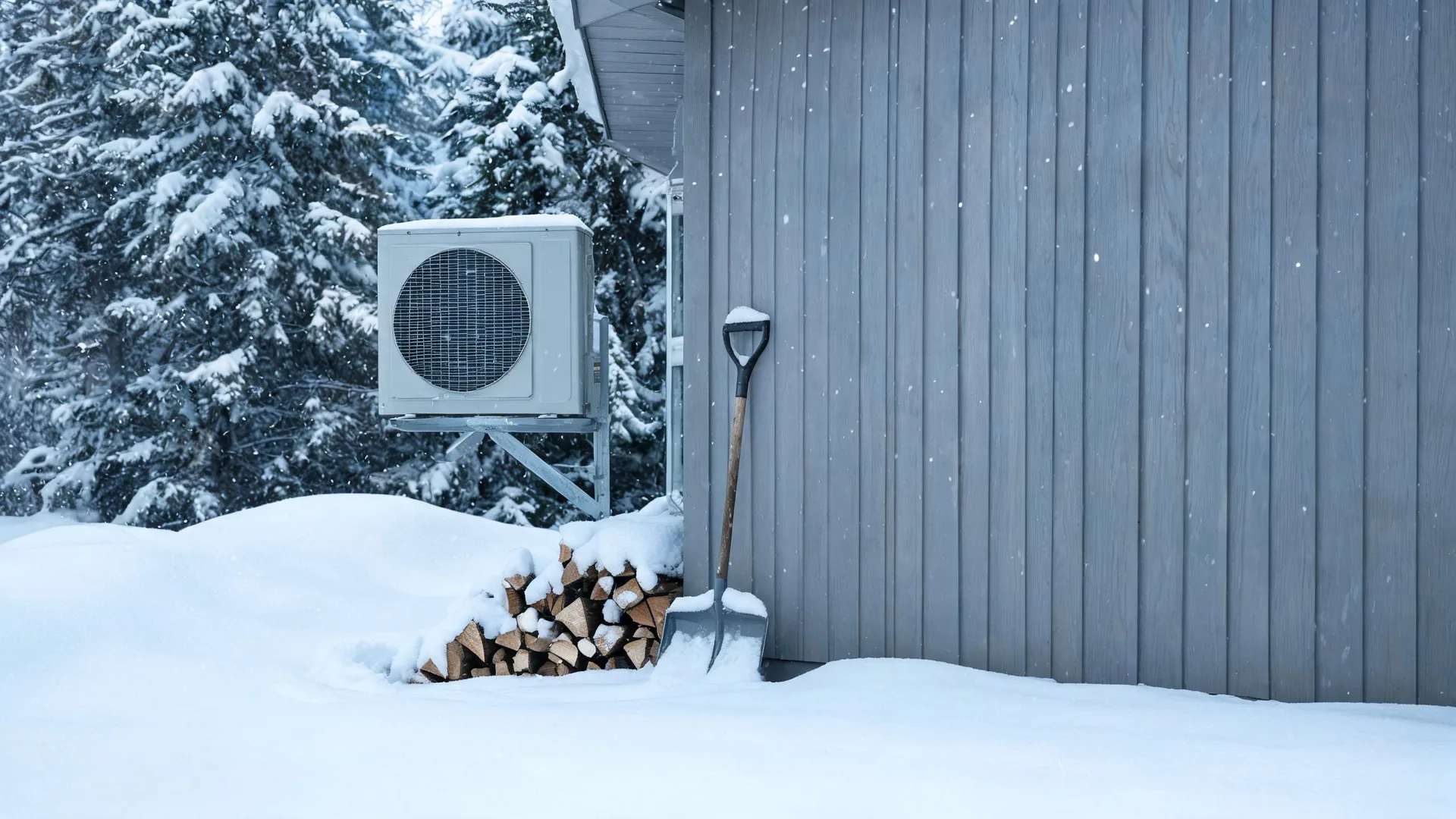
Between 2015 and 2024, Dickinson County saw 72 damaging wind events and 52 hail events. The outdoor unit sits through all of that, coil and fan exposed with no cover from the weather. A bent fin or a hail-dinged cabinet does not always stop the system right away. It just makes the unit work harder from that point on.


Why the diagnosis matters more here

A heat pump under that kind of load rarely fails for one clean reason. The coil, the refrigerant charge and the electrical components all take the strain differently. A tech who checks all of it finds the actual cause. One who resets the obvious part and calls it done is likely sending you into another service call.

8 months
October through May, your system heats
3 months
June through August, it cools
10°F
the average winter night it heats against
81°F
the average summer afternoon it cools against
Isometric line illustration of a cutaway house showing interior rooms with furniture, ceiling ductwork connected to an indoor air handler, and an outdoor condenser unit linked by refrigerant lines.
Your system heats October through May and cools June through August.

NOAA nClimDiv, 1991–2020 normals

Half the homes in Dickinson County were built in 1979 or later.

A heat pump in a newer home usually still has years of service left, so repair is the right first call.

Heat runs October through May, cooling June through August: the first cold snap or the first hot stretch is when a weak part gives out

Cooling runs June through August
Heat runs October through May
72 damaging wind events from 2015 to 2024

A heat pump that's struggling pulls more power to do the same job, and in Dickinson County that power costs 15.32 cents per kilowatt-hour. That's not the cheapest rate around, and a failing part makes it worse. A dirty coil, a low charge, a weak capacitor, all of them make the system run longer to hit the same temperature. Longer runs on a bad part show up on next month's bill before they show up as a full breakdown.

Get the real cause found before it costs you another service call

A bent fin or a weak capacitor rarely fixes itself, and on a heat pump working this hard, it tends to get worse from here. Getting the actual cause checked now means whoever comes out fixes that, not just the symptom you noticed first.

Find a contractor
A man in a tan jacket, cap, and work boots carries a canvas tool bag up wooden porch steps toward a dark green front door of a house with light horizontal siding and a potted shrub.
A gray outdoor HVAC unit mounted on a concrete pad beside a house with gray lap siding and a stone foundation.

Likely still has years left in it

If the heat pump came with the house, there's a good chance it's still within its working life. That's worth asking the contractor outright when they come out: how old is this system, and how does that line up with what it's doing. A tech who checks the coil, the charge and the electrical parts before touching anything can tell you whether this is a quick repair or the start of something bigger. On a system with years left, finding the one part that failed and fixing that is the right move.

A struggling compressor keeps drawing on itself

When the charge is low or the coil is dirty, the compressor works harder to move the same heat. It runs hotter than it was built to. That heat breaks down the oil that lubricates the internal parts, and once that starts, wear speeds up every time the unit cycles on. A compressor in that state is on a shorter path to full failure, not a longer one.

Ice on the coil cuts off its own airflow

A heat pump that's low on charge or has a dirty filter can start icing the outdoor coil. Ice blocks airflow across the coil, so the system pulls in even less heat, and the defrost cycle has to run longer and more often to clear it. Each defrost cycle puts the system in cooling mode for a few minutes, which is its own kind of strain. Left alone, the coil stays iced more than it's clear.

Before anyone comes out, there are a few things worth checking yourself. Look at the outdoor unit and clear away any leaves, grass clippings or ice sitting against the cabinet. Airflow in and out of that unit matters, and anything blocking it makes the system work harder for no reason. Check the air filter inside and swap it if it is gray or clogged. Check the thermostat batteries and make sure it is set to the mode you expect, since a heat pump stuck in the wrong mode can look like a bigger failure than it is. Walk your vents and confirm none of them are closed or blocked by furniture. If the outdoor unit is caked in ice and none of that explains it, stop there and let a tech look at the charge and the defrost cycle.

A part that's already failing does not get cheaper to run while you wait. Every hour the system runs long to make up for a weak capacitor or a low charge, it pulls more power doing it, and that power costs real money here. Waiting a month does not fix a charge problem or bring a capacitor back. It just means another month of those longer runs before the same repair happens anyway. Getting someone out this week instead of next month is the difference between one repair bill and one repair bill on top of a month of inflated runs.