A quiet residential street at dusk lined with illuminated two-story brick houses and mature trees.

Heat Pump Repair in Tipton, IA

Tell us about the job

Takes about a minute. No obligation.

RepairHeat PumpCedar County, IA
Step 1 of 2

What ZIP code is the job in?

Winters here work the system hard

Tipton gets down to a 16°F average overnight low across December, January and February. A heat pump is still moving heat out of the cold air at that temperature, and it runs long hours doing it. That's normal operation, not a sign of strain.


So the usual parts wear the usual way

Long runtime is what wears a contactor, a capacitor or a defrost control over time. If your heat pump is struggling now, the cause is probably one of those, not something particular to this area. A tech can check them directly and find the one that's failing.

8 months
October through May, your system heats
3 months
June through August, it cools
16°F
the average winter night it heats against
82°F
the average summer afternoon it cools against
Isometric line illustration of a cutaway single-story building showing interior rooms, ceiling ductwork, an indoor air handler, and an outdoor condenser unit connected by refrigerant lines.
Your system heats October through May and cools June through August.

NOAA nClimDiv, 1991–2020 normals

Heat pumps in Cedar County sit idle most of September, then start up for the season in October.

A heat pump that starts struggling in October is usually the weak capacitor or failing defrost control that September never tested.

Cedar County sees its share of storms, but that's not what's wearing on your heat pump

149 severe weather events from 2015 to 2024
15% of homes statewide lost power a day or more in 2024
63 damaging wind events from 2015 to 2024

Electricity here runs 13.4 cents a kilowatt-hour, in line with the rest of Iowa. That's not the kind of number that burns out a contactor or a capacitor. What does is runtime, the hours the system spends moving heat on a cold night, and that's the same wear every heat pump sees. So if yours is running longer and your bill shows it, that part is just the system working the way it's supposed to. The repair itself is about finding which part gave out, not what it costs to run it.

Get the usual fix

Nothing about this area is especially hard on it. It's most likely the usual problem with the usual fix.

Find a contractor
A man seen from behind in a dark work shirt and tan pants carries a worn canvas tool bag up concrete steps toward a dark green paneled front door, with a potted shrub at left.
A gray outdoor HVAC unit mounted on a concrete pad beside a house with gray lap siding and a stone foundation.

What this repair is really buying

A heat pump installed when an older house was built or remodeled has been running long seasons for decades already. At some point a repair is just money going into a system that's going to need replacing anyway. Ask the tech doing the repair how old the unit is and what shape the rest of it is in before you commit to the fix.

It's not heating, or it's not switching over

A heat pump that blows cold air in heating mode may be stuck in cooling, icing up on the outdoor coil, or low on refrigerant. One that runs constantly without the house ever getting warm is losing the fight somewhere in the cycle. Either way, something is keeping it from doing the one job it has.

Noise and short cycling are the system asking for help

A clicking contactor, a humming outdoor unit that won't start, or a compressor that kicks on and off every few minutes are all signs a part is failing, not just aging. Ice on the outdoor unit that doesn't clear during defrost points the same way. None of these get better on their own, and waiting usually means a bigger repair.

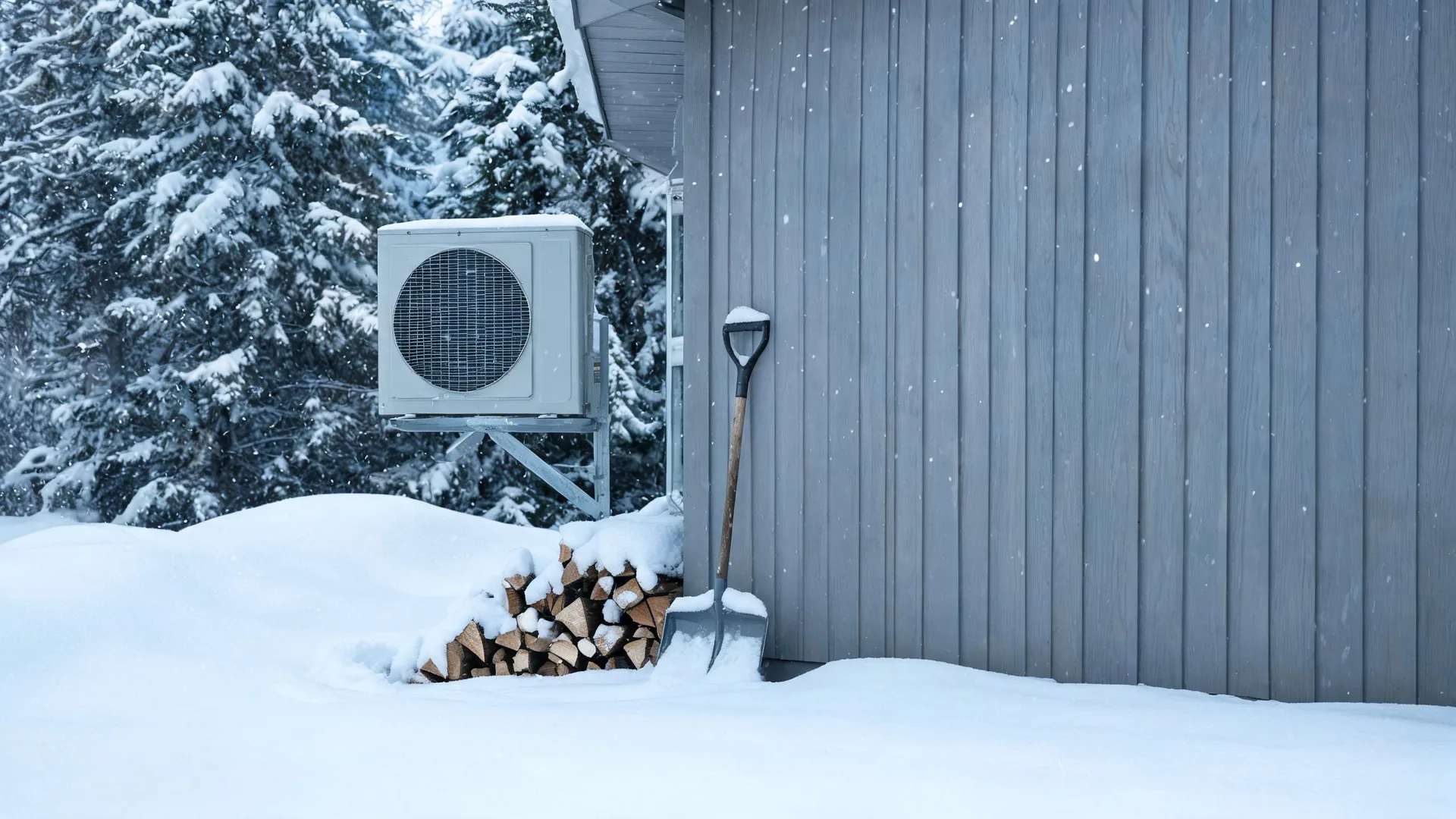
Before calling anyone, check the thermostat is set to heat and the temperature is set above room temperature. Look at the outdoor unit and clear away any leaves, ice or snow blocking the coil or the fan. Check the indoor filter and replace it if it's dirty, since restricted airflow can make a heat pump struggle even when nothing's actually broken. Go to the breaker panel and confirm both the indoor and outdoor breakers are on, since a tripped breaker can look like a dead system. If you see a drip pan under the indoor unit that's full or overflowing, that's worth mentioning to the tech when they arrive. None of this fixes a failing capacitor or a bad defrost control, but it rules out the simple stuff first.

A diagnostic visit starts with the tech asking what the system is doing and when it started. Blowing cold air, short cycling, ice that won't clear, running nonstop. Each points to a different part, so that conversation narrows things down before any panel comes off. From there the tech checks the thermostat call, the breakers and the filter, the same things worth checking before anyone's even called. Then comes the equipment itself. The tech tests the capacitor and contactor, checks refrigerant pressures, and watches the defrost cycle run through a full round to see if it reverses and clears like it should. Electrical parts either test within range or they don't, so a weak capacitor or a bad relay usually shows up clearly on the meter. Refrigerant issues take longer to run down. Low charge can point to a slow leak that needs finding, not just topping off. By the end the tech should be able to name the failed part and explain what else, if anything, is showing wear.