






An outdoor heat pump unit mounted on a concrete pad in front of a two-story suburban house.

Heat Pump Repair in Washington, IA

Tell us about the job

Takes about a minute. No obligation.

RepairHeat PumpWashington County, IA
Step 1 of 2

What ZIP code is the job in?

Heat pumps here work both sides, cooling from June through August and heat from October through May. September is the last easy month before that long heating stretch starts. A weak capacitor or a failing defrost control can sit quiet all through the mild weather and only show itself once the system has to run hard and keep running. If yours is short cycling or the air coming out is not quite warm enough, that is usually a fault that was already there, just waiting for the cold to find it. Getting it looked at in September, before October asks for full output, is easier than catching it mid-season.

8 months
October through May, your system heats
3 months
June through August, it cools
17°F
the average winter night it heats against
83°F
the average summer afternoon it cools against
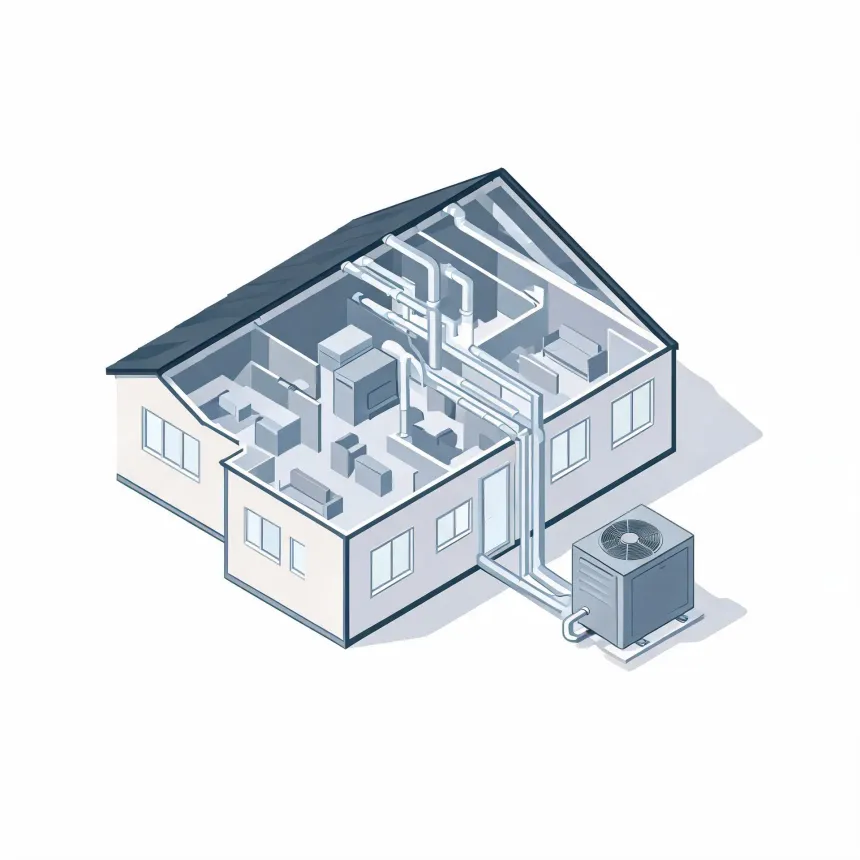
Isometric illustration of a cutaway single-story house showing interior ductwork and vents connected to an outdoor condenser unit beside the building, on a white background.
Your system heats October through May and cools June through August.

NOAA nClimDiv, 1991–2020 normals

Winter lows here average 17°F, nothing extreme for a heat pump built to handle it.

When one struggles at 17°F, the cause is usually a worn part, not the weather.

Half the homes here date to 1964 or earlier, old enough that the heat pump itself, not the house, is usually what's worn

Half the homes here were built by 1964
32 hail events from 2015 to 2024
22 winter storms from 2015 to 2024
Nothing unusual here, just the usual wearIowa homes paid 13.40 cents per kilowatt-hour in 2024, and a heat pump losing efficiency is what pushes that bill higher.

A heat pump that needs a repair every season is telling you something different than one that has run clean for years and just hit a rough patch. Age matters more than most other factors, because the compressor is the one part that ends the unit's life when it fails, and compressors wear out on a schedule tied to how many hours they have logged, not how well you have kept up with filters. A system near the end of that schedule can still be repaired, but the next failure is never far off, and each one tends to hit a different part. If the repair in front of you is a capacitor or a contactor, that is a small, cheap part doing exactly what small parts do over time, and fixing it tells you nothing bad about the rest of the system. If it is the compressor itself or the reversing valve, you are looking at a major cost on a system that may only have a few years left in it anyway, and that is the point where most homeowners start asking a contractor to compare that cost against a new system outright rather than just signing off on the repair.

Get it looked at early

Problems tend to show up in the first weeks of the season, when the load hits a part that was already weak.

Find a contractor
A man in a dark long-sleeved shirt, tan work pants and boots, seen from behind, carries a worn canvas tool bag as he steps up onto a porch toward a green paneled door, with a small potted evergreen beside him.
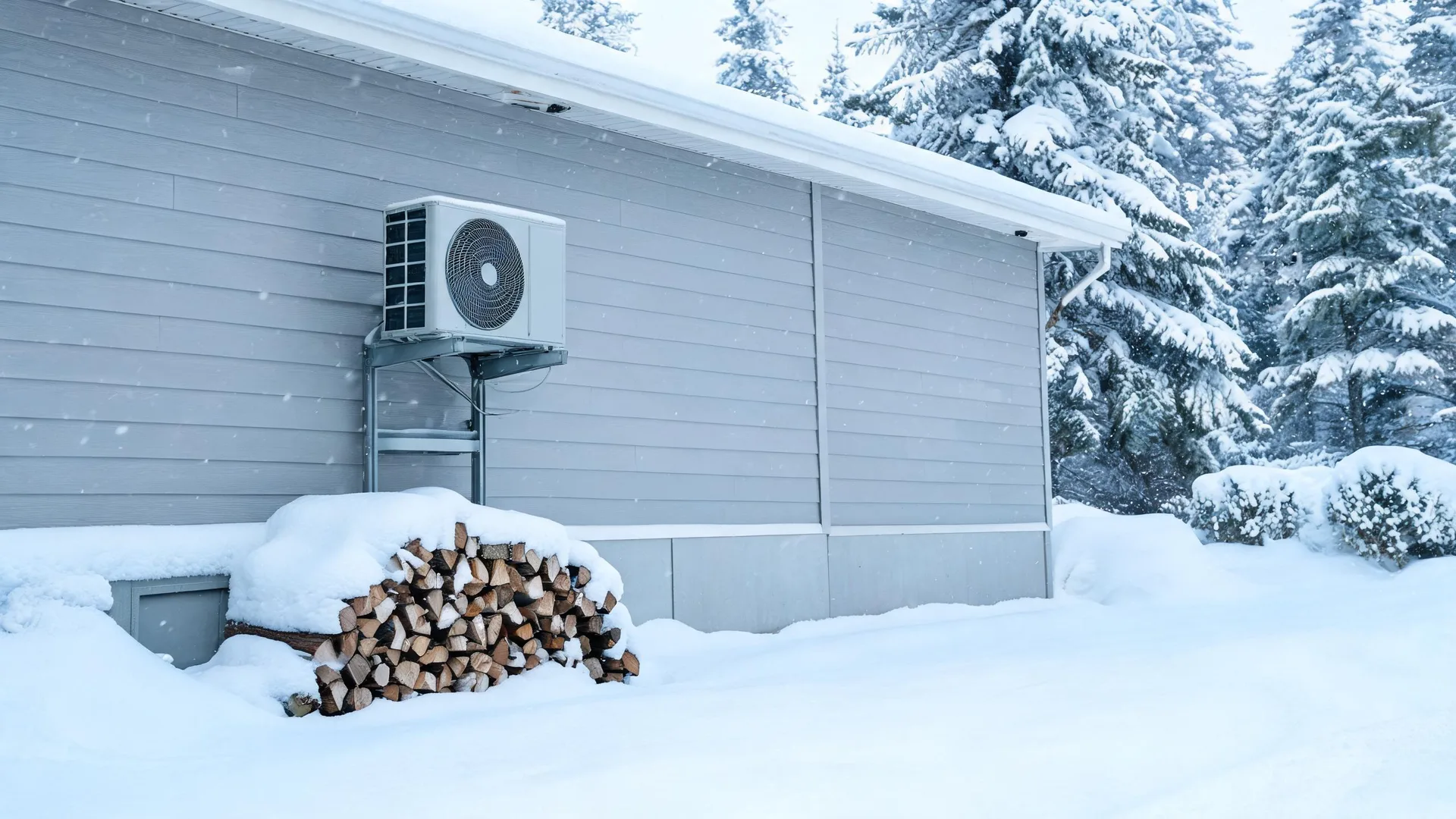
A gray heat pump outdoor unit mounted on a concrete pad next to a residential house with lap siding and stone accents.

Running through a problem rarely fixes it

A refrigerant leak is the clearest case. A system running low on charge makes the compressor work harder to move the same amount of heat. Run it long enough on a low charge and the compressor can overheat, or the oil moving with the refrigerant stops lubricating it the way it should. That is how a slow leak left alone turns into a failed compressor. A failing capacitor behaves the same way. It is already struggling to start the compressor or the fan motor, and every extra cycle it limps through adds strain the motor windings were not built for. Ignore a dirty coil and the system has to run longer to move the same heat, which means more hours logged on a compressor that was already wearing toward the end of its life. None of these get better by waiting. The part that is failing does not rest and recover between cycles. It just gets asked to do the same job again under worse conditions.

What you can check yourself

Look at the outdoor unit first. Leaves, mulch or ice packed against the coil block airflow, and the unit needs clear space on all sides to move air. Check the air filter next. A clogged filter starves the system and shows up as weak airflow at the vents or a unit that runs long without catching up. Inside, make sure no vents are closed off or blocked by furniture. Check the thermostat batteries if it has a blank or dim display. These take a few minutes and rule out the simplest causes before anyone needs to open the unit up.
What to leave alone

Do not pull the outdoor unit's panels or touch anything inside the cabinet. Capacitors hold a charge even with the power off, and refrigerant lines need gauges and training to handle safely. If you see ice on the coil, do not chip at it. Turn the system to fan only and let it melt on its own, then call. If the unit is making a grinding or screeching noise, shut it off instead of letting it keep running. A motor that sounds like that is already failing, and running it longer only turns a repair into a replacement.

Short cycling is one of the clearest signs, the system kicking on, running a few minutes, then shutting off before it has actually heated or cooled the house. Warm air in the dead of winter, or air that never feels quite cold enough in summer, both point to the same kind of trouble even though they look like opposite problems. Listen for sounds that were not there before. A clicking that keeps repeating without the unit starting, a hum with no fan movement, a grinding from the outdoor unit, all of these mean a part is struggling to do its job. Watch the outdoor unit during a defrost cycle. Some frost is normal, but a heavy coat of ice that does not clear on its own means the defrost control or a sensor has stopped working. A system that runs constantly without ever quite catching up is doing the same thing, just slower and quieter, and it is worth a look before that part fails outright.

A diagnostic visit starts outside at the unit itself, before any panel comes off. A tech checks static pressure, refrigerant charge, and the temperature split between the air going into the system and the air coming out. That split tells a lot on its own. Too small a difference and the system is not moving heat the way it should, even if everything sounds fine. From there it is electrical readings. Amp draw on the compressor and fan motor, voltage at the contactor, resistance on the capacitor. Each reading either matches what that part should show or it does not. That is what points to the failing part instead of a guess at one. The visit ends with a straight answer about what failed, why, and what it takes to fix it.