




A tall trimmed hedge runs along a mown lawn in front of a row of dark-sided townhouses with brown shingled roofs, framed by leafy tree branches under an overcast sky.

Heat Pump Repair in Waterloo, IA

Tell us about the job

Takes about a minute. No obligation.

RepairHeat PumpBlack Hawk County, IA
Step 1 of 2

What ZIP code is the job in?

Winter nights in Black Hawk County average 13°F, and that's well within what a heat pump here is built to handle. A system that's heating poorly or short cycling on a cold night isn't being overwhelmed by the weather. It's more likely a refrigerant leak, a failing defrost control, or a reversing valve stuck in one position. A heat pump here runs from early fall through spring, so it logs a lot of hours, and parts wear out from that regardless of how cold any one night gets. A tech can usually tell within a visit whether it's a simple fix or something that calls for a bigger decision.

8 months
October through May, your system heats
3 months
June through August, it cools
13°F
the average winter night it heats against
82°F
the average summer afternoon it cools against
Isometric illustration of a cutaway single-story house showing interior ductwork and an air handler connected by lines to an outdoor condenser unit on a pad beside the building.
Your system heats October through May and cools June through August.

NOAA nClimDiv, 1991–2020 normals

September is the month before heat pumps here switch over to heating.

A weak part that made it through winter often fails once the system switches back in the fall.

Black Hawk County doesn't put extra strain on a heat pump

142 severe weather events from 2015 to 2024
15% of homes statewide lost power a day or more in 2024
62 damaging wind events from 2015 to 2024

Electricity in Iowa ran 13.40 cents per kilowatthour in 2024, and a heat pump leans on electricity for every hour it runs. That's fine when the system is working right. It's a different story when a refrigerant leak has it running long cycles to make the same heat, or a stuck reversing valve has it fighting itself. A heat pump in that state draws power the whole time and still falls short on comfort. The longer that goes on, the more it shows up on the bill, so it's worth having someone look at it soon rather than waiting out the season.

If your heat pump is original to an older home, repair may not be the only question

Half the homes in Black Hawk County were built in 1966 or earlier. If your heat pump came with a house that old, it may not be the original system, but if it is, it's well past the age where repairs start getting bigger and more frequent. Before you pay for a major repair, it's worth asking how much life the unit has left.

Find a contractor
A gray air-source heat pump mounted on a concrete pad next to a house with gray vinyl siding, surrounded by gravel and flanked by green shrubs and white hydrangea flowers.

Letting it run doesn't buy time, it spends it

A heat pump that's struggling doesn't fail cleanly. It compensates. If the reversing valve is slow to shift or the charge is low, the system runs longer to make up the difference, and every one of those extra hours wears on the same compressor and valve that caused the problem in the first place. A capacitor that's starting to go makes the compressor draw harder on startup each time it cycles, which shortens what's left of its life. Ice on the outdoor coil that isn't clearing in defrost adds load too, since the system has to push harder to move heat through it. None of this fixes itself by waiting. A part that's failing under normal strain fails faster under added strain, and running the system while it struggles is what turns a single bad part into a compressor problem.

The reversing valve takes the abuse

Every time a heat pump switches between heating and cooling, the reversing valve slides into position to redirect refrigerant. It does that constantly, and the parts inside it wear down. A valve that sticks halfway can leave the system heating weakly, cooling weakly, or running in a mode it wasn't told to.
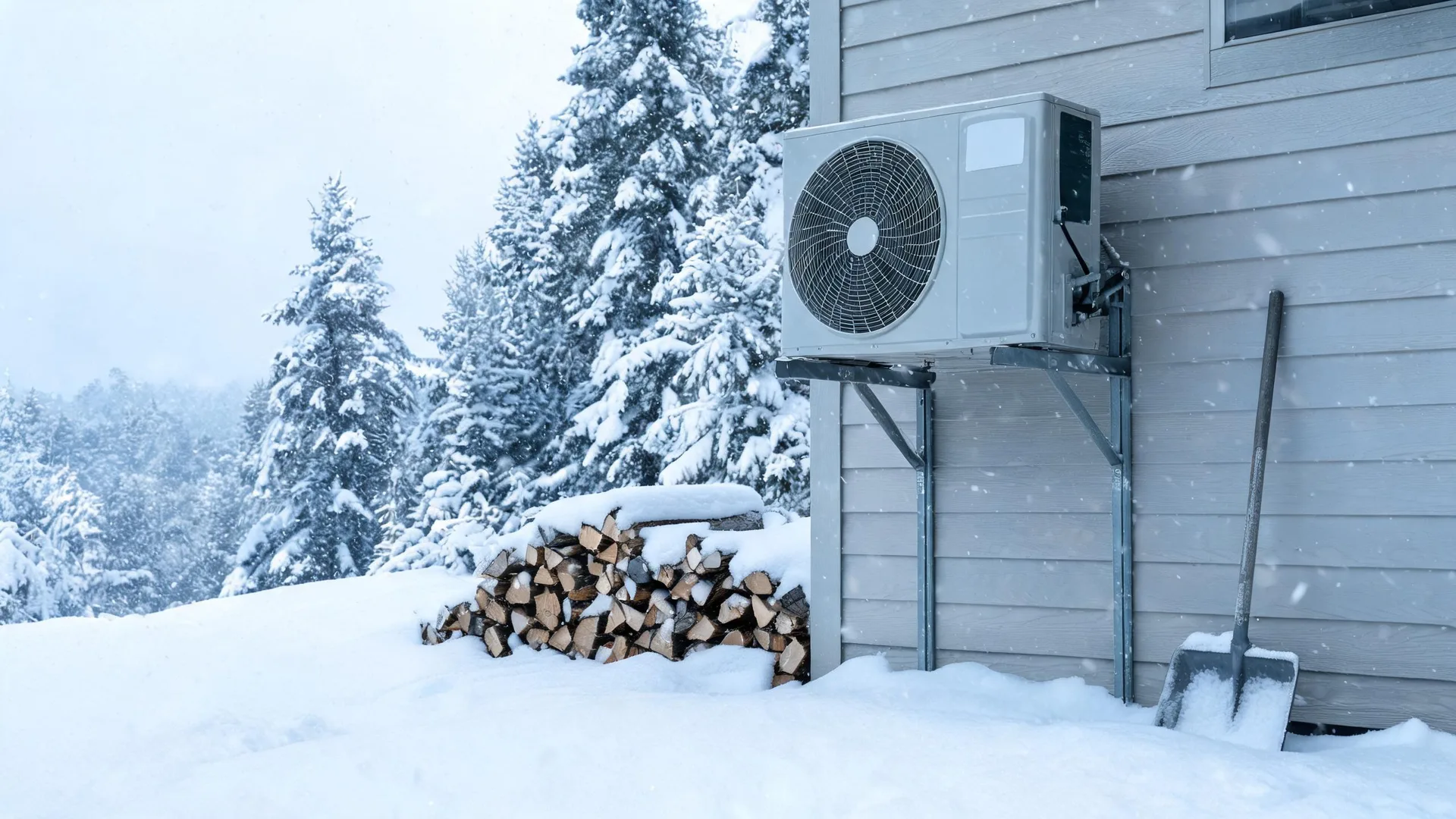
Low refrigerant rarely means a one-time top-off

A heat pump doesn't use up refrigerant. If a system is low, it's leaking somewhere, usually at a fitting, a coil, or a joint that's corroded through. Adding refrigerant without finding the leak just buys a few months before it's low again, and running low makes the compressor work harder than it should.

A heat pump in trouble rarely shuts off outright. It keeps running and just stops keeping up. Rooms feel a few degrees off no matter how long it runs, or the air coming out doesn't feel warm even though the system is on. Short cycling is another sign. It kicks on, runs a few minutes, shuts off, then starts again before the house has caught up. Ice building up on the outdoor unit beyond a normal defrost cycle is worth a look too. So is a system stuck blowing cold air in heating mode, which points to a reversing valve that isn't shifting right. A hum that wasn't there before, a clicking that repeats, a hiss near the lines, any of these is the machine telling you something before it fails outright.

A repair is worth making when the part that failed is a part on its own, something like a capacitor, a contactor, or a blower motor, and the rest of the system is sound. Those jobs fix the problem and the heat pump goes back to running the way it should. The harder calls come when the failure is in something central, the compressor or the reversing valve, because those parts sit at the core of how the whole system moves heat. A compressor replacement on an older unit often costs close to what a new system runs, and a tech will usually say so plainly rather than let you spend toward a dead end. Age matters alongside the failure. The same broken part means something different in a unit a few years in than in one that's been cycling for most of a normal lifespan. If a system has needed more than one repair in a short stretch, that pattern is worth weighing as much as the part in front of you right now.