



Is a mini split worth it in Clinton, IA

New system or replacementMini-splitClinton County, IA
Step 1 of 2

What ZIP code is the job in?

Is a mini split worth it in Clinton, IA?

You've been thinking about a mini split, maybe for a room addition, a garage, or a house that's never had central air. Clinton winters get cold enough that you're wondering if a mini split can actually carry the heat on its own, or if it only makes sense for summer. You want a straight answer before you spend money on something that might leave you cold in January.

Yes, if you size it and place it for how cold it gets here

A mini split earns its keep in Clinton County if it's matched to the job. For cooling, any mini split handles the sticky stretch from June through August without strain. The harder question is winter. Modern cold-climate mini splits still produce heat at low outdoor temperatures, but as the air outside gets colder, the unit works harder and puts out less heat for the same power used. In a Clinton winter, that means a mini split is a strong fit for one room, a sunroom, a basement, a garage, or a home without existing ductwork. For whole-house heating here, most homeowners keep it paired with their gas furnace rather than asking it to carry January alone.

  1. A cold climate heat pump pulls heat from outside air to warm your room.

  2. The compressor keeps running in cold weather instead of shutting off like older units.

  3. Indoor air passes over a coil, then blows out warm or cool.

  4. The system switches to cooling mode and reverses the cycle in summer.

What does a mini split actually have to do in Clinton?

  • Cooling runs June through August

    Three months of real cooling load means the mini split spends most of the year in heating mode, not AC mode.

  • Heat runs October through May

    Eight months of heat is most of the year. The unit needs to hold up on the coldest nights, not just the mild ones.

  • Power here costs 14.76 cents per kilowatt-hour

    At 14.76 cents per kilowatt-hour, a unit that runs efficiently in that eight-month stretch is what keeps the bill reasonable.

NOAA nClimDiv 1991-2020 · EIA-861 2025

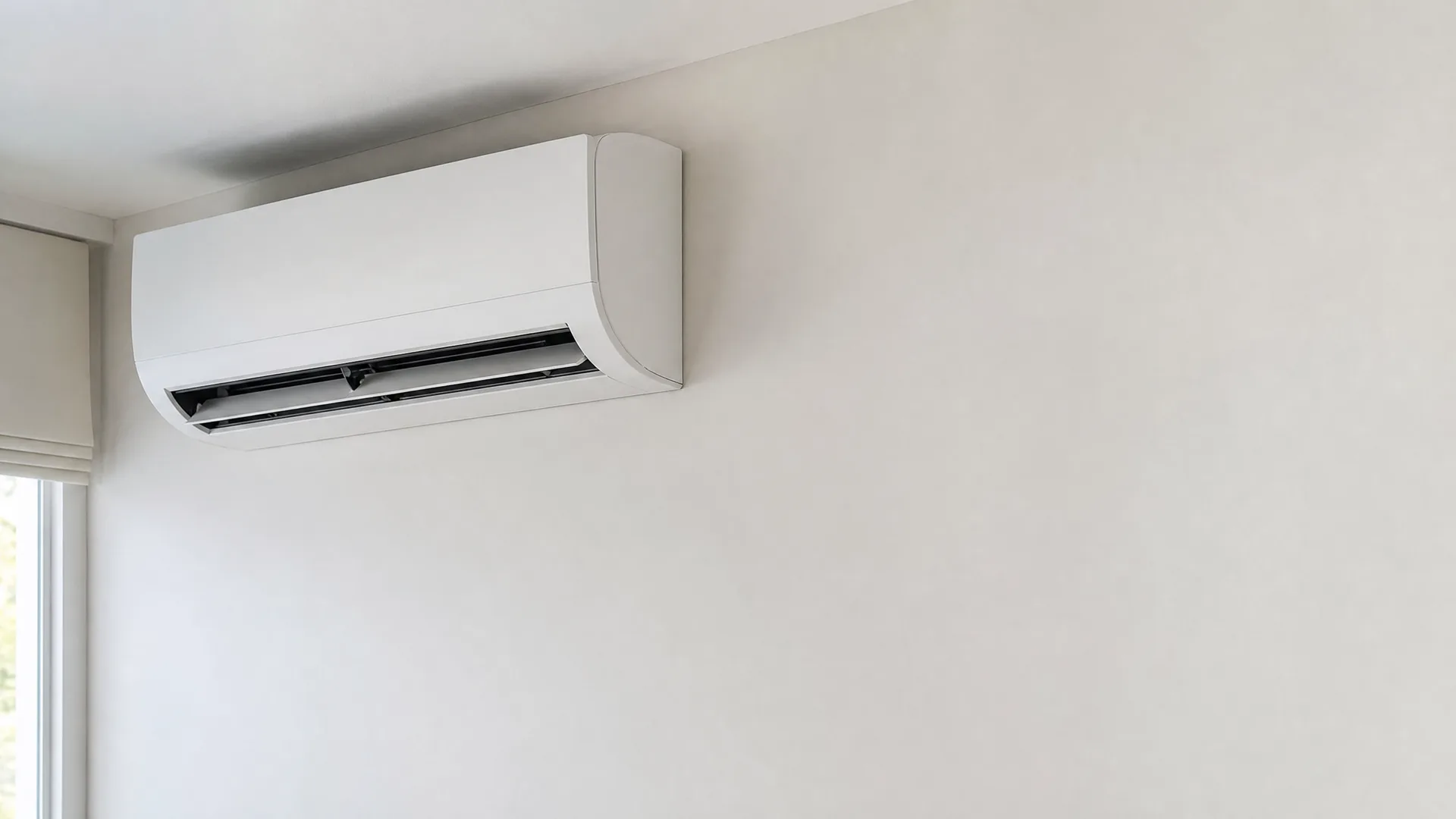
A white wall-mounted mini-split air conditioner unit installed near the ceiling on a plain light-colored interior wall, with a window edge at the far left.

Running it as your only heat

A cold climate mini split can carry a space through a Clinton winter on its own, but it has to be sized and installed for that job from the start. Below a certain temperature, output drops and the unit leans harder to keep up. If it's undersized or placed wrong, you'll feel it on the coldest nights, in the corners farthest from the indoor head.

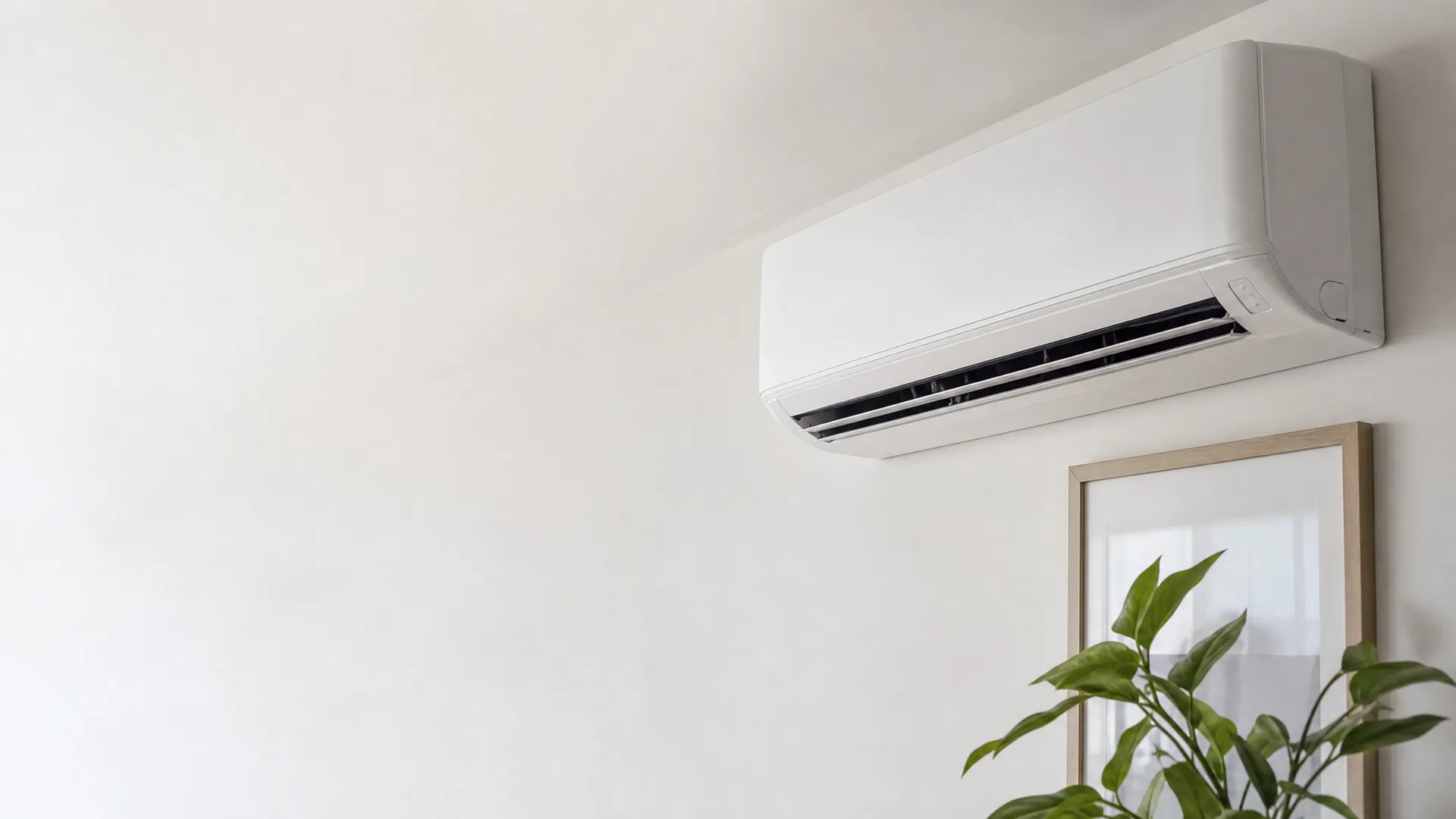
A white wall-mounted mini-split air conditioner near the ceiling of a white interior wall, with a framed picture and a green leafy houseplant in the lower right corner.

Running it alongside your furnace

Most houses in Clinton County already heat with gas, and a lot of mini splits here work as a second system rather than a replacement. The furnace covers the house, the mini split covers the one room that never gets warm or never cools down, like a garage, a bonus room, or an addition that's off the main ductwork. Less strain on the unit, and nothing for it to prove on a January night.

Is the room you're heating with it still cold in January?

If the mini split is carrying a bonus room, a garage, or an addition, you'd notice it first on the coldest nights. The unit runs constantly instead of cycling off, the air coming out feels cooler than usual, and the room never quite catches up to the thermostat setting. Some of that is normal for how these units work in deep cold. But if the room is consistently colder than the rest of the house, or the outdoor unit is icing up and not defrosting on its own, that usually means it was sized for cooling only, not for a Clinton winter. Left alone, you end up running space heaters to fill the gap, which adds to your power bill and still leaves the room uncomfortable.

A white wall-mounted mini-split air conditioner installed high on a beige interior wall below crown molding, with a window and light curtain on a black rod at right.

Running clean

This is what a mini split should look like after a winter of steady work. The casing is clean, the coil behind it isn't fighting through dust, and the unit can move the air it's rated for. If yours still looks like this, it's pulling its full output on the coldest days.


A wall-mounted mini-split air conditioner indoor unit with a dusty off-white casing and dark lower vent, installed high on a plain light-colored wall below a ceiling molding.

Overdue for service

Dust like this builds up over more than one season. A coil caked with it can't transfer heat the way it did when the unit was new, so it runs longer to hold the same room temperature. In a Clinton winter, that's the difference between keeping up and falling behind on a ten degree night.

A woman in a gray turtleneck sweater sits on a couch under a blanket indoors, looking out a window toward orange autumn foliage, with a bookshelf and plants behind her.
A woman with gray shoulder-length hair in a cream knit sweater sits in an armchair under a blanket, looking out a window at orange autumn foliage, with a living room, houseplant and wooden table behind her.
A woman with gray hair in a cream knit sweater sits on a light sofa by a large window, looking out at trees with autumn foliage, with a dark mug on a wooden side table nearby.
A gray-haired woman in a dark knit sweater sits on a couch with a cream blanket and patterned pillow, looking out a window toward yellow and orange autumn trees, with wooden shelves and plants in the room behind her.

Get matched with a mini split pro in Clinton County

A mini split that's sized and installed right for a Clinton winter should keep up without straining, and one that's undersized or placed wrong will show it on the coldest nights, running constantly and losing ground. That gap comes down to the installation, not the equipment itself. Load calculations, where the outdoor unit sits, how the line set is run, whether the indoor head can actually reach every corner of the room. A local contractor who installs these every season in this county has seen which setups hold through January and which ones come back as complaints. If you're deciding whether a mini split makes sense for your space, or you already bought one and want it put in right the first time, getting matched with someone who knows this climate's demands is worth more than guessing. That's what the button above does. Your winters are long enough that the install is worth getting right.

Sized for the coldest night, not the average one

A mini split that's right for Clinton isn't sized off a mild April day. It's sized off the lowest temperature the room sees in January. A contractor doing a load calculation looks at the square footage, the windows, and how the room is built, then picks a unit whose rated output at low temperatures still covers it. Skip that step and the unit might handle November fine and still fall behind once the real cold sets in. The sizing decision happens once, at installation, and it's the one that determines whether the system can actually do the job you're asking of it.

Where the outdoor unit sits changes how it runs

The outdoor unit needs clear space around it to pull in air, and it needs to sit where snow won't bury it or drift against it. An installer who's worked around Clinton winters will set it up off the ground, away from the spot where roof runoff turns to ice, and clear of where a snowblower or shovel throws snow. A unit that's fighting through drift or packed ice around its base can't pull air the way it's rated to, no matter how well it was sized on paper. Placement is part of the installation, not an afterthought to it.

A dusty, stained wall-mounted mini-split air conditioner indoor unit near the ceiling on a plain beige wall, with visible lint buildup at its intake grille.
Before you get your mini split installation
A white wall-mounted mini-split air conditioner installed high on a beige interior wall near the ceiling, with a white-framed window at the left edge.
After you get your mini split installation

Backed up by gas furnace

If the mini split carries most of the year and a furnace covers the coldest stretch, neither one works as hard. Worth checking if the sizing and layout actually split the load that way.

Find a local pro

Running alone, all winter

A mini split as the only heat has to hold the room on the coldest January night, not just the mild ones. That takes a unit and an install sized for that specific job.

Find a local pro

Where a Mini Split Fits in Clinton

Right for your place

  • Most Clinton County homes already have a gas furnace, and a mini split can cover one room or addition without touching the furnace or ductwork.
  • If the space never had ducts run to it, like a bonus room or garage, a mini split skips the cost of extending the duct system.
  • A cold climate model keeps producing heat well below freezing, so the room it serves isn't left to a space heater in January.
  • Summers here get sticky enough that the same unit covers cooling for that room in July without a separate window AC.
  • Because it conditions one zone, you can set that room's temperature on its own instead of running the whole house to fix one cold spot.

Not the right fit

  • If every room in the house needs heat, a single mini split head won't carry the load the way a furnace tied to full ductwork does.
  • A standard mini split, not rated for cold climates, loses output as the temperature drops and can struggle on the coldest nights here.
  • A unit sized off the room's square footage without a proper load calculation can run constantly all winter and still lose ground.
  • If the furnace already heats the space well, adding a mini split there mostly adds cooling you may not need for three months a year.
  • Placement matters. A head mounted where it can't move air across the whole room leaves part of that room cold no matter how hard it runs.
A two-story house with light gray siding and a small front porch, framed by leafy trees and shrubs, with a concrete walkway leading from a wet sidewalk across a green lawn in low sunlight.

Summer air here averages a 63°F dew point across June, July and August, per NOAA climate data for Clinton County. That's sticky enough that your mini split isn't just cooling the room, it's pulling a lot of water out of the air to get comfort you can feel. On a muggy afternoon you'll notice the unit cycling less and running longer and steadier instead, which is normal and actually drier than quick on-off cycling. If the room still feels damp with the temperature set where you want it, the unit may be oversized for the space or short on refrigerant charge.

NASA POWER T2MDEW

A man in a dark blue shirt stands in an open front doorway of a stucco and wood-clad house, facing a blond woman seen from behind in the foreground on a stone walkway.

So is it worth it in Clinton

A mini split earns its keep here when it's matched to the job. Covering a room addition or a garage that never had ducts, backed up by the furnace on the coldest nights, it can run for years without anyone thinking twice about it. Asked to carry a whole house through January on its own, it needs to be sized for that from day one, not scaled up later.

The sizing and the install are what decide which of those you get. A contractor who works on these units every winter in Clinton County has seen which ones hold up on the coldest nights and which ones were never set up to. Getting matched with one means someone local looks at your room, your layout, and what you're actually asking the unit to do, then reaches out to go over it with you.

Interior corner of a living room with a sheer-curtained window, a light wood console table holding a vase of greenery and a shallow bowl, a woven basket on the lower shelf, and a blurred upholstered sofa and dark wood table in the foreground.
Elevated view over a shingled roof peak and treetops toward a wide river winding through flat farmland and woods under a clear sky.

A pro who works on mini splits

Get a licensed local pro

You only hire the pro if you want to.

A mini split that's undersized for your room won't show it until January, when it's running flat out and still losing ground. A local contractor who installs these every winter can size it right the first time, so you're not finding out the hard way.