Gas heats most of Ames
Utility gas heats 62.6% of homes in Story County, with electricity a distant second at 29.0%. A furnace is still what most houses here are built around.
Takes about a minute. No obligation.
Utility gas heats 62.6% of homes in Story County, with electricity a distant second at 29.0%. A furnace is still what most houses here are built around.
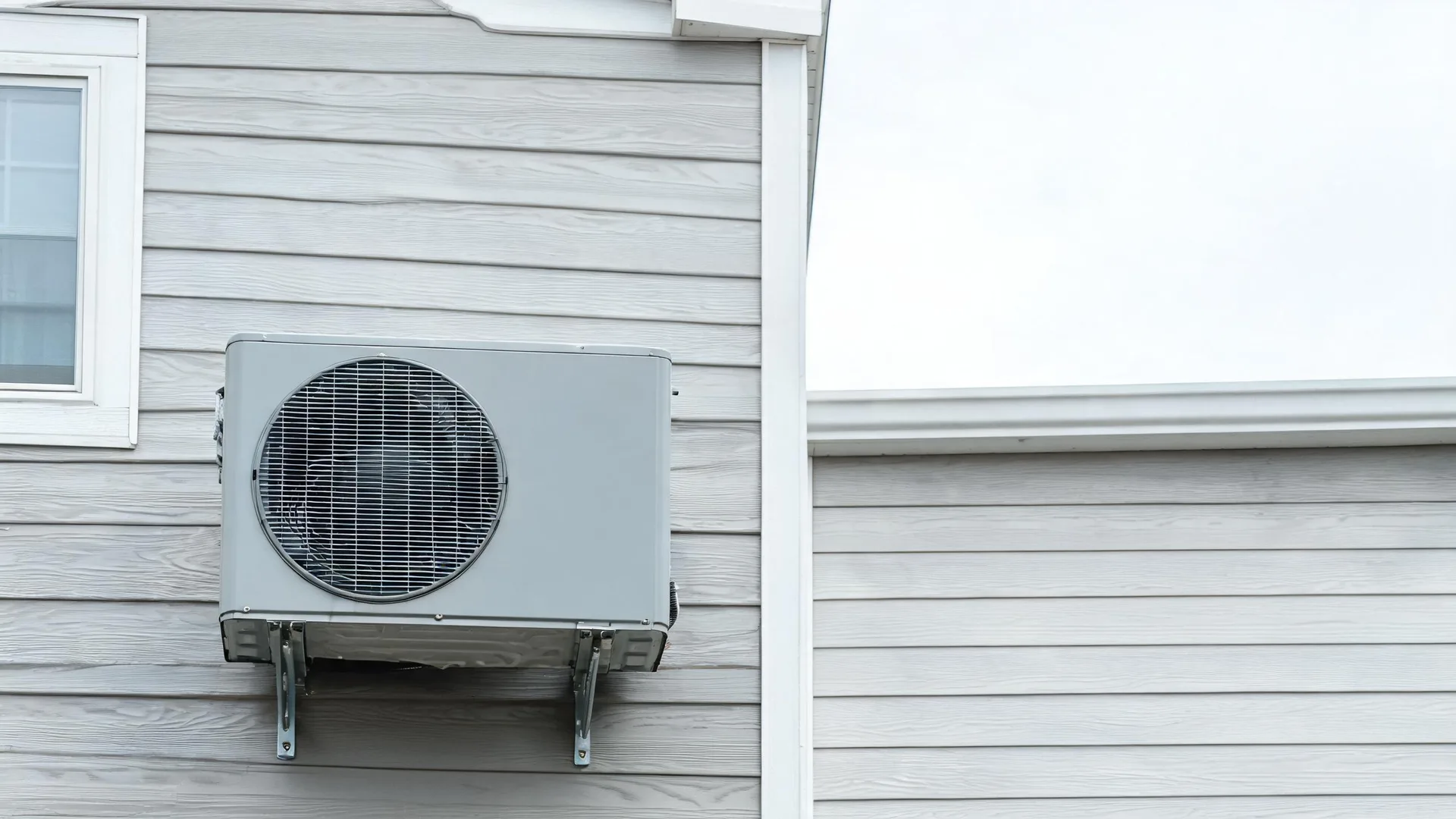
Most homes going this route are adding cooling or heating a room the furnace and ducts don't reach well, not switching the whole house off gas. Where the unit goes and what it needs to run are worth working out with whoever installs it.
NOAA nClimDiv, 1991–2020 normals
Hail and wind both hit Story County a fair number of times between 2015 and 2024.
None of that changes what a mini split needs. A standard outdoor unit rated for normal weather is enough.



Story County sits in climate zone 5A, where winters set the bigger load and any new split system has to clear federal minimums of 14.3 SEER2 for cooling and 7.5 HSPF2 for heating. A ductless mini-split falls under that same split-system rule. There's no separate, looser standard for going ductless. So the unit going in has to meet the same bar as a central heat pump would, whether it's covering one room or several.
Cooling runs June through August here. If the mini split is going in to cover a room the furnace can't reach, May is the month to get it done, before the heat shows up and the job gets queued behind everyone else's.
Find a contractor
Cooling here runs about three months, June through August, with afternoon highs averaging 82. That's not a long season and not a hot one as these things go. A mini split sized to the room it's covering will handle that load without strain. The bigger job it has is winter, since Story County sits in a zone where heating carries the greater share of the work. Either way, nothing about the hours this unit will log points toward anything other than a standard size.
A heat pump loses capacity as the outdoor temperature drops, and the spec sheet should show the output at a cold design temperature, not just a mild one. A unit that looks evenly matched on a fall afternoon can fall off hard on the coldest night of the year. Ask what carries the room at that point, the mini split alone or a backup source.
Sizing a mini split means working out how much heat the room loses in winter and gains in summer, from its walls, windows and exposure, not guessing from floor space. A unit too big cycles on and off instead of running steady, and won't pull humidity down right. Whoever installs it should walk through that math with you, room by room, before anyone picks a model.
A mini split sized right runs long, slow cycles. It brings the room down to temperature and holds it there, mostly moving at low speed rather than shutting off and starting back up. Oversize it and the unit blasts the room down fast, shuts off, then kicks back on a few minutes later. That short cycling is why a room can still feel clammy even when the thermostat reads cool. The coil never runs long enough to pull the moisture out of the air. Undersize it and the opposite happens. It runs flat out and never quite catches up on the hottest or coldest days. Either way the compressor wears faster, since it's built to cruise at low speed most of the time, not cycle hard or run flat out.
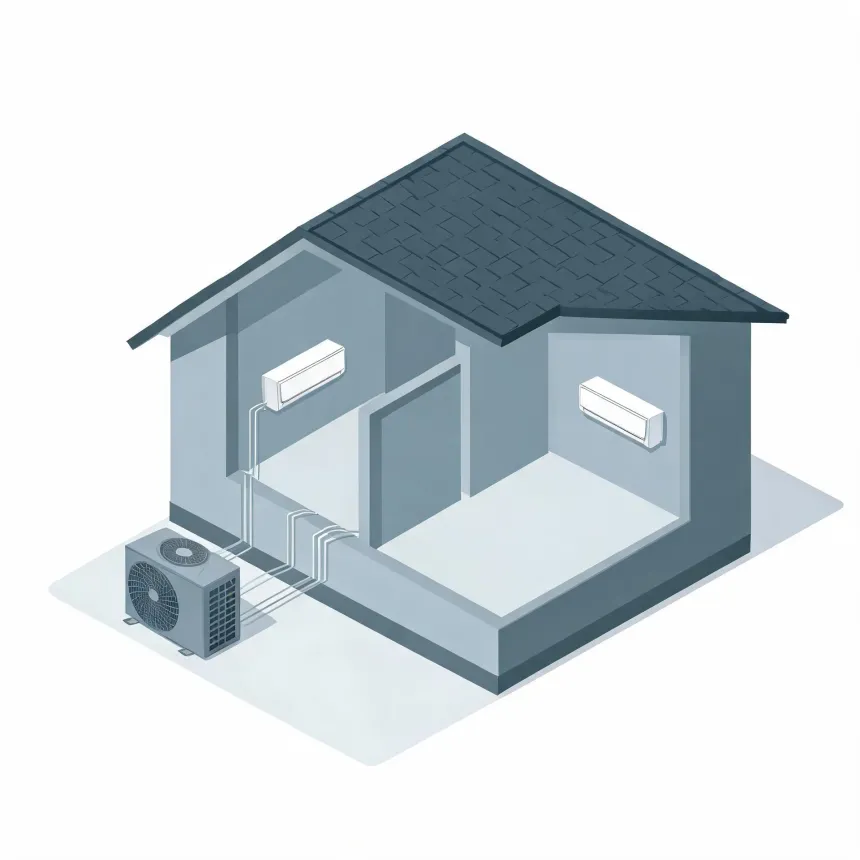
Installation day starts with the line set, not the indoor head on the wall. The installer runs refrigerant line, a drain line, and a power whip from the outdoor unit to the indoor unit, usually through one hole drilled in the wall. That path matters. Every bend in the line is a place oil can pool or flow can suffer. Once the indoor head is mounted and the outdoor unit is set on its pad, the lines get connected and the system is pressure tested before any refrigerant goes in. Then the installer pulls a vacuum on the line set to clear out moisture and air. Either one left behind turns to acid or ice once the system runs. Only after that holds does refrigerant get released into the lines. Last comes commissioning. The installer checks the charge against what the manufacturer specifies, confirms the condensate drain actually drains, and runs the unit through both heating and cooling to see that it responds right. A system that skips the vacuum or gets its charge eyeballed instead of measured is the one that shows up again later with a slow leak or a compressor that failed early.