A lit residential street at dusk featuring large two-story brick houses with glowing windows, mature trees, and a street lamp.

Mini Split Installation in Anamosa, IA

Tell us about the job

Takes about a minute. No obligation.

New system or replacementMini-splitJones County, IA
Step 1 of 2

What ZIP code is the job in?

LP gas runs a lot of the furnaces here

Jones County splits mostly between utility gas and bottled or LP gas, with gas furnaces common in either case. A mini split doesn't replace that furnace. It gives you cooling and a second way to heat the rooms you use most, without touching the gas line or ductwork already in place.

What this means for sizing the job

A mini split installer still needs to know how your home is heated now, because that affects how the new system gets used. A house that leans on LP gas all winter may only need the mini split for summer cooling and shoulder season heat, which changes which rooms make sense to cover.

8 months
October through May, your system heats
3 months
June through August, it cools
15°F
the average winter night it heats against
81°F
the average summer afternoon it cools against
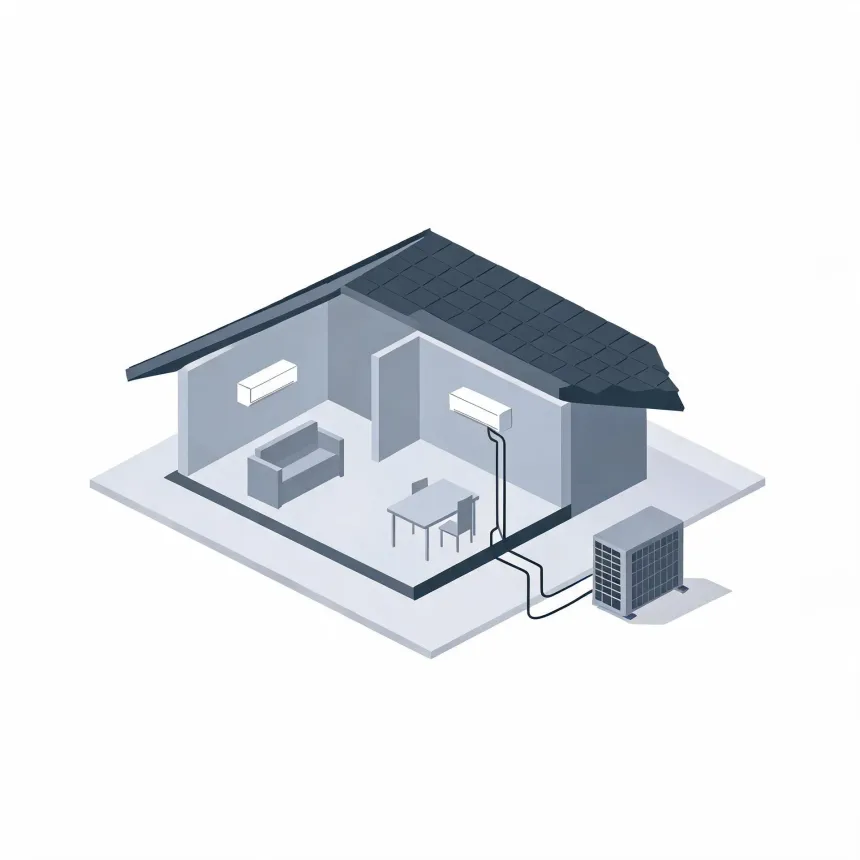
Isometric illustration of a cutaway house interior with sofa, table and chair, two wall-mounted indoor air conditioning units connected by lines to an outdoor condenser unit beside the building.
Your system heats October through May and cools June through August.

NOAA nClimDiv, 1991–2020 normals

Iowa electricity ran 13.40 cents per kilowatthour in 2024, cheaper than most states.

A mini split still earns its keep on comfort and backup heat, just don't expect the power bill alone to pay for it fast.

Get the mini split in before June, not during a 81°F afternoon

Cooling runs June through August
Summer afternoons average 81°F
67 damaging wind events from 2015 to 2024

Half the homes in Jones County were built in 1970 or earlier. A house that age usually wasn't built with the kind of wall and ceiling space a ducted system expects, and the wiring may not have a dedicated circuit waiting for a new unit. That's part of why mini splits fit older homes well. Each indoor head mounts on the wall or ceiling of the room it serves, run by a small conduit back to the outdoor unit, so there's no duct work to open walls for. The installer still needs to check your electrical panel and wall construction before sizing the job, because what's behind the wall in a house this age isn't something to guess at.

A standard mini split is right for Anamosa homes

Jones County sees its share of wind, hail and winter storms, but none of that changes what a mini split needs to do here. A standard size and efficiency unit handles the cooling and backup heat this area calls for. No reason to size up or pay for more than that.

Find a contractor
A man in a cap, dark jacket and work pants carries a worn canvas tool bag up stone steps toward a dark green front door, with a shrub in a green planter beside the entry.
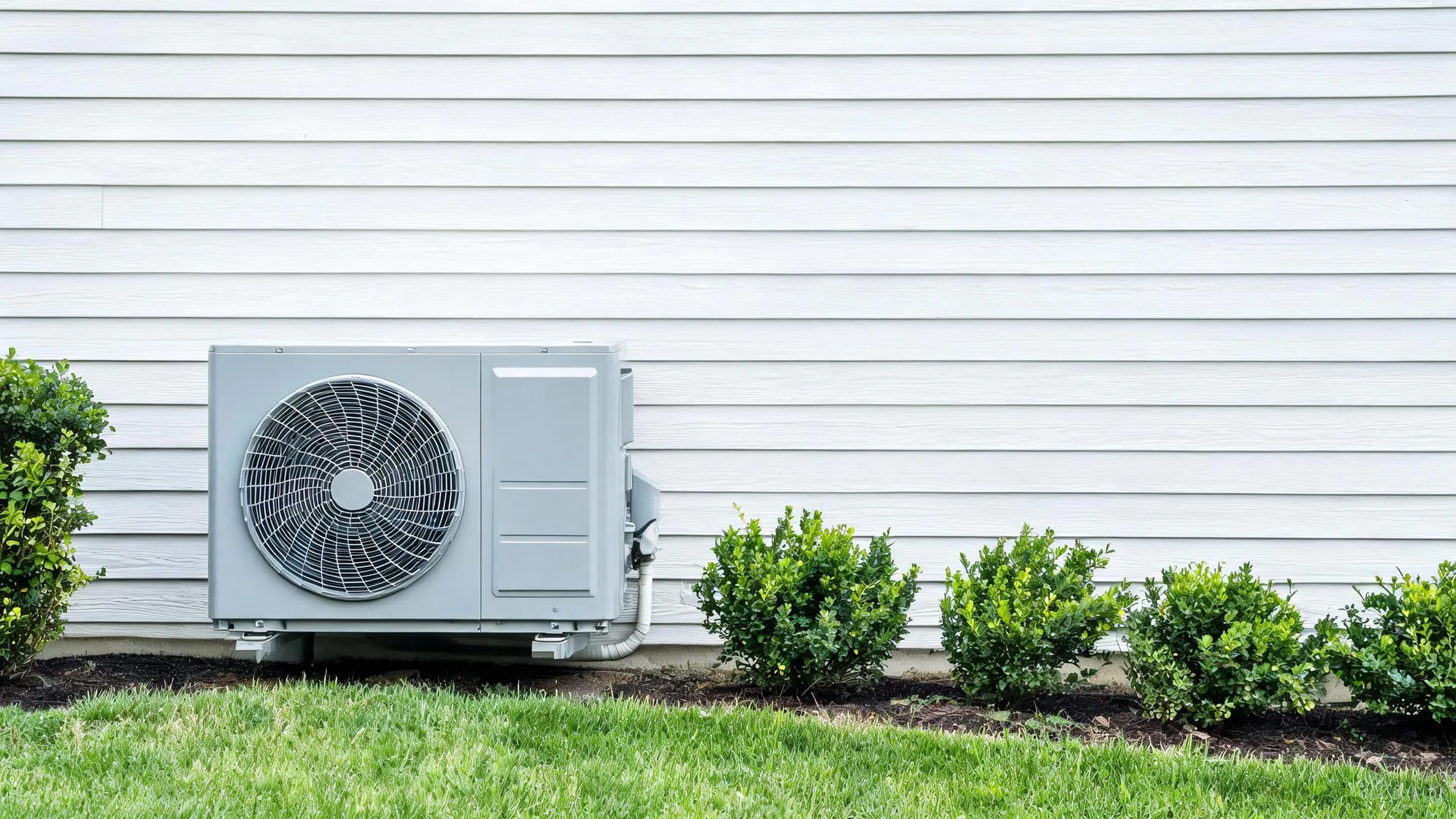
A white outdoor air conditioner condenser unit mounted on metal wall brackets against gray horizontal siding, with a blue sky and white clouds behind it.

Three months of real work, the rest easy

Cooling here runs about three months, June through August, with afternoons averaging 81°F. That's a short season for a condenser to work against. The rest of the year it sits idle or covers light heating in spring and fall. A mini split built for this area doesn't need to be oversized or top-tier to hold up. What wears a system down is running hard for long stretches, and that's not what's asked of it in Jones County.

Most old systems don't leave

If a mini split is adding cooling or backup heat alongside the furnace, there's no old system to remove. The furnace stays, the gas line stays, nothing about the existing setup changes. The only removal question comes up when a mini split is replacing an older mini split or a window unit, and even then it's just that one unit coming down.

What comes down, comes down whole

An old outdoor condenser gets disconnected from its line set and hauled off. The indoor head unmounts from the wall or ceiling, and the installer patches the small hole left behind for the conduit. None of it involves opening walls or touching ductwork, since a mini split never ran through any.

The number of indoor heads is what moves the price most, since each one is its own line set, its own mount and its own labor, not just an accessory off the main unit. A single-zone system is a simpler job than a multi-zone covering several rooms, even before the equipment cost is counted. Where the outdoor unit can sit also matters. A short, direct run to the indoor head costs less than one that has to snake through a longer conduit run or around obstacles. Line set length adds up fast once the outdoor unit can't go right outside the room being served. The electrical work behind the wall plays a part too. A dedicated circuit that already exists is a different job than one that has to be added, and that depends on the panel, not on the mini split itself. None of this is guesswork an installer skips. It's what they're pricing when they walk the house before quoting anything.

Installation day starts with the outdoor unit going in first, set on a pad or mounted bracket away from the wall so air can move around it. Then comes the line set, run from the outdoor unit through a small hole drilled in the wall to wherever each indoor head is going. That hole gets sealed around the conduit when the run is done, so weather and pests stay out. Indoor heads mount next, leveled on brackets screwed into studs or ceiling joists, then connected to the line set and the electrical. Once everything's in place, the installer pulls a vacuum on the line set to clear out air and moisture before the refrigerant ever flows, because any left behind will cause problems later. Last comes the test run, checking that each head is cooling and heating the way it should before calling the job done.