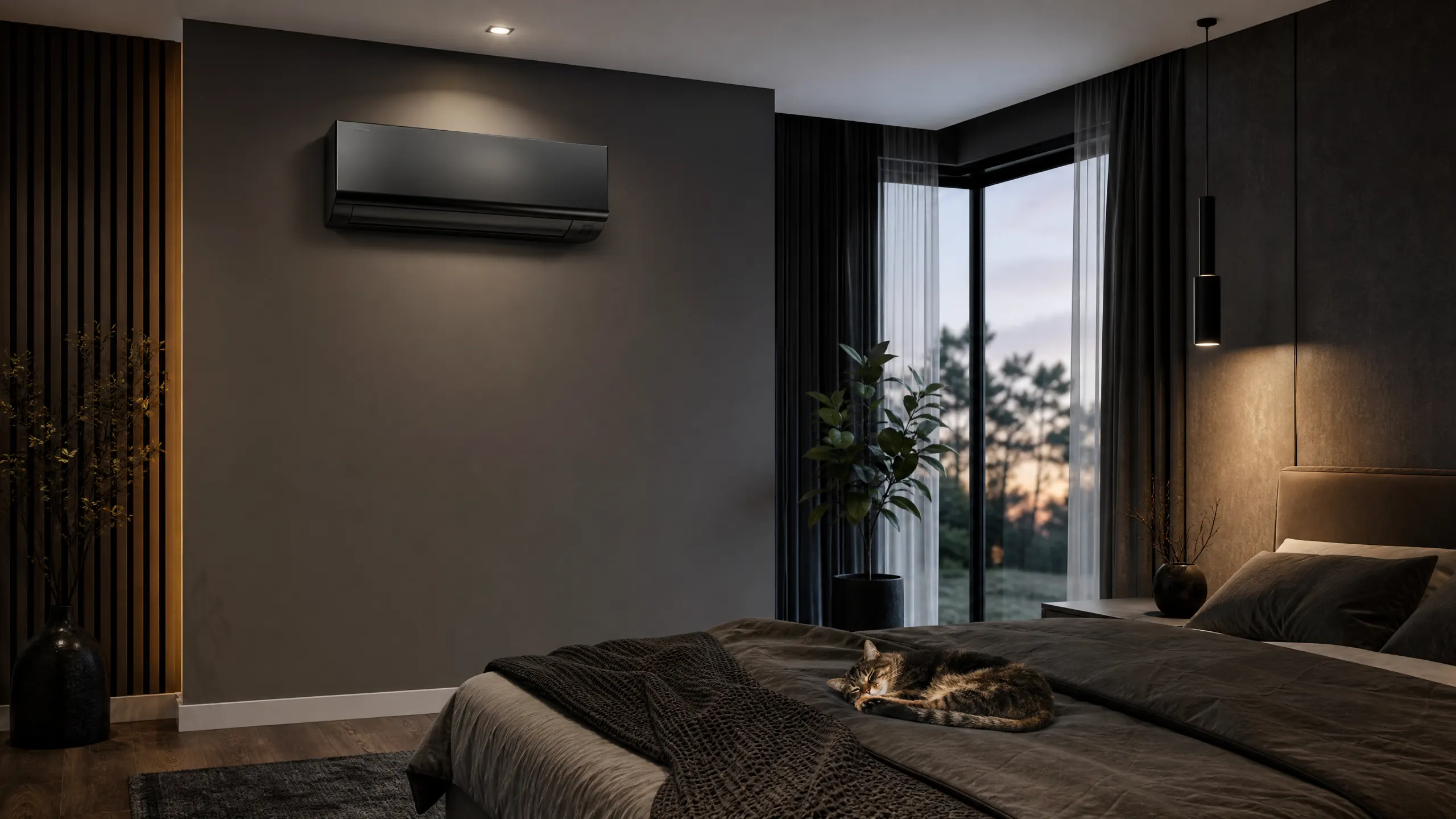





A tabby cat rests on a made bed in a dark modern bedroom equipped with a wall-mounted split air conditioner.

Mini Split Installation in Burlington, IA

Tell us about the job

Takes about a minute. No obligation.

New system or replacementMini-splitDes Moines County, IA
Step 1 of 2

What ZIP code is the job in?

Utility gas heats 67.5% of homes in Des Moines County, and most of those run on a furnace and ducts. A mini split doesn't replace that furnace. It handles what the ducted system doesn't reach well, like a bonus room, a finished garage, or an addition built after the ductwork went in. Some homeowners install one head for a single room. Others add several and let the mini split carry most of the day to day heating and cooling, leaving the furnace for the coldest stretches. Either way it runs on electricity, so it draws on the panel rather than the gas line.

8 months
October through May, your system heats
4 months
June through September, it cools
19°F
the average winter night it heats against
84°F
the average summer afternoon it cools against
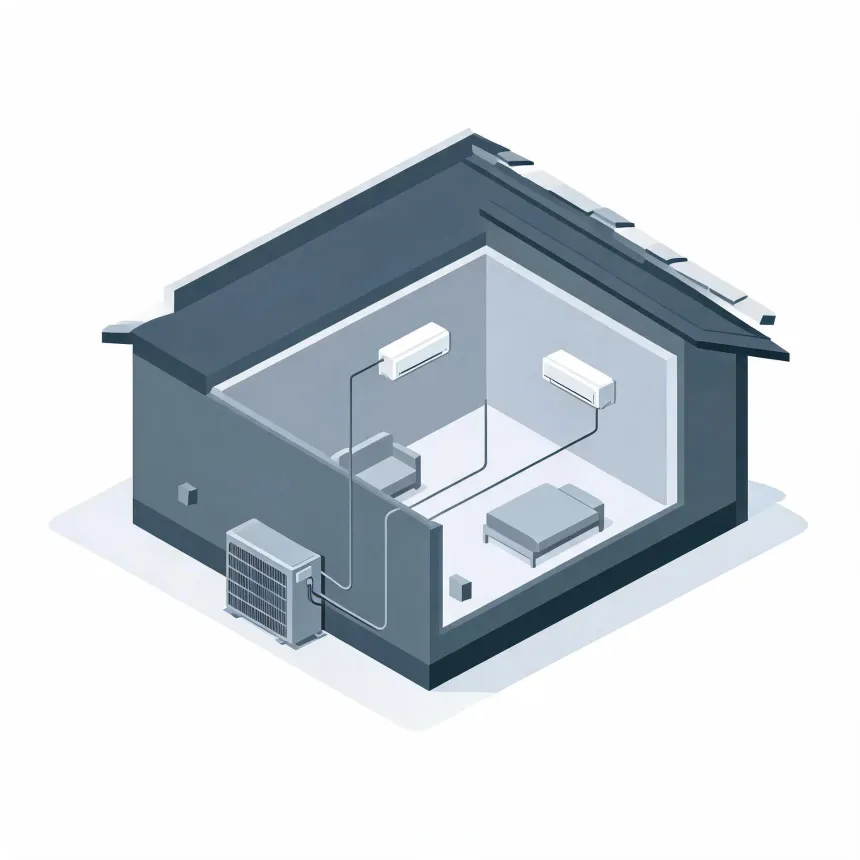
Isometric illustration of a cutaway house interior showing two wall-mounted indoor air conditioning units connected by line sets to an outdoor condenser unit beside the exterior wall.
Your system heats October through May and cools June through September.

NOAA nClimDiv, 1991–2020 normals

The old window unit or space heater in that room doesn't get hauled off by the installer unless that's part of the job.

Ask what happens to it before install day, since removal and disposal isn't automatic.

Half the homes here were built by 1959, and a mini split has to fit that house

Half the homes here were built by 1959
Cooling runs June through September
Summer afternoons average 84°F

Electricity in Iowa runs about 13.4 cents a kilowatt-hour, cheaper than most of the country. That changes how to think about a mini split here. In places with expensive power, the efficient model pays for itself fast just from the electric bill. Here that payback stretches out further, so it shouldn't be the only reason to pick one unit over another. What matters more is whether it's sized right for the room and holds up through an Iowa winter without strain. A contractor can tell you which models do that.

Get it in before June, not after

Cooling in Des Moines County starts in June and runs about four months, through September. If the mini split is going in before then, May is the month to get it done. Installed now, it's ready for the first warm week instead of getting scheduled around one.

Find a contractor
A man in a cap, dark jacket and olive pants climbs porch steps toward a green front door, carrying a canvas tool bag filled with hand tools, with a potted shrub to the right.
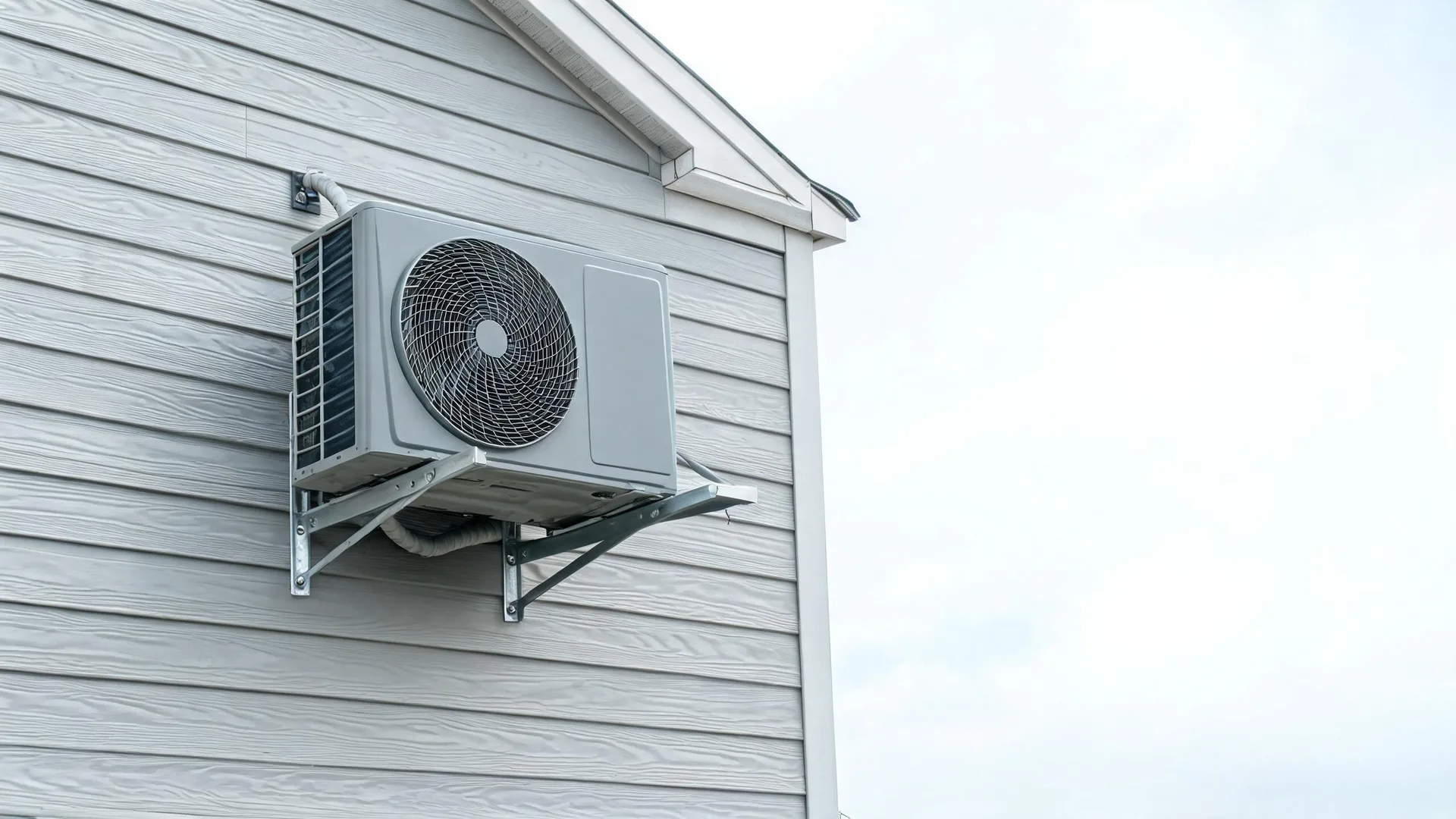
A beige split-system air conditioner outdoor condenser unit mounted on metal wall brackets atop a stucco wall.

The room comes first, then the install

A wall where the old place runs copper pipe, old wiring, or framing that doesn't match a newer build changes where the lines can run and where the head can go. Have the contractor walk the actual room before they quote the job, not just the square footage.

The rating describes the compressor, not the room

A SEER2 number comes from lab testing over a full cooling cycle, not from how the unit handles the hottest afternoon or the coldest night. A mini split with a high rating still struggles if the head is undersized for the room, or wastes energy cycling on and off if it's oversized. The rating describes the equipment. It doesn't describe whether that equipment fits the space it's heating or cooling.
The more efficient unit costs more before it saves anything

A higher rated mini split uses a more efficient compressor and a variable speed drive, and both add to the price of the equipment itself. That cost shows up on install day, before any energy gets saved. Whether the higher price is worth paying back depends on how many hours a day the system runs and how many years it stays in the wall, not on the rating by itself.

Sizing a mini split comes down to a heat load calculation, not a square footage chart. A contractor measures the room, checks the windows and how they face, looks at the ceiling height, and accounts for what's on the other side of the walls. Skip that step and the guess usually runs big, because it feels safer to size up. It isn't. An oversized head cools the room fast, shuts off, then starts again a few minutes later, and that cycling wears on the compressor more than running steady does. It also leaves the room clammy, since a unit that shuts off quickly never runs long enough to pull moisture out of the air. An undersized one has its own problem. It runs flat out and still can't hold the temperature on the hottest or coldest days. The right size runs long steady cycles and keeps up without straining, and the only way to land on it is by calculating the load for that specific room.

When you're getting quotes, ask each contractor what they're actually comparing. Some will quote by the ton or by a flat per-head price, which skips over whether that capacity matches the room. Ask what's included in the install, like the line set, the condensate drain, and the electrical whip to the outdoor unit, since those get priced separately by some contractors and bundled by others. Ask about the warranty on the compressor versus the labor, because those often run different lengths, and a long parts warranty means little if the labor to use it isn't covered. Ask how many indoor heads the outdoor unit is rated to run, and whether adding a room later means a new outdoor unit or just another head on the existing line. A quote that answers these without you prompting is usually the one that was built around the room, not around moving a unit.