A dark two-story house with a covered front porch and shrubs, framed by large leafy trees, photographed from ground level across a mown green lawn with blurred grass in the foreground.

Mini Split Installation in Cedar Rapids, IA

Tell us about the job

Takes about a minute. No obligation.

New system or replacementMini-splitLinn County, IA
Step 1 of 2

What ZIP code is the job in?

Linn County sees real storm damage

Linn County recorded 344 severe weather events between 2015 and 2024. That includes 156 damaging wind events, 139 hail events, and 17 tornadoes. An outdoor condenser sits outside through all of it, exposed to hail and flying debris in a way a furnace in the basement never is.

Power doesn't always come right back

15% of Iowa households went at least a full day without power in 2024. A mini-split, like any electric heating or cooling system, stops working the moment the power does. Where the outdoor unit goes and what backup you plan for matters more here than in a place where outages are rare.

8 months
October through May, your system heats
3 months
June through August, it cools
15°F
the average winter night it heats against
82°F
the average summer afternoon it cools against
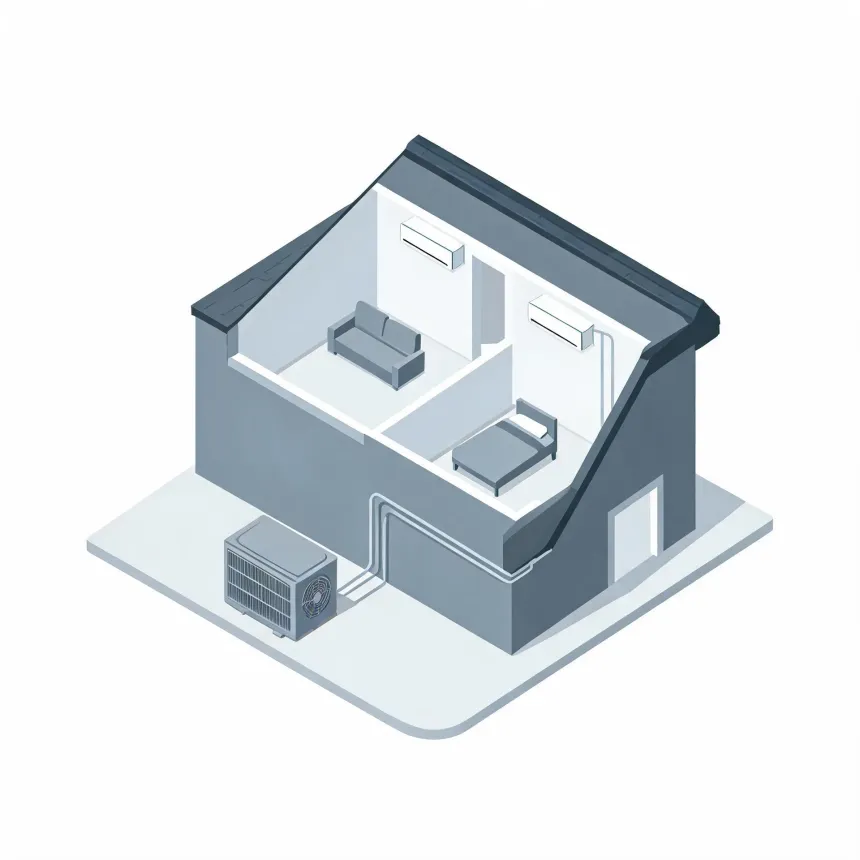
Isometric cutaway illustration of a two-room house showing two wall-mounted indoor air conditioning units connected by line sets to an outdoor condenser unit on the ground outside.
Your system heats October through May and cools June through August.

NOAA nClimDiv, 1991–2020 normals

Gas heats 74% of homes in Linn County.

A mini-split works alongside a gas furnace here, not in place of it, so the install has to account for both.

Three months of cooling, pushed hard every time it runs

Cooling runs June through August
Summer afternoons average 82°F
156 damaging wind events from 2015 to 2024

Linn County falls under zone 5A, a cool, humid climate where the heating load outweighs the cooling load. Any mini-split installed here, ductless or not, has to meet the federal split-system heat pump minimums: at least 14.3 SEER2 for cooling and 7.5 HSPF2 for heating, if it was built on or after January 1, 2023. That floor applies everywhere in the country, but it matters more here because the unit will spend more hours heating than cooling. A system rated well for cooling and weak for heating is working against the climate it's going into. The federal tax credit for qualifying heat pumps is available on top of meeting that standard, separate from it.

Plan for the storm before the install, not after

Talk through outdoor unit placement with the installer before anything goes in. Somewhere it's shielded from wind-driven hail and falling branches, not just wherever the line run is shortest. If you're set up to run a generator, confirm the mini-split and your gas furnace's blower are both on that circuit, so a day without power doesn't mean a day without heat or cooling either.

Find a contractor
A man in a cap, dark sweatshirt and tan work pants, seen from behind, climbs porch steps toward a dark green paneled door while carrying a canvas tool bag.
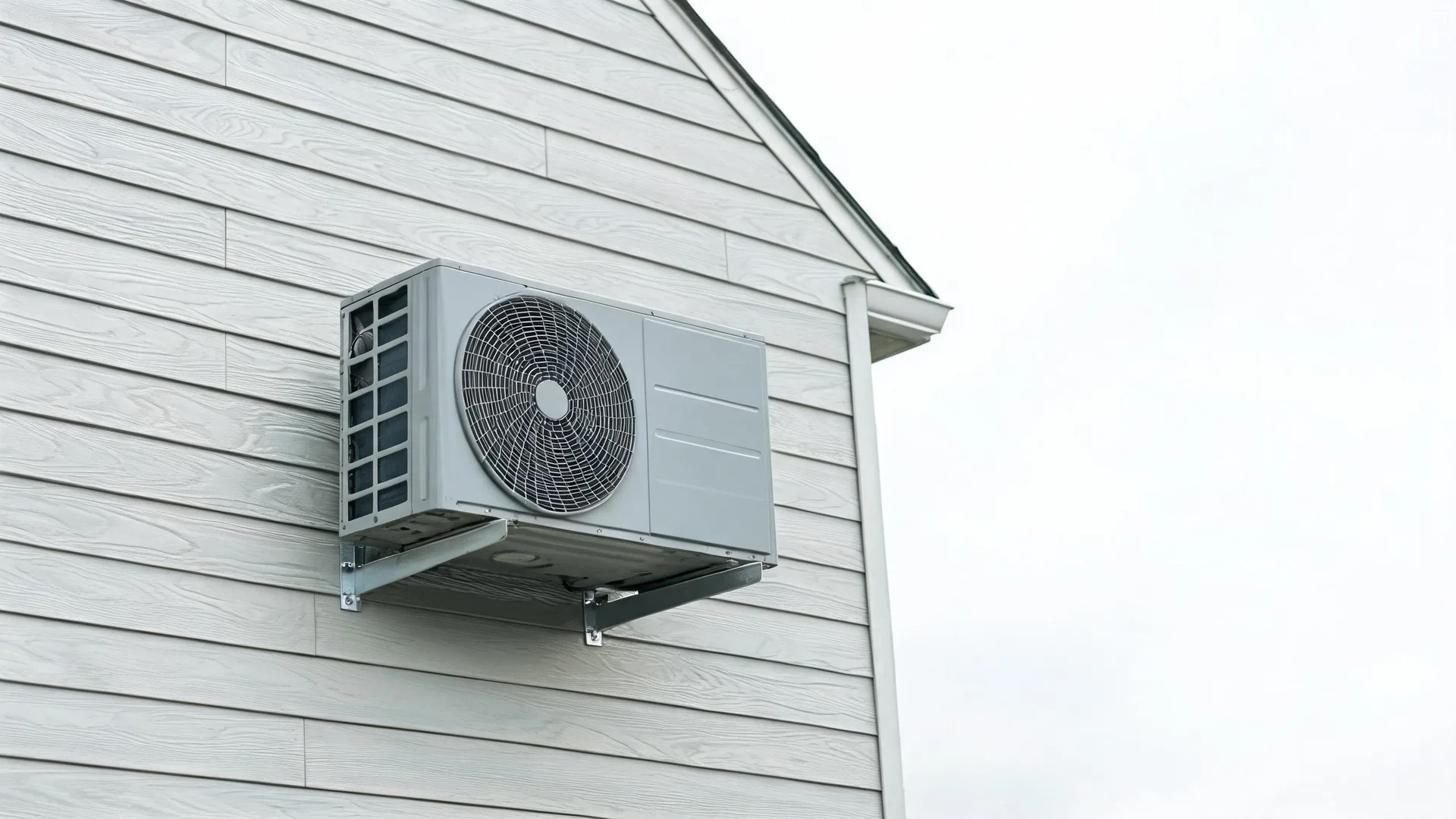
A white outdoor air conditioner condenser unit mounted on metal wall brackets against gray horizontal siding, with a blue sky and white clouds behind it.

Get it in before June, not during the first heat wave

Cooling here runs June through August, so May is the month to get this done. Install before then and the unit is already tested and running when the first hot week hits, instead of going in while the room is already uncomfortable. Waiting until winter is close is worse. Overnight lows average 15°F across December, January and February, and that kind of cold is hard on a mini-split's heating capacity. If this one is meant to help carry the load alongside the furnace, it needs time on the wall before that cold sets in, not a rushed install during the first cold snap.

Ask what each number covers

A quote on a mini-split should break out the equipment, the line set, the electrical work and the labor separately. Two bids with the same total can split that cost very differently, and the breakdown tells you whether you're comparing the same scope of work or not.

Ask how they're sizing it

A contractor should size the unit to the room using a load calculation, not a rule of thumb based on square footage alone. A unit sized too large will short cycle, turning on and off without running long enough to pull moisture out of the air. One sized too small will run constantly and still struggle to keep up on the hottest or coldest days.

Sizing a mini-split starts with a load calculation, not a tape measure. A contractor looks at the room's square footage, but also the ceiling height, how many windows it has and which way they face, how well the walls and attic are insulated, and what else in the room gives off heat. Two rooms the same size can need different sized units once all that's accounted for. Get the size wrong and the unit fights the room no matter how well it was installed. Too big, and it blasts the room down to temperature fast, shuts off, then kicks back on a few minutes later, cycling like that all day. That short cycling means it never runs long enough to pull humidity out of the air, so the room feels cool but clammy. Too small, and it runs nearly nonstop, straining to keep up and still falling short on the hardest days of the year. The right size runs in longer, steadier stretches, holding the room at temperature without either problem.

Given how hard this unit will run, size it for the worst three months, not the mild ones. An afternoon in the 80s in July asks more of a mini-split than the same unit would give in a milder climate, and it does that for weeks at a stretch, not just on the odd hot day. A contractor sizing on square footage alone can get close enough in a gentler climate and still leave you short here. Ask for the load calculation, and ask how they weighed the summer load against the winter one, since this system has to carry both. The unit that's right for this room is the one that holds up through a full run of hot afternoons, not just the first one.