Most homes here run on gas
Utility gas heats 62.9 percent of homes in Clinton County. Another 17.2 percent run on bottled or LP gas. Electric heat is the rest of the picture at 16.5 percent.
Takes about a minute. No obligation.
Utility gas heats 62.9 percent of homes in Clinton County. Another 17.2 percent run on bottled or LP gas. Electric heat is the rest of the picture at 16.5 percent.
Most homeowners here install a mini split for a room the furnace doesn't reach well, or for cooling, and keep the gas furnace for the rest of the house. It's worth saying upfront what job you want this system to do before comparing quotes.
NOAA nClimDiv, 1991–2020 normals
Electricity in Iowa runs 13.40 cents per kilowatt-hour, below the national average.
A mini split still costs less to run than electric resistance heat, but with power this cheap, the highest-SEER2 model on the quote may not earn back its price difference fast.




Clinton County sees its share of hard weather, from hail to high wind to the occasional tornado, and winter brings its own run of snow and ice. None of that calls for anything special in a mini split. A standard unit, sized to the room or zone it's heating and cooling, holds up fine here the same as anywhere else. What matters more is getting the size right for the space. Oversized units cycle on and off too fast to dehumidify well, and undersized ones run constantly without keeping up. There's no local reason to pay more for extra capacity or a higher efficiency tier than the room actually needs.
Three months of cooling a year, a furnace that already carries the heating load. Get the size matched to the room and a standard unit, at a standard efficiency tier, does the job.
Find a contractor
A mini split installed in a house this old still has to answer to the walls and windows already there. Whoever sizes the unit needs the room's actual heat loss, not a number pulled from a chart for new construction. That means a load calculation that accounts for what the room loses on a cold night, not a guess based on square footage alone.
A higher number on the label means the system turns a given amount of electricity into more cooling or heating over the course of a season. It doesn't tell you whether the unit fits the room. A high-efficiency mini split in a room it's too big for still short-cycles and still leaves the room clammy. The rating only pays off once the sizing is right.
Moving from a low tier to a mid tier on the label makes a real difference. Moving from a mid tier to the highest tier costs more upfront for a thinner slice of savings, since the unit is already running efficiently at that point. Whether that gap is worth paying for depends on how many hours a day the system actually runs, which is worth asking about before picking a tier off the quote.
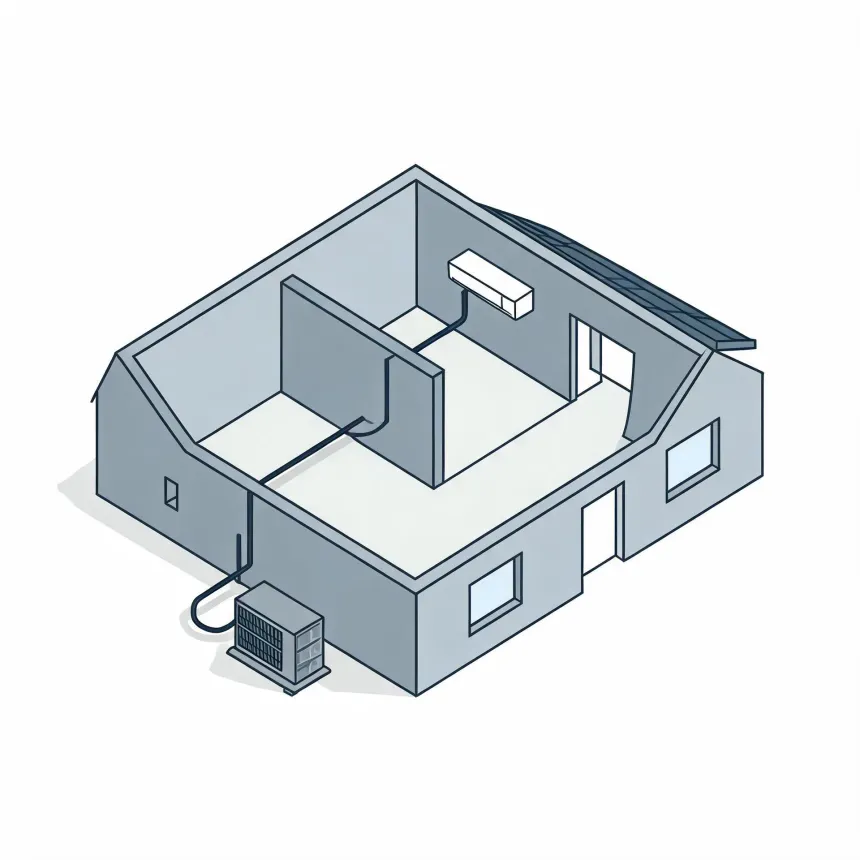
If this install is replacing an old window unit or a worn-out mini split, the installer still has to deal with the outdoor condenser and the line set running to it. A failed compressor or a refrigerant leak usually means the whole outdoor unit gets swapped, not patched. The old line set often gets replaced too rather than reused, since fittings and insulation degrade over the years and a leak-free connection matters more than saving an afternoon. Whoever removes the old system also has to recover the refrigerant properly rather than just cutting the lines, since venting it isn't legal. If the old unit ran on an older refrigerant, that's one more reason a straight swap rather than a patch job makes sense.
A quote should tell you more than the brand and the price. Ask what the installer counted as the room's heat loss, and whether that number came from a calculation or a guess. Ask how many indoor heads are going on the system and whether the outdoor unit is sized to run all of them at once, not just one. Ask what happens to the old equipment, the old line set, and the refrigerant inside it. Ask where the outdoor unit will sit and how the line set gets from there to the indoor head, since a longer run or extra elbows change how the system performs. Quotes for the same brand and the same tier can still be doing different jobs underneath.