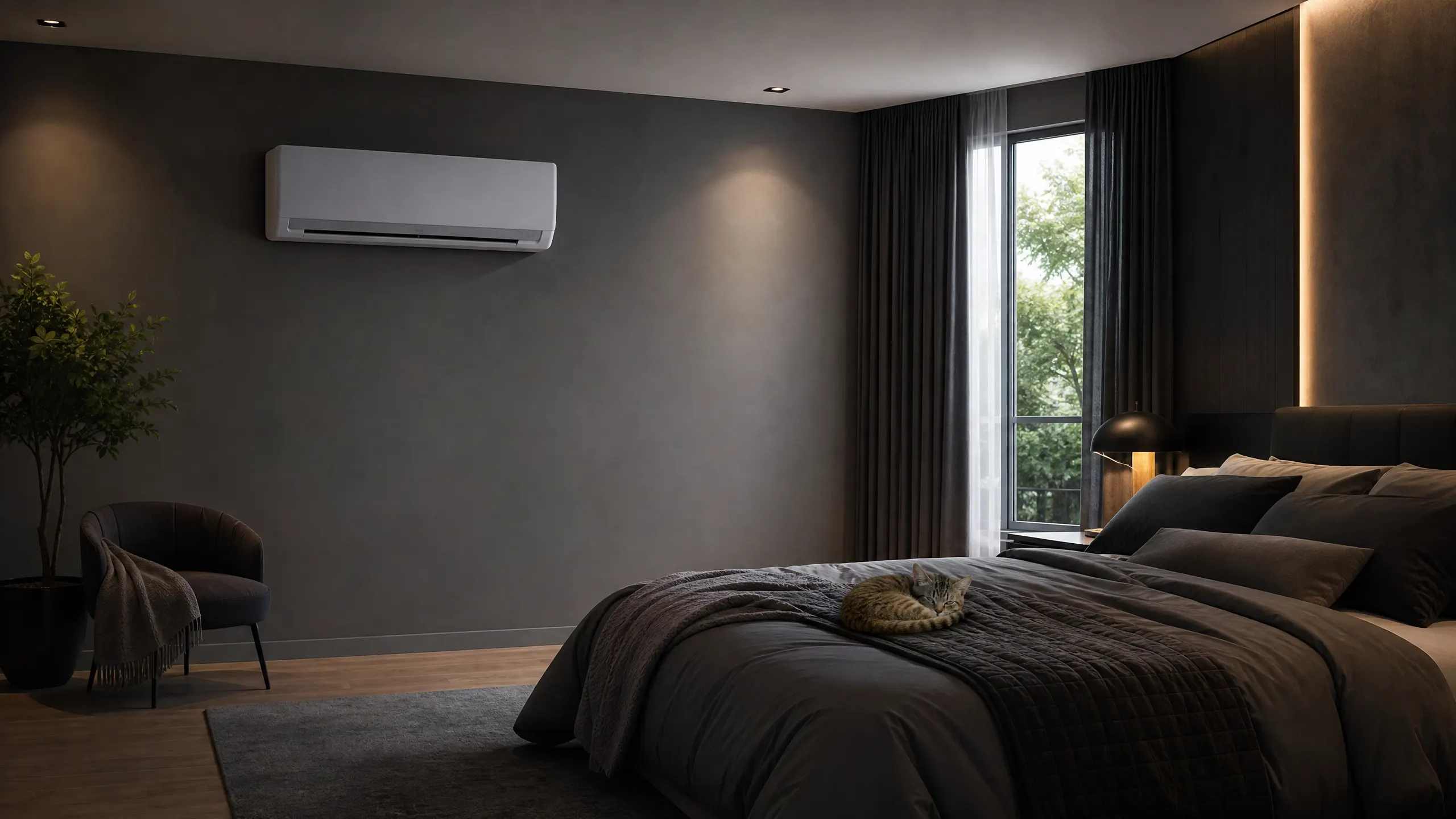





A tabby cat sleeps on a large bed in a dark, modern bedroom equipped with a wall-mounted air-conditioning unit.

Mini Split Installation in Grinnell, IA

Tell us about the job

Takes about a minute. No obligation.

New system or replacementMini-splitPoweshiek County, IA
Step 1 of 2

What ZIP code is the job in?

Gas heats close to half the homes in Poweshiek County, with electricity and LP gas splitting most of the rest. A mini split works differently from all of them. It doesn't burn fuel and it doesn't tie into a central furnace, so it doesn't compete with whatever already heats the house. Homeowners here usually add one to cover a room or addition the main system doesn't reach well, or to get cooling where there isn't any. Whether it makes sense to replace a zone outright or just add coverage depends on what's already installed.

8 months
October through May, your system heats
3 months
June through August, it cools
15°F
the average winter night it heats against
82°F
the average summer afternoon it cools against
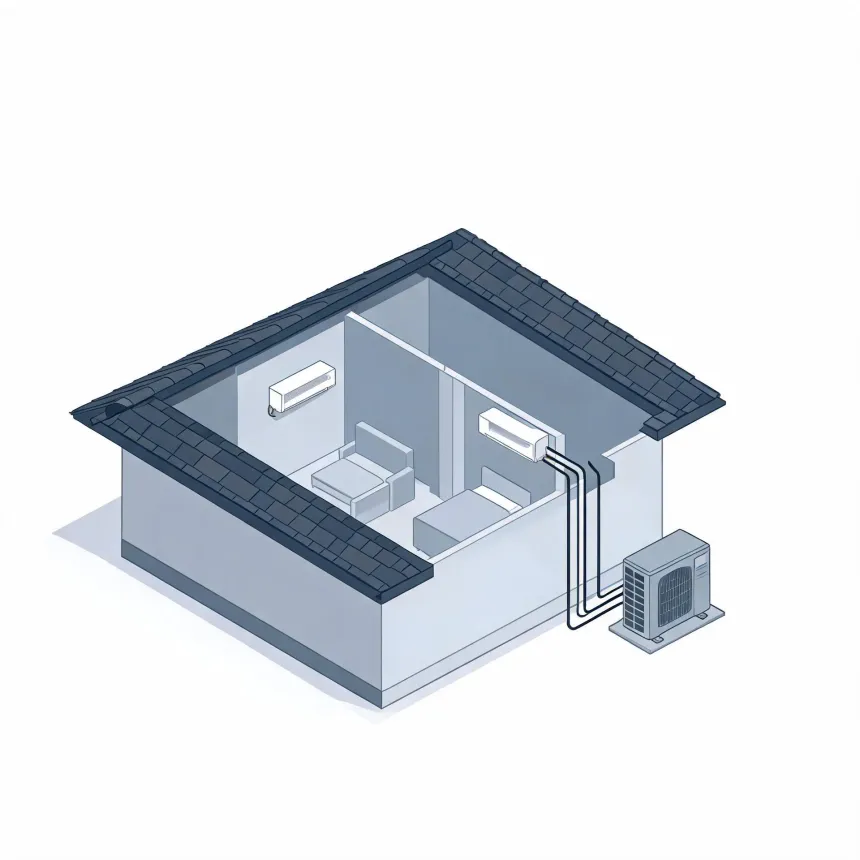
Isometric illustration of a cutaway house with tiled roof showing two wall-mounted indoor mini-split units connected by line sets to an outdoor condenser beside the building.
Your system heats October through May and cools June through August.

NOAA nClimDiv, 1991–2020 normals

Electricity in Iowa runs 13.40 cents per kilowatt-hour, below the national average.

A mini split earns its keep on comfort and fit here, not on a fast payback from the power bill.

Half the homes in Grinnell were built in 1971 or earlier, and a mini split has to work with the house it's going into

Half the homes here were built by 1971
Cooling runs June through August
Summer afternoons average 82°F
May Is the Month to Get It InCooling runs June through August here, so getting it installed in May means it's done before you need it.

Cooling only runs three months here, June through August, with afternoon highs around 82. That's a short, mild season compared to what the heating side deals with. A mini split's outdoor unit spends most of the year doing little or nothing, which means less wear than it would see in a hotter climate. That makes a straightforward system a reasonable choice here. You don't need to pay for the highest efficiency tier to get good results. Put the money instead into a unit sized right for the room it's covering.

Meet the standard here

A new system here has to meet this region's minimum efficiency, which limits what can go in.

Find a contractor
A white outdoor air conditioner condenser unit mounted on metal wall brackets against gray horizontal siding, with a blue sky and white clouds behind it.

Size it to the house you have

A contractor sizing the new unit needs to see the actual room before anything else. That matters more here than in a newer subdivision, since half the homes in Grinnell went up in 1971 or earlier. If the job is replacing an existing zone, the spot for the outdoor unit and the line set path were worked out around a house that predates the system going in now. For an addition or a room getting coverage for the first time, the same rule holds. The unit has to match the space as it is, not a guess at what a newer build would give it.

Ask what the low-temperature rating covers

Every heat pump mini split has a point where it stops keeping up with the cold and leans on backup heat strips instead. That cutoff varies a lot between models. Ask the contractor what capacity the unit still puts out at the coldest temperatures the house will see, not just what it's rated for at mild conditions.

Ask how many zones the outdoor unit can run

A single outdoor unit can run one indoor head or several, but splitting it across multiple rooms means each head gets a smaller share of capacity when everything runs at once. If the plan is to add zones later, ask whether the outdoor unit being installed now has the capacity to carry them, or whether it's sized for just the one room in front of you.

If the mini split is going in as a dedicated zone, the old system doesn't get hauled out. It's still the furnace or boiler doing most of the work, with the new unit just covering the one room. If it's a straight replacement of an electric baseboard or window unit, whoever installs the mini split handles taking out what's there as part of the job. Either way, ask ahead of time who's responsible for disconnecting and hauling off the old equipment, since that's sometimes treated as a separate line item rather than something bundled into the install.

Install day starts with the outdoor unit and the indoor head going up, usually on opposite sides of an exterior wall so the line set between them stays short. A contractor runs the refrigerant lines, a condensate drain and an electrical whip through a small hole drilled in that wall, then connects everything to the indoor head mounted high and the outdoor unit set on a pad or brackets below. Once the lines are connected, the system gets evacuated with a vacuum pump to pull out air and moisture before any refrigerant moves through it. Skipping that step is the most common reason a new mini split underperforms or fails early. After that the refrigerant charge gets set, the system runs through both heating and cooling to check it's holding temperature, and the contractor walks through the remote or thermostat before leaving. Most of the day is that vacuum and charge work, not the mounting.