






A quiet residential street at dusk lined with illuminated two-story brick houses and mature trees.

Mini Split Installation in Guttenberg, IA

Tell us about the job

Takes about a minute. No obligation.

New system or replacementMini-splitClayton County, IA
Step 1 of 2

What ZIP code is the job in?

Propane runs this county about as often as gas furnaces do, with utility gas heating 44.3% of homes and LP gas another 32.5%. A mini split doesn't ask which one you have. It runs on electricity, so it sidesteps a fuel tank or a gas line entirely, and that's worth knowing if you're adding heat to a room that never had either. For a home already on propane, a mini split in one or two rooms can take the load off the furnace during the months it isn't working as hard, without touching the tank or the lines feeding the rest of the house.

8 months
October through May, your system heats
3 months
June through August, it cools
13°F
the average winter night it heats against
80°F
the average summer afternoon it cools against
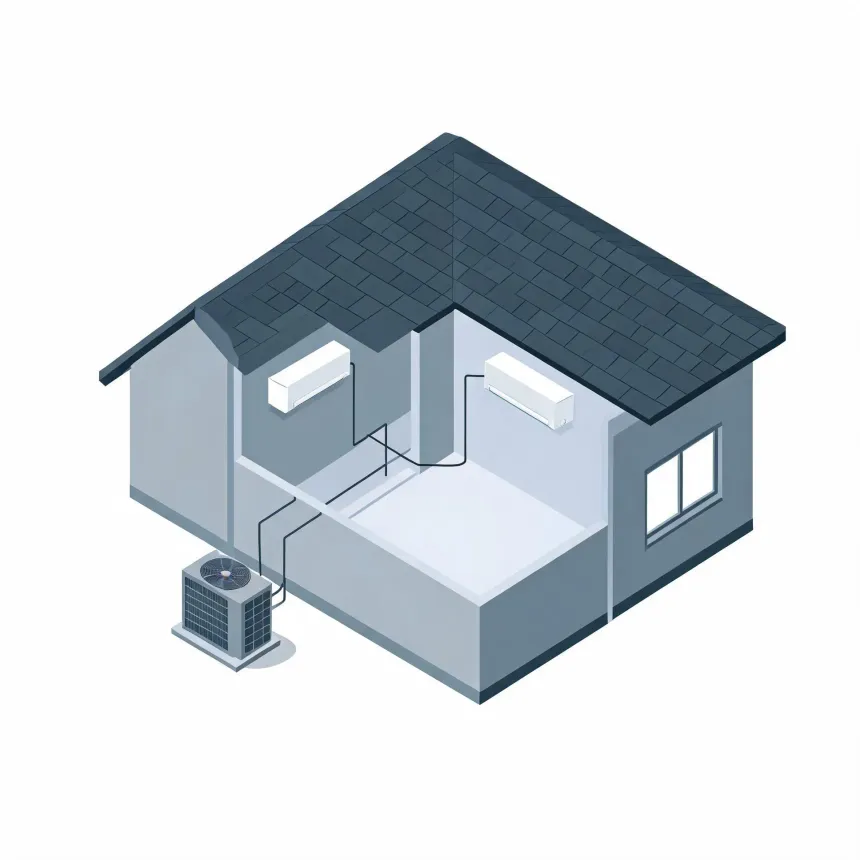
Isometric illustration of a cutaway gray house with a dark shingled roof, showing two wall-mounted indoor air conditioning units connected by lines to an outdoor condenser unit on the ground outside.
Your system heats October through May and cools June through August.

NOAA nClimDiv, 1991–2020 normals

Iowa electricity runs 13.40 cents a kilowatt-hour, below the national average.

A mini split still beats paying to heat a room with propane you're not using anywhere else in the house.

Half these homes were built by 1960, and a mini split has to work with that house, not a new one

Half the homes here were built by 1960
Cooling runs June through August
Summer afternoons average 80°F
Install before JuneCooling runs June through August here. May is the month to get it in.

Summer here is short. Cooling only has to carry June through August, with afternoons averaging around 80 degrees, nothing like the load a system faces in a hotter state. Heating is the bigger job in this climate, and a mini split still has to handle that end too, but it's not fighting extreme heat on top of it. A system that's well matched to the room doesn't need to be the highest-efficiency model on the shelf to keep up here. Put the money into a unit sized right for the space and installed well, rather than paying for cooling capacity this county rarely asks for.

A mini split here has to clear 7.5 HSPF2. The tax credit helps you get there.

Clayton County is in zone 5A, where heating carries most of the load. Any mini split installed here has to meet the same federal minimum as other split-system heat pumps. That means at least 14.3 SEER2 for cooling and 7.5 HSPF2 for heating, no matter whose name is on the unit. A federal tax credit on heat pump equipment is available now and brings down the cost of meeting that standard.

Find a contractor
A man in a cap, dark shirt and olive pants climbs porch steps toward a dark green paneled door, carrying a worn canvas duffel bag, with a potted shrub beside the entry.
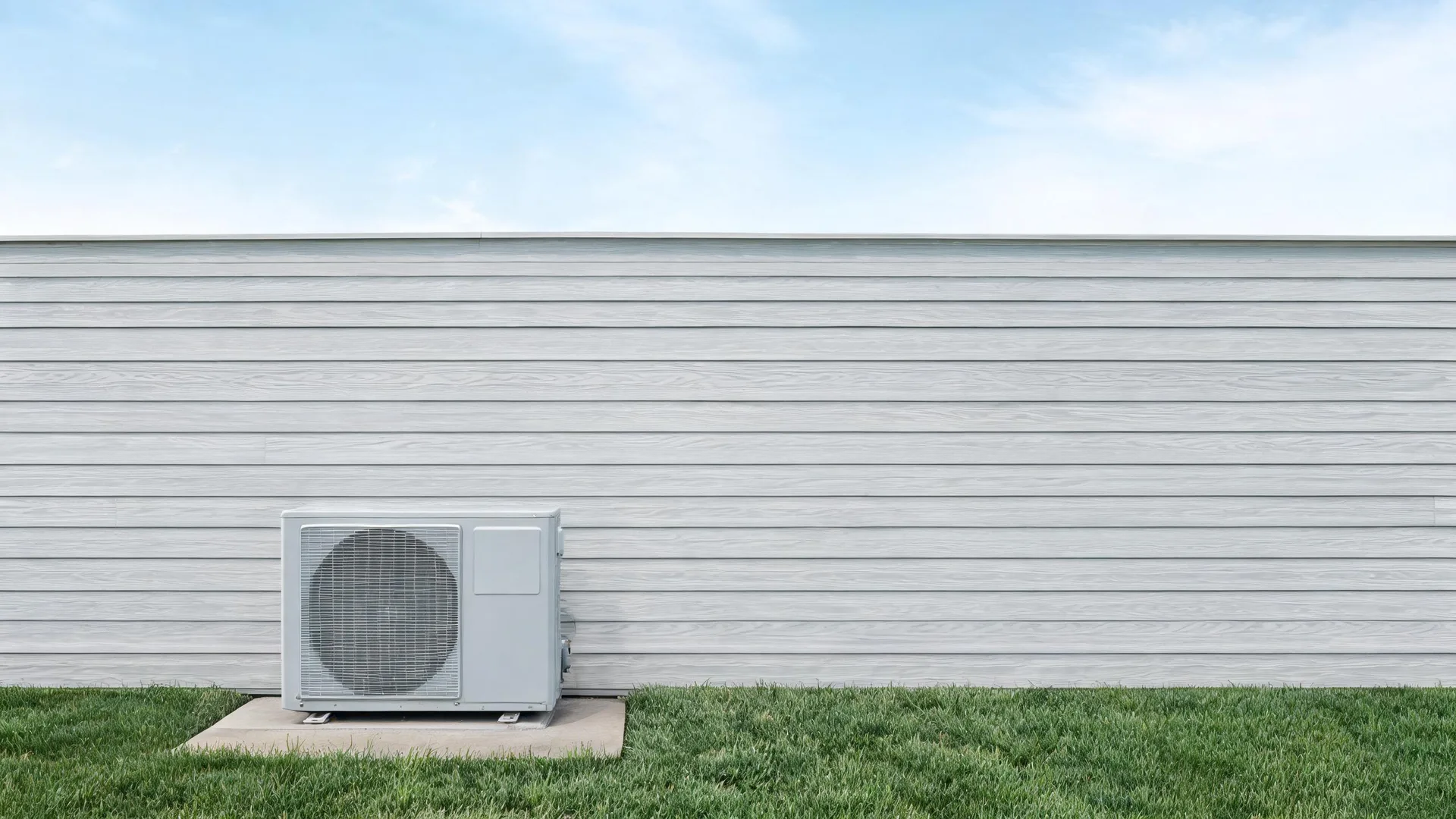
A white outdoor air conditioner condenser unit mounted on metal wall brackets against gray horizontal siding, with a blue sky and white clouds behind it.

Sizing it right means working the room, not guessing the number

Sizing a mini split isn't about matching the room's square footage to a number on a brochure. The installer works out a heat load. That means figuring how much heat the room loses when it's cold and gains when it's hot, based on the windows, the insulation, the ceiling height, what's on the other side of each wall. A unit sized too big reaches the set temperature and shuts off fast. It never runs long enough to pull the moisture out of the air, so the room can feel clammy even though the thermostat reads right. A unit sized too small just runs flat out and still doesn't catch up on the hardest days, and that strain falls on the compressor. Sized right, the unit runs longer stretches at a lower output. That's what keeps the temperature steady, and it's easier on the equipment too.

The line set and where the unit goes

The cost of putting in a mini split has more to do with the path between the indoor and outdoor unit than the equipment itself. Running refrigerant lines through a wall is straightforward when the wall is open and short. It gets more involved when the line has to travel through framing, around joists, or up between floors to reach the outdoor unit. The farther that line runs and the more it has to work around, the more labor goes into the job before the system ever turns on.
One zone costs less than several

A single indoor head tied to one outdoor unit is the simplest version of this job. Once you're heating and cooling more than one room, the outdoor unit has to be sized for the combined load and the installer is running a line set to each head separately. Every additional zone adds its own run of refrigerant line, its own electrical whip, and its own mounting work, so the price climbs with each room added, not just with the size of the equipment.

When you're comparing quotes, ask what each one actually sized the system to. A contractor should be measuring the room, checking the windows and the insulation, and working out a heat load before naming a unit, not picking a size off the last job. Ask how many indoor heads tie to the outdoor unit and whether that unit is sized for all of them running at once. Ask what happens if one zone needs service, whether the others keep running or the whole system shuts down. And ask about the line set path specifically, since that's where installs tend to differ most even when the equipment on paper looks the same.

Installation day starts before anyone touches a wall. The crew marks where the indoor head goes, checks that the spot gives the air a clear path into the room, and confirms where the line set will run to reach the outdoor unit. Mounting the indoor unit and setting the outdoor pad or bracket is the fast part. Running the line set is where the day goes, especially if it has to pass through framing rather than a single clean wall. Once the lines are connected, the installer pulls a vacuum on the system to clear out moisture and air before any refrigerant moves through it. Skipping that step is what leads to a system that runs poorly or quits early. After that, it's a matter of wiring in the electrical whip, powering it on, and checking that the head is actually cooling and heating the way it should before anyone calls the job done.