






A lit brick residential street at dusk showing a row of two-story homes with covered porches and mature trees.

Mini Split Installation in Independence, IA

Tell us about the job

Takes about a minute. No obligation.

New system or replacementMini-splitBuchanan County, IA
Step 1 of 2

What ZIP code is the job in?

Just over half the homes in Buchanan County heat with utility gas. Most of the rest run on electricity or propane. That means a mini split is going into a house built around a furnace and ductwork, not around this kind of system. A mini split doesn't need that ductwork. The indoor head mounts on a wall or ceiling, and a line set runs from it to the outdoor unit through a small hole in the wall. That makes it a fit for a room the ducts never reached, or a house that never had central air to begin with.

8 months
October through May, your system heats
3 months
June through August, it cools
13°F
the average winter night it heats against
81°F
the average summer afternoon it cools against
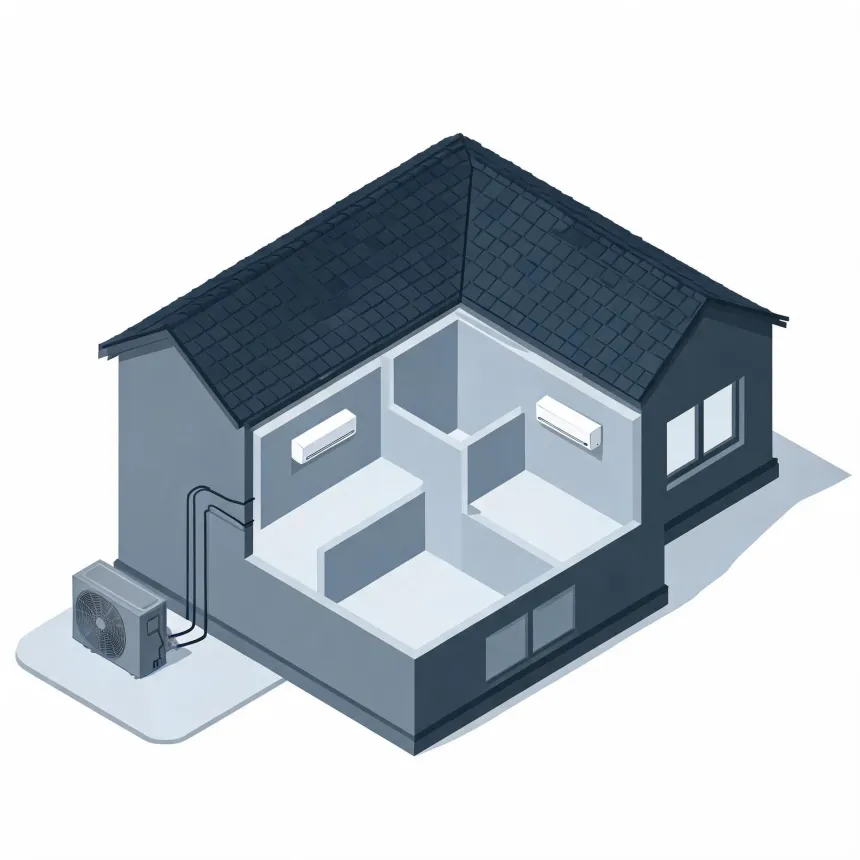
Isometric illustration of a cutaway single-story house with a dark shingled roof, showing two wall-mounted indoor air conditioning units connected by lines to an outdoor condenser unit on a pad beside the building.
Your system heats October through May and cools June through August.

NOAA nClimDiv, 1991–2020 normals

Every quote should say how many indoor heads the system has and what each room needs for output.

A system sized for the whole house but split wrong across rooms leaves some too cold and some too warm.

Nothing about Buchanan County's weather calls for sizing a mini split above what the rooms need

161 severe weather events from 2015 to 2024
15% of homes statewide lost power a day or more in 2024
93 damaging wind events from 2015 to 2024
Get it in before JuneHomes here run cooling from June through August. May is the month to get it installed.

Electricity in Iowa runs about 13.4 cents per kilowatthour, cheaper than in most of the country. That changes the math on which mini split to buy. A higher-efficiency unit costs more up front, and the cheaper power here means it takes longer to earn that back through lower bills. So the efficiency rating matters less than it would somewhere with expensive power. What matters more is whether the contractor sized each head right for its room and whether the installation holds up over the years. A unit that's reliable and fits the space will serve you better than one bought mainly for a high efficiency number.

Any mini split installed here has to clear 14.3 SEER2 and 7.5 HSPF2

Buchanan County falls in climate zone 5A, where heating is the bigger job. The federal minimum for a split-system heat pump covers mini splits too, so new units have to meet 14.3 SEER2 for cooling and 7.5 HSPF2 for heating. A federal tax credit is available on qualifying systems. Get a quote to see what fits your home and what it qualifies for.

Find a contractor
A man in a cap, dark t-shirt and tan work pants walks up concrete steps toward a dark green front door, carrying a waxed canvas tool bag, with a potted shrub beside the entry.
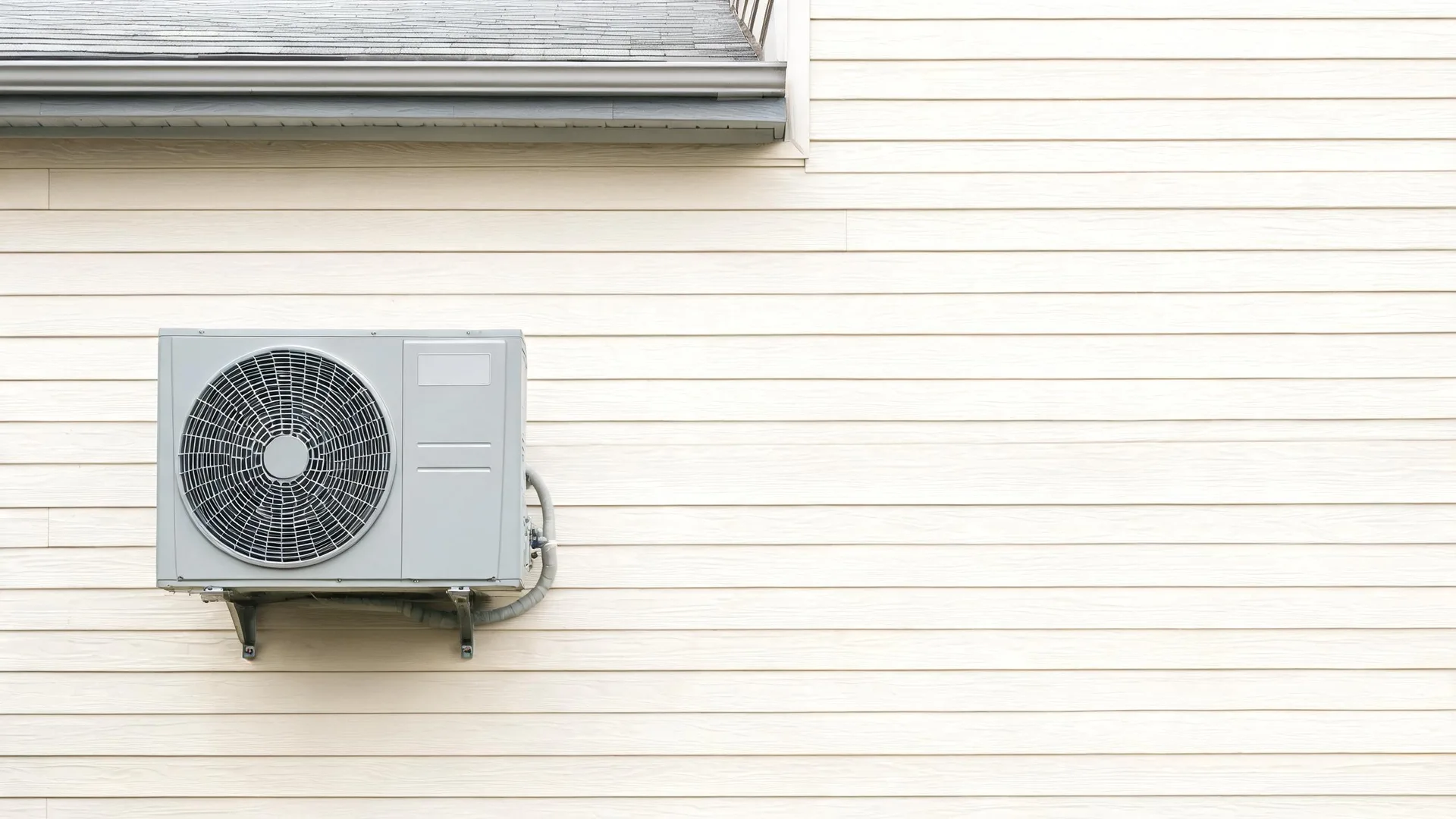
A white outdoor air conditioner condenser unit mounted on metal wall brackets against gray horizontal siding, with a blue sky and white clouds behind it.

Your house wasn't built for this system

Half the homes in Buchanan County were built in 1973 or earlier. A house that age was built around a furnace, not a heat pump, and whoever installed the old system sized it for that house alone. Replacing it with a mini split means starting over on that sizing. The wall thickness and room layout you have now are what the new heads have to match, not what the old furnace was built for.

Oversized cools the air but not the room

A head sized too big for its room shuts off almost as soon as it starts. That short run never gives the room time to pull moisture out of the air, so the space ends up cool and clammy instead of just comfortable. The fix isn't a bigger unit, it's the right one for that room.
The load gets worked out room by room

A contractor sizing a mini split works out how much heat each room gains in summer and loses in winter, using its square footage, window area, insulation and what's on the other side of its walls. Every room gets its own number, and the head for that room gets matched to it. Add up the rooms wrong, or skip the room by room step, and the system fights the house instead of running with it.

The cost of a mini split job comes down to how much equipment the house needs and how hard that equipment is to put in. A single head cooling one room costs less than a multi-zone setup feeding several rooms at once. Each indoor head, its line set and its own place on the outdoor unit adds to the job. Where the outdoor unit sits matters too. A straight run through an exterior wall is simple. A line set that has to travel up through a chase, across an attic or around the house to reach the right spot takes more time and material. Electrical work plays into it as well. Some systems need a dedicated circuit, and if the panel doesn't have room for one, that's its own job before the mini split goes in at all.

Installation starts with the outdoor unit and the line set, not the indoor head. The installer runs refrigerant lines, a power cable and a condensate drain from the outdoor unit to each indoor head, usually through a single small hole in the wall behind where the head will hang. That line set gets connected, then the whole system is pressure tested to make sure there are no leaks before any refrigerant goes in. Once it holds pressure, the lines get evacuated to pull out air and moisture, because either one left inside will cause problems later. Only after that does the refrigerant get charged to the amount that head and that run of line call for. The indoor head goes up last, mounted level on the wall or ceiling, and the system gets powered on and run through both heating and cooling to check that each zone is doing what it should.