A tabby cat sleeps curled up on a dark grey bed in a modern bedroom equipped with a wall-mounted air conditioning unit.

Mini Split Installation in Indianola, IA

Tell us about the job

Takes about a minute. No obligation.

New system or replacementMini-splitWarren County, IA
Step 1 of 2

What ZIP code is the job in?

Gas heats most homes here

Utility gas heats 54.3% of homes in Warren County, with electricity and propane splitting most of the rest. A mini split works alongside any of these or on its own, since it runs on electricity and doesn't tie into a gas line or ductwork at all.

What that means for a mini split job

If your home has gas furnace, a mini split usually goes in as added cooling or heat for a room that needs it, not a replacement for what's already there. If your home heats with electric or propane, a mini split can take on more of the job, sometimes becoming the main source of heat in the space it covers.

8 months
October through May, your system heats
4 months
June through September, it cools
17°F
the average winter night it heats against
84°F
the average summer afternoon it cools against
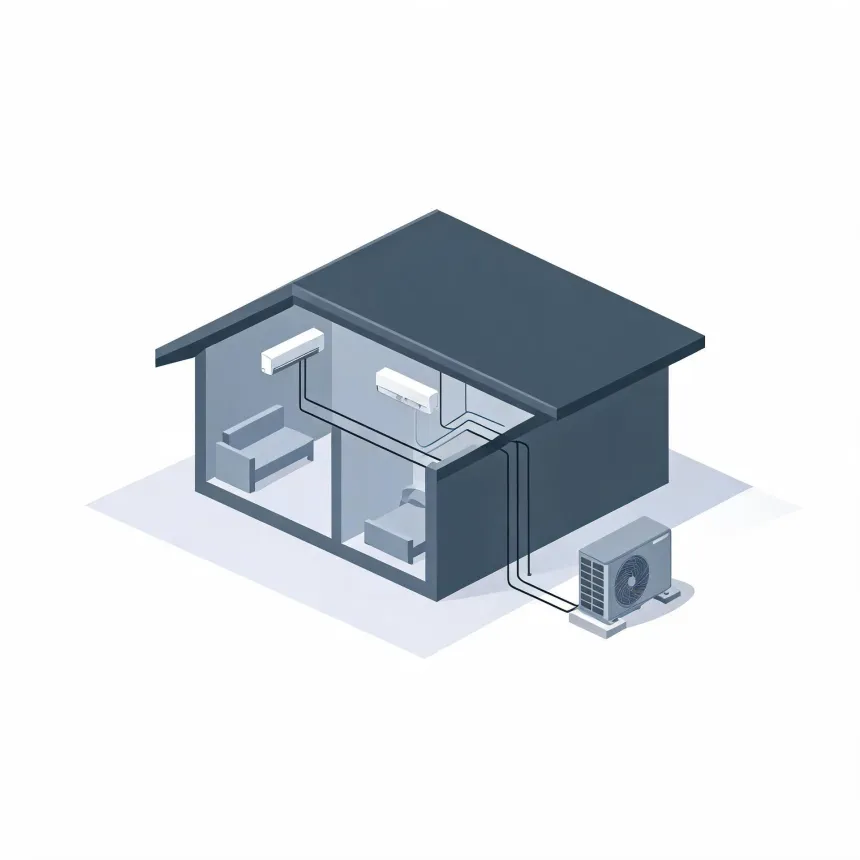
Isometric illustration of a cutaway house showing two wall-mounted mini-split indoor units connected by line sets to an outdoor condenser on a pad outside.
Your system heats October through May and cools June through September.

NOAA nClimDiv, 1991–2020 normals

Cooling in Warren County runs June through September.

May is the time to get a mini split installed, before the first warm week puts it to work.

Four summer months, nothing extra to size for

Cooling runs June through September
Summer afternoons average 84°F
66 damaging wind events from 2015 to 2024

Iowa electricity ran 13.40 cents per kilowatt-hour in 2024, cheaper than most of the country. That changes the math on which mini split to buy. A higher-efficiency model costs more up front, and with power this cheap it takes longer to earn that back in lower bills. The bigger question is which unit fits the room you're cooling or heating and holds up over the years you'll own it. Pick for reliability and the right size first.

A mini split here has to meet zone 5A's efficiency minimum

Warren County falls in climate zone 5A, where heating carries the bigger load over the year. Any mini split installed here has to meet 14.3 SEER2 for cooling and 7.5 HSPF2 for heating, the same federal minimum that applies to any split-system heat pump. A federal tax credit is available toward the cost of a qualifying system.

Find a contractor
A man in a dark long-sleeve shirt and tan work pants, seen from behind, steps onto a porch toward a dark green paneled door while carrying a canvas tool bag with tools in its outer pockets, with a potted shrub to the right.
A beige split-system air conditioner outdoor condenser unit mounted on metal wall brackets atop a stucco wall.

What drives the cost of this job

The number of indoor heads driving off one outdoor unit matters more than anything else. A single zone, one head, one outdoor unit, is the simplest version of this job. Each head you add after that means another line set run through the wall, another spot to mount, and a larger outdoor unit to carry the load. Where that outdoor unit sits changes things too. A short, straight line set between indoor and outdoor is quick work. A run that has to go around corners, up through a floor, or a long distance across the house takes more line, more time, and more care, since a line set that's too long or charged wrong will cost efficiency for as long as the system runs. The electrical panel plays into it as well. Some homes can take the new load as is. Others need a dedicated circuit run for the unit, and that's its own job apart from the mini split itself. None of this is extra. Each piece is something your home either needs or doesn't, and that's what settles the price.

Ask what the unit is rated down to

A mini split that handles cold well will say so in its low-temperature rating. Some units lose heating capacity fast once it gets cold out and fall back on backup heat strips to make up the difference. A unit built for colder climates keeps producing heat at lower outdoor temperatures without leaning on that backup.

Ask how the load was calculated

The size of the unit should come from a room-by-room load calculation, not a guess based on square footage. A unit that's too big cycles on and off instead of running steady, which wears parts faster and leaves the room uneven. A unit that's too small runs constantly and still can't keep up on the hottest or coldest days.

Sizing a mini split starts with the heat gain and heat loss of the specific room, not the house as a whole. Window area, wall insulation, ceiling height, and what's on the other side of each wall all factor into how much heat that room gains in summer and loses in winter. A contractor works through this room by room rather than applying one rule to the whole house. Get it wrong on the high side and the unit short cycles, running in quick bursts that cool or heat the air but never run long enough to pull moisture out or settle into a steady temperature. Get it wrong on the low side and the unit runs flat out and still loses ground on the hardest days. Either mistake shows up in how the room actually feels, long after the install truck is gone.

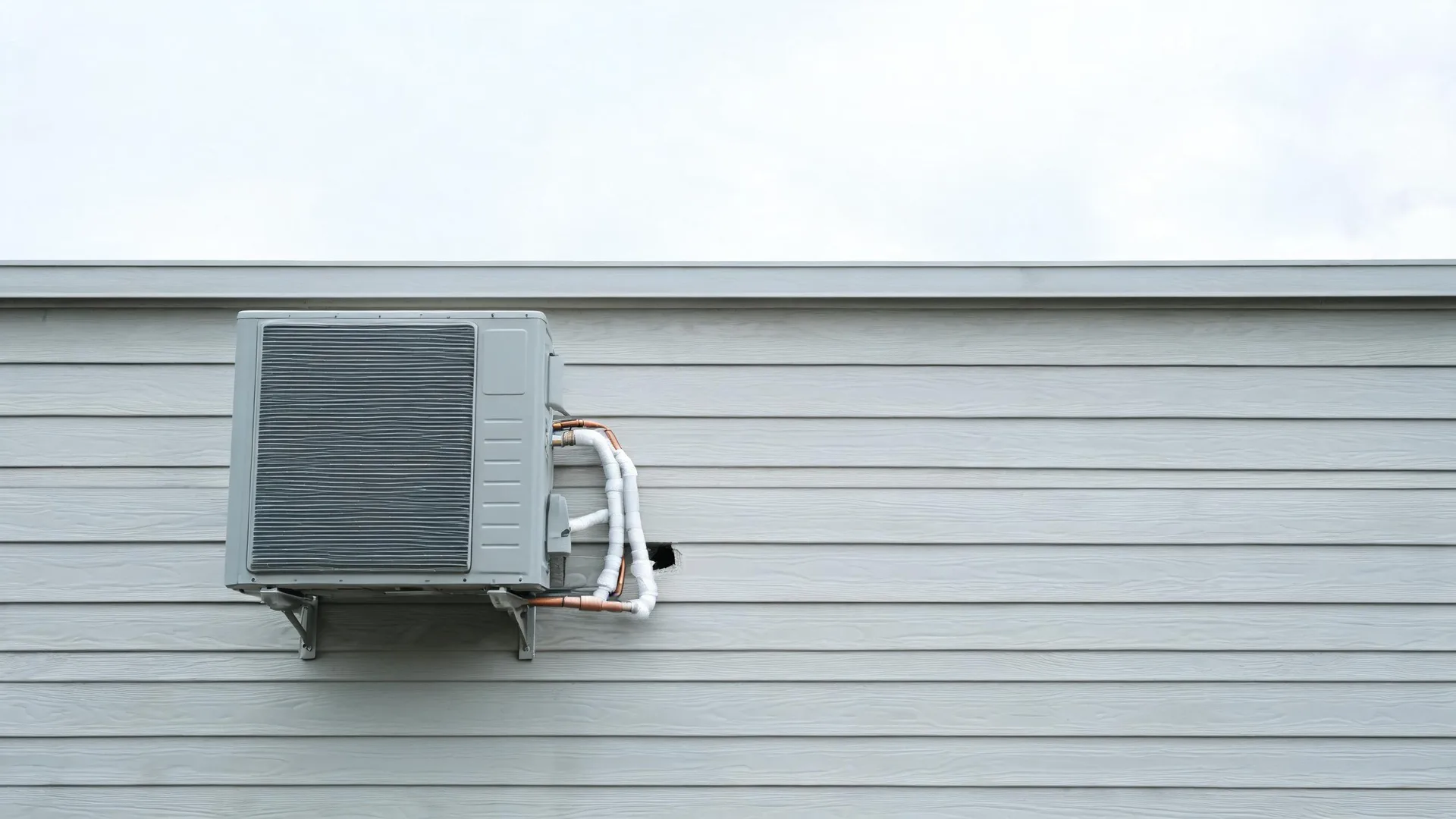
Installation day starts outside. The outdoor unit needs a spot with clear airflow on every side and a pad underneath that's solid and level, away from where snow piles up or water runs through. Mounting the indoor head comes next, high on the wall and away from direct sun or a doorway draft that would throw off the thermostat reading. Then the line set. A hole gets drilled through the wall, refrigerant lines and a condensate drain run between the units, and that opening gets sealed tight against weather and pests. Once the lines are connected, the system gets evacuated to pull out air and moisture before refrigerant goes in, then charged to the weight the manufacturer specifies for that line length. Last comes the test, running the system in cooling and in heating to check that it holds the right pressure and every head responds the way it should.