Three lit brick homes on a tree-lined residential street photographed at dusk.

Mini Split Installation in Le Mars, IA

Tell us about the job

Takes about a minute. No obligation.

New system or replacementMini-splitPlymouth County, IA
Step 1 of 2

What ZIP code is the job in?

Gas heats most homes here

Utility gas heats 45.7% of homes in Plymouth County, with electricity at 37.5% and propane at 12.6%. A mini split is not replacing that furnace. It works alongside it, usually to handle cooling or to take the load off a few rooms.

What that means for the install

If your home runs on gas or propane heat, the ductwork and thermostat are already set up around that system. A mini split installation runs on its own line and doesn't touch that setup, which is why it works as an add-on rather than a swap.

8 months
October through May, your system heats
3 months
June through August, it cools
13°F
the average winter night it heats against
83°F
the average summer afternoon it cools against
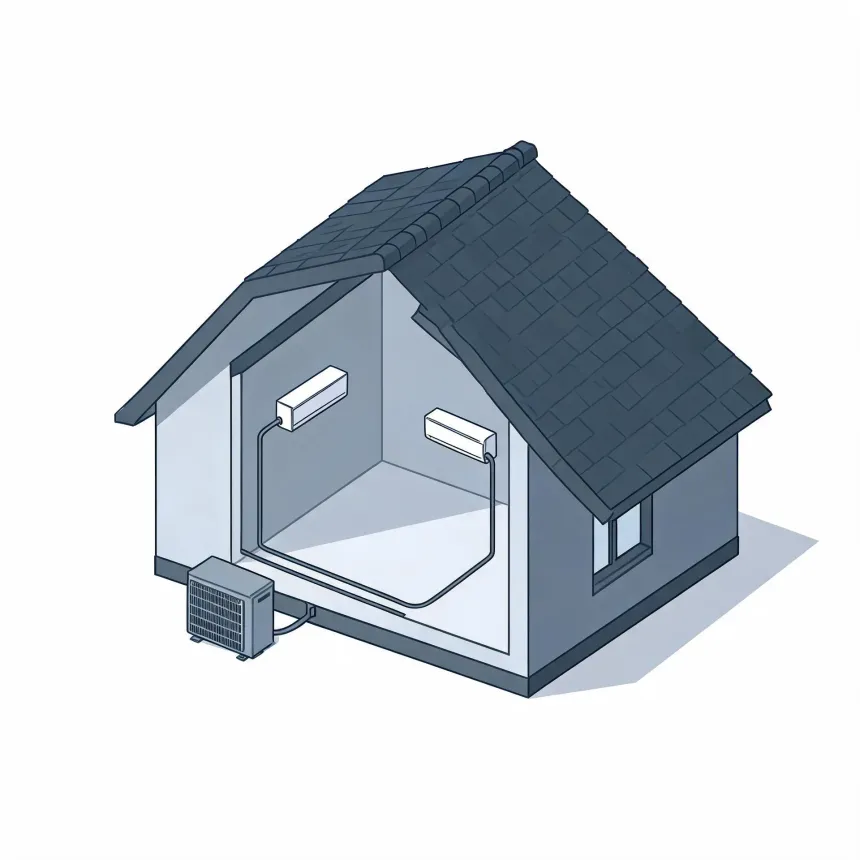
Isometric cutaway illustration of a small house with a shingled gable roof, showing two wall-mounted indoor air conditioning units connected by refrigerant lines to an outdoor condenser unit on the ground outside.
Your system heats October through May and cools June through August.

NOAA nClimDiv, 1991–2020 normals

Cooling in Plymouth County runs June through August.

May is the month to get a mini split installed, before the first warm week puts you on a waiting list.

At 13.4 cents a kWh, a mini split pays you back slow, so pick it for comfort first

Power costs 13.4 cents a kWh statewide
Climate zone 5A
Cooling runs June through August
Three months of cooling to size forSummers here run June through August, with afternoon highs averaging around 83°F.

Plymouth County gets its share of rough weather, with 136 severe weather events logged between 2015 and 2024, hail and wind more than snow or tornadoes. None of that changes what a mini split needs to do its job. A standard outdoor unit is built to run through wind and hail and cold the same as a central AC condenser sitting next to it. There's no case here for oversizing the unit or stepping up to a higher efficiency tier than the room calls for. Size it to the space, pick a reliable brand, and let the install match the load you actually have.

Half the homes here were built in 1971 or earlier. A mini split works with that.

Half the homes in Plymouth County were built in 1971 or earlier. A mini split doesn't ask much of a house like that. No ducts to tie into, no gas line to run, just a line set through the wall and a spot for the outdoor unit. That makes it a reasonable fit for an older place without reworking what's already behind the walls.

Find a contractor
A man in a tan jacket, cap, and work boots carries a canvas tool bag up wooden porch steps toward a dark green front door of a house with light horizontal siding and a potted shrub.
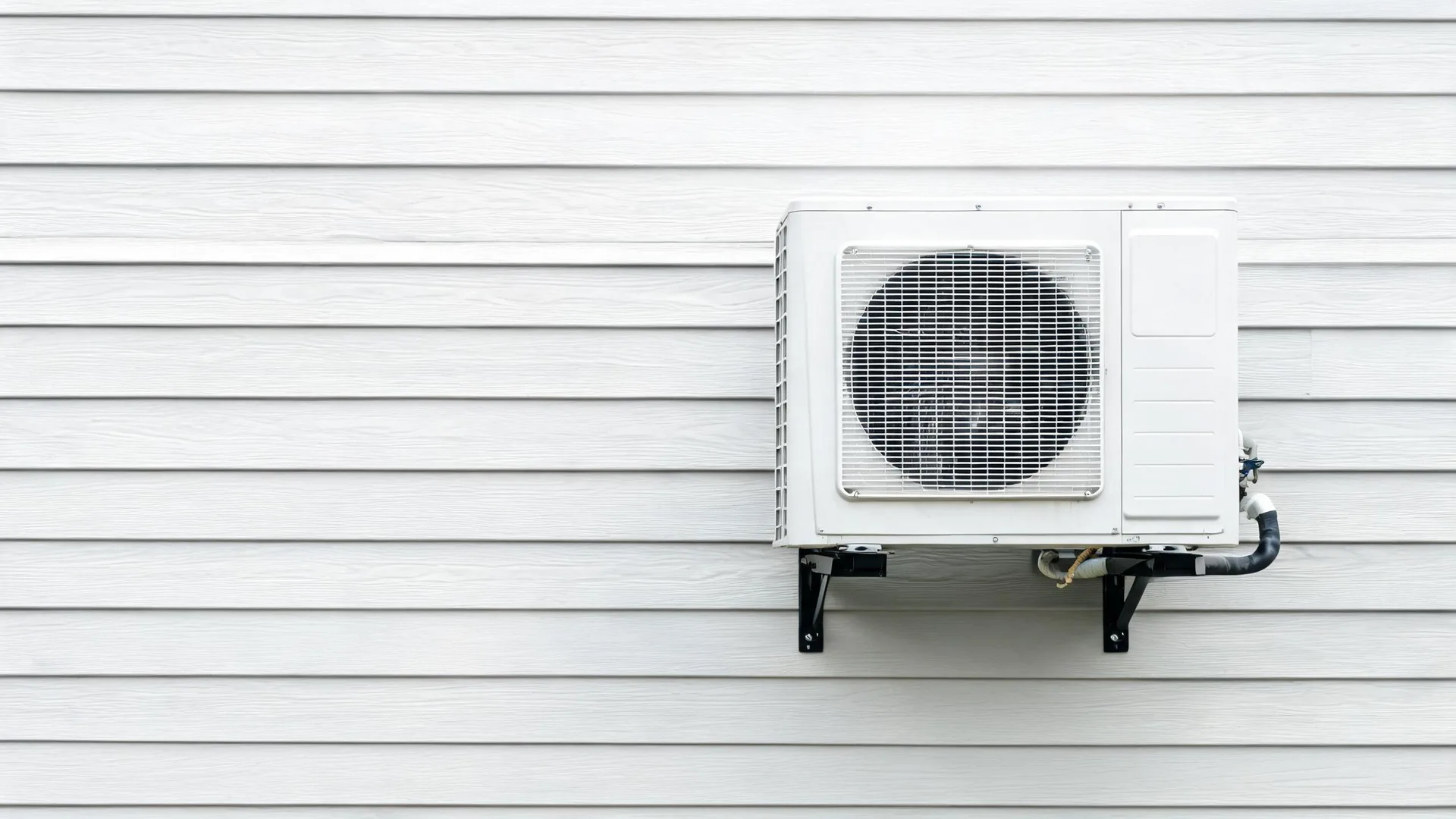
A beige split-system air conditioner outdoor condenser unit mounted on metal wall brackets atop a stucco wall.

Match the install to the house you have

If a contractor is sizing the install, ask where the line set is going and where the outdoor unit will sit before anything gets mounted. On a house from this era, that walk-through matters more than the brand on the unit. Get the room measured, not guessed at, and have the installer show you the load calculation for that specific room rather than a rule of thumb.

The number of zones sets the price

A single room needs one indoor head and one outdoor unit. Add rooms and you're either adding separate systems or moving to a multi zone unit that runs several indoor heads off one outdoor compressor. More zones means more line set, more mounting work, and a larger outdoor unit to carry the load.

Where the lines have to run costs more than the unit itself

The line set carries refrigerant between the indoor head and the outdoor unit through a hole in the wall. A straight shot through an exterior wall is the simple case. Running it up through a chase, across an attic, or down multiple floors to reach where the outdoor unit has to sit adds labor the unit price never shows.

Sizing a mini split starts with the room, not the unit. A contractor works out how much heat that room gains in summer and loses in winter, based on square footage, window area, which way it faces, and how well it's insulated. That calculation is what tells you the output the unit needs to deliver. Too small and it runs flat out on the hottest days and never quite catches up. Too big and it cools the room fast, shuts off, then starts again a few minutes later, cycling on and off instead of running steady. That short cycling is hard on the compressor and leaves the room feeling damp, because the unit isn't running long enough to pull moisture out of the air. The right size runs longer, steadier stretches, and that's what actually keeps a room comfortable.

Installation day starts with the walk-through, not the drill. The contractor confirms where the indoor head is going, where the outdoor unit will sit, and the path the line set takes between them. Once that's settled, the indoor head gets mounted high on the wall, on a bracket that holds it level and gives the condensate line somewhere to drain to. The hole through the wall is small, just enough for the line set, the drain line, and the electrical to pass through, and it gets sealed around that opening when the work is done. Outside, the compressor sits on a pad or brackets, away from the wall enough to let air move through it. Once everything's connected, the line gets checked for leaks and the system gets charged with refrigerant before it ever runs a full cycle. The whole job happens in one visit, and the unit is ready to run the same day.