




A illuminated two-story red brick house on a quiet residential street at dusk, flanked by mature trees under a deep blue evening sky.

Mini Split Installation in Mason City, IA

Tell us about the job

Takes about a minute. No obligation.

New system or replacementMini-splitCerro Gordo County, IA
Step 1 of 2

What ZIP code is the job in?

Gas heats 71.1% of the homes in Cerro Gordo County, and most of those furnaces move air through ducts that are already in place. A mini split doesn't need any of that. It runs on its own line to an outdoor unit, with no ductwork to tie into, which is why people add one to a single room or a finished space that the furnace never reached well. Electric heat accounts for 18.4% of homes here, and for those, a mini split can cover a room or two without leaning on whatever baseboard or wall units are already there. Either way, the furnace or boiler keeps doing what it does. The mini split just handles the space it's installed in.

8 months
October through May, your system heats
3 months
June through August, it cools
12°F
the average winter night it heats against
80°F
the average summer afternoon it cools against
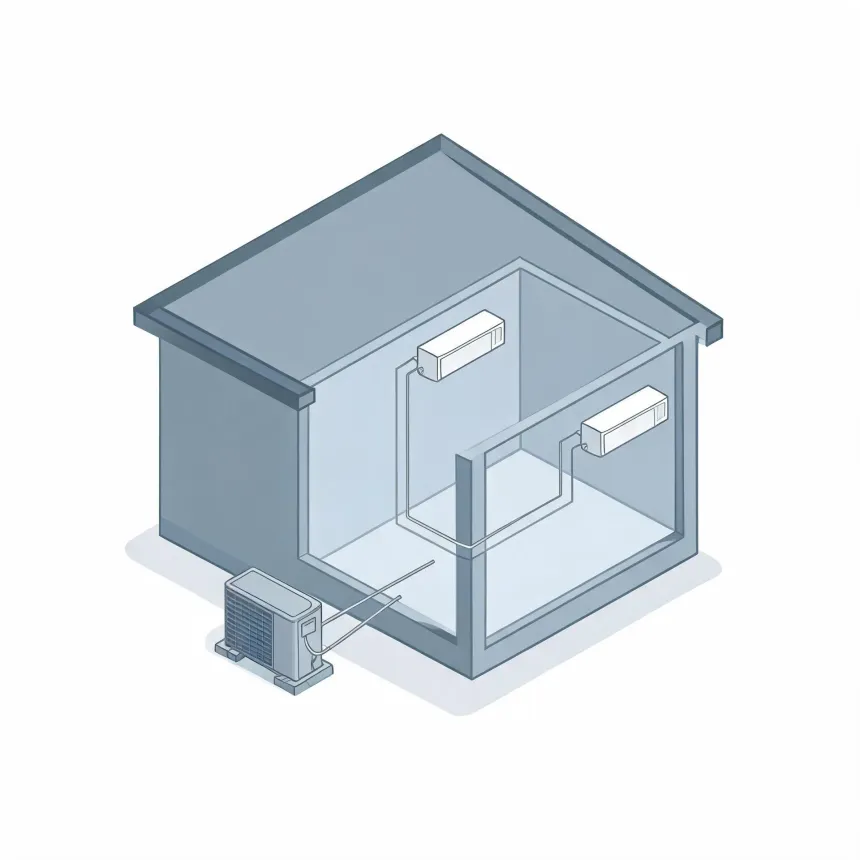
Isometric line illustration of a cutaway building interior with two wall-mounted indoor air conditioning units connected by piping to an outdoor condenser unit on the ground outside.
Your system heats October through May and cools June through August.

NOAA nClimDiv, 1991–2020 normals

Mason City sees damaging wind, hail and winter storms most years.

A mini split only has to heat and cool the room it's in, so standard sizing holds up fine through that.

Three months of cooling here, best scheduled before June

Cooling runs June through August
Summer afternoons average 80°F
76 damaging wind events from 2015 to 2024

Electricity in Iowa runs 13.40 cents per kilowatt-hour, cheaper than most of the country. That changes the math on a mini split. The highest efficiency models cost more up front and take longer to earn that back when power is already this cheap. For a room the furnace never heats well, or a space with baseboard that struggles to keep up, a mid-efficiency unit sized right for that space will do the job and cost about the same to run as the top-tier model. Put the money into correct sizing and a good installation instead of chasing the highest efficiency number on the spec sheet.

Half the homes here were built in 1959 or earlier. Size the mini split to that house.

Half the homes in Cerro Gordo County were built in 1959 or earlier. An older house can have smaller rooms, older windows, or additions that don't match the rest of the place, and that affects what size unit a room needs. Sizing a mini split off square footage alone skips over that. Getting it sized to the actual room is what makes it heat and cool the way it should.

Find a contractor
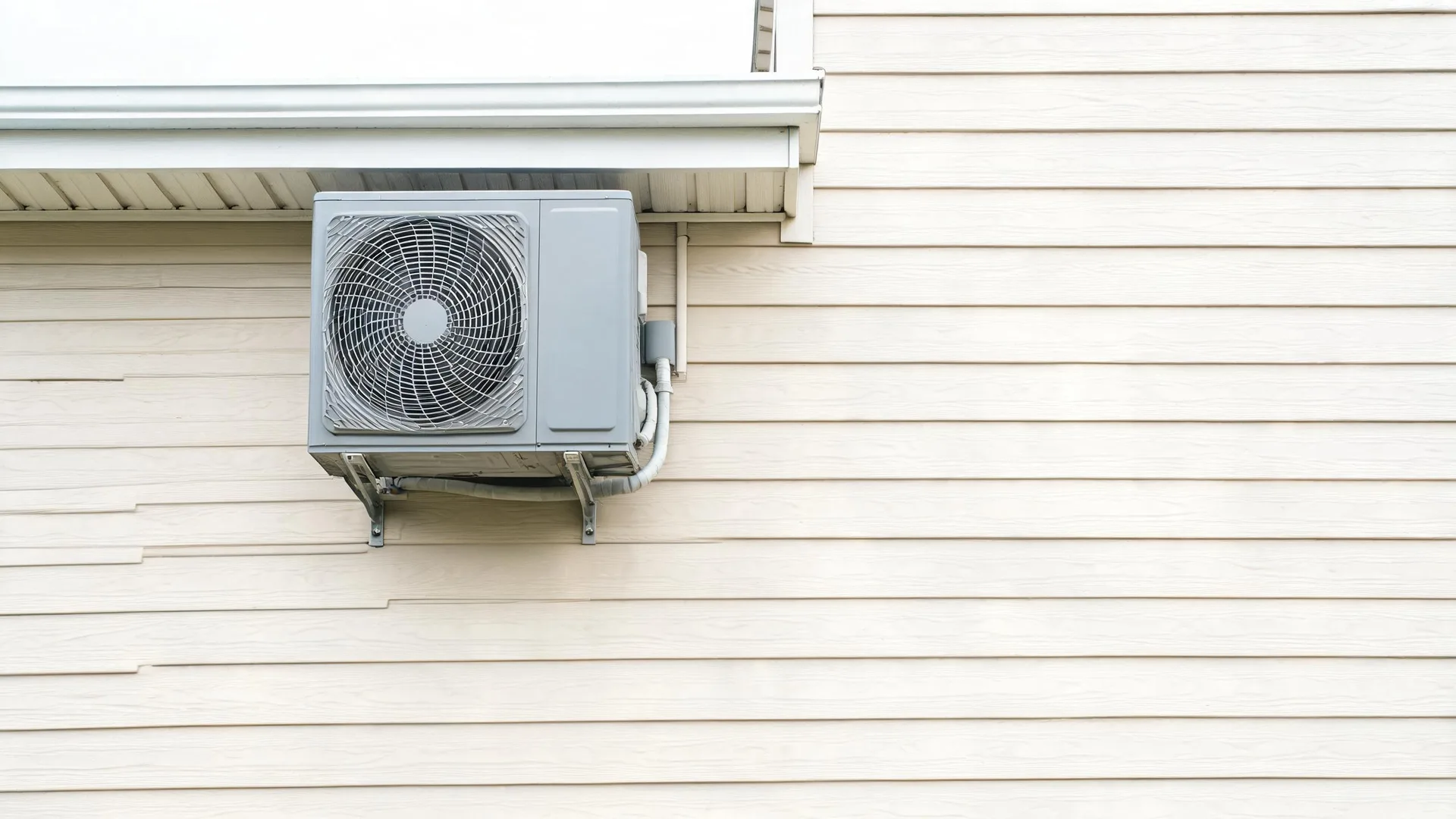
A white outdoor air conditioner condenser unit mounted on metal wall brackets against gray horizontal siding, with a blue sky and white clouds behind it.

Three months of summer, a long winter around it

Cooling runs about three months here, June through August, with afternoon highs averaging 80°F. That's a short season and a mild one. A mini split sized to the room handles it without strain, and the compressor isn't working against extreme heat for most of the year. Winter is the long season in a 6A climate, and the unit will spend more hours heating than cooling over a full year. Standard sizing and a standard efficiency rating are built for exactly this kind of load.

Sizing is a room by room calculation

A contractor works out a mini split's size from the room itself. How big it is, how many windows, which way it faces, what's on the other side of its walls. Rooms the same size can need different capacity if one gets afternoon sun and the other sits shaded. This gets done room by room because each indoor head only serves the space it's mounted in.
Oversized runs worse, not better

A unit too big for its room cools the air fast and shuts off before it pulls the moisture out. The room ends up cold and damp instead of comfortable. It also cycles on and off more often, which wears the compressor harder than a unit that runs longer and steadier. Bigger isn't a safety margin here. The right size is the one that matches the room's actual load.

A mini split's price comes down to how many rooms it's covering and how far the line set has to run to reach them. One indoor head to one outdoor unit is the simplest version. Add a second or third head off the same outdoor unit and the install gets more involved, since each head still needs its own line set and its own spot on the wall. Distance matters too. An outdoor unit mounted right outside the room it serves is a shorter run than one that has to reach a second floor or the far side of the house. Where that outdoor unit can actually sit, and whether the wall it's mounted through is easy to get a line set through or not, changes the labor more than the equipment itself does. The unit is only part of what gets priced. The path the refrigerant lines take is the other part.

Installation starts with the line set, not the indoor head. The crew runs refrigerant lines, a drain line, and a power cable from the spot the indoor unit will mount through a hole drilled in the wall out to the outdoor unit. That hole is usually angled slightly down to the outside, so condensation drains out and not back into the wall. Once the lines are run and connected at both ends, the system gets evacuated with a vacuum pump to pull out air and moisture before the refrigerant charge goes in. That step matters more than anything else that day. Air or moisture left in the lines will cause problems with the compressor down the road, and it's not something you can see or fix later without opening the system back up. After the charge, the contractor checks refrigerant pressure, tests the unit in both heating and cooling, and walks through the remote and any wall controls before leaving.