Gas heats most homes here
Utility gas heats 52.5% of homes in Henry County, with LP gas heating another 22.1%. A furnace or boiler is still doing the heavy lifting in most houses around Mount Pleasant.
Takes about a minute. No obligation.
Utility gas heats 52.5% of homes in Henry County, with LP gas heating another 22.1%. A furnace or boiler is still doing the heavy lifting in most houses around Mount Pleasant.
For a homeowner here, a mini split usually goes in alongside the existing gas system, covering a room or zone that needs its own heating and cooling rather than taking over the whole house.
NOAA nClimDiv, 1991–2020 normals
Half the houses in Henry County went up in 1968 or earlier.
A mini split going into a house that old has to work with the walls and rooms already there, not the other way around.



Electricity in Iowa runs 13.40 cents per kilowatthour, below what most of the country pays. That changes the math on a mini split. The highest efficiency models cost more up front, and with power this cheap, the extra cost takes longer to earn back in lower bills. For a lot of homes here, a mid-efficiency unit does the job just as well and makes more financial sense. What matters more is whether the unit is sized right for the room it's heating and cooling, and whether it holds up over the years. A unit that is reliable and fits the space is worth more here than one that saves a few dollars a month on power.
Cooling here runs June through August. May is the last month before that starts, which makes it the month to get a mini split installed and set up right, before the heat is already on you.
Find a contractorA mini split that's sized right for the room should run for years without major work. The outdoor compressor is built to cycle on and off, warming up and shutting down as the room calls for it, and that cycling is normal wear, not a sign of strain. What shortens its life is a unit that's the wrong size for the space, running longer or shorter cycles than it was built for. The indoor head needs its filter cleaned on a regular schedule no matter how small the job is, since dust and pet hair cut down airflow and make the unit push harder to move the same air. When you're comparing systems, ask how the installer sizes the unit for the specific room, not just the house as a whole. Ask what the compressor warranty covers and for how long, since that's the part most expensive to replace. And ask how often the filter needs cleaning on that model, because that's the one piece of upkeep that falls on whoever lives there after installation.
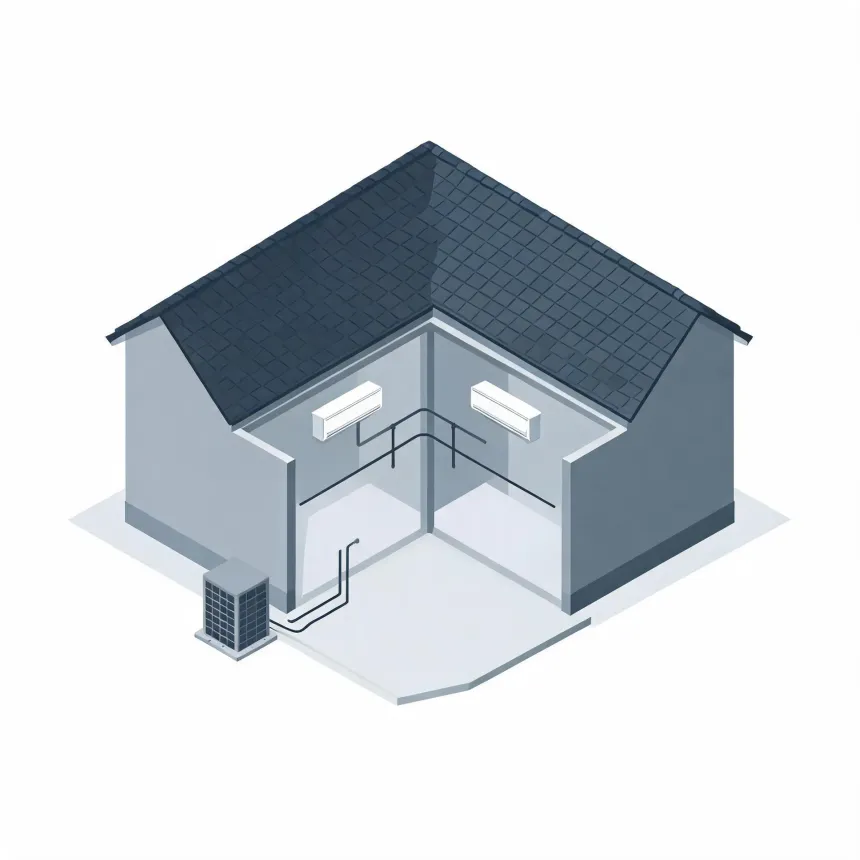
The equipment itself is a small piece of the job. Running a line set between the outdoor compressor and the indoor head, mounting the head where it actually cools the room instead of just the nearest wall, and routing a condensate drain so moisture has somewhere to go, that work is most of what a contractor is pricing. A wall near the outdoor unit costs less to run line set to than one on a far side of the house or up through another floor.
Each indoor head needs its own line set, its own mounting, its own place to drain. An outdoor unit built to run several heads costs more than one built for a single zone, and running line sets to more rooms takes more time and more wall and floor penetrations than running one. A second zone is not a small add-on to the first. It is close to doing the job over again.
Sizing a mini split comes down to matching the unit's output to the heat gain and heat loss of the specific room, not guessing from square footage alone. A contractor doing this right works through the walls facing outside, the windows and how they face the sun, the ceiling height, and what's on the other side of each wall. A unit too big cools the room fast, shuts off, and leaves the air damp since it never runs long enough to pull moisture out. A unit too small never shuts off at all, running constantly and still falling short on the hottest or coldest days. Either mistake wears on the compressor, because neither lets it settle into the steady cycle it's built to run. The right size looks less powerful on paper than people expect, and that's usually a sign the math was done properly instead of rounded up.
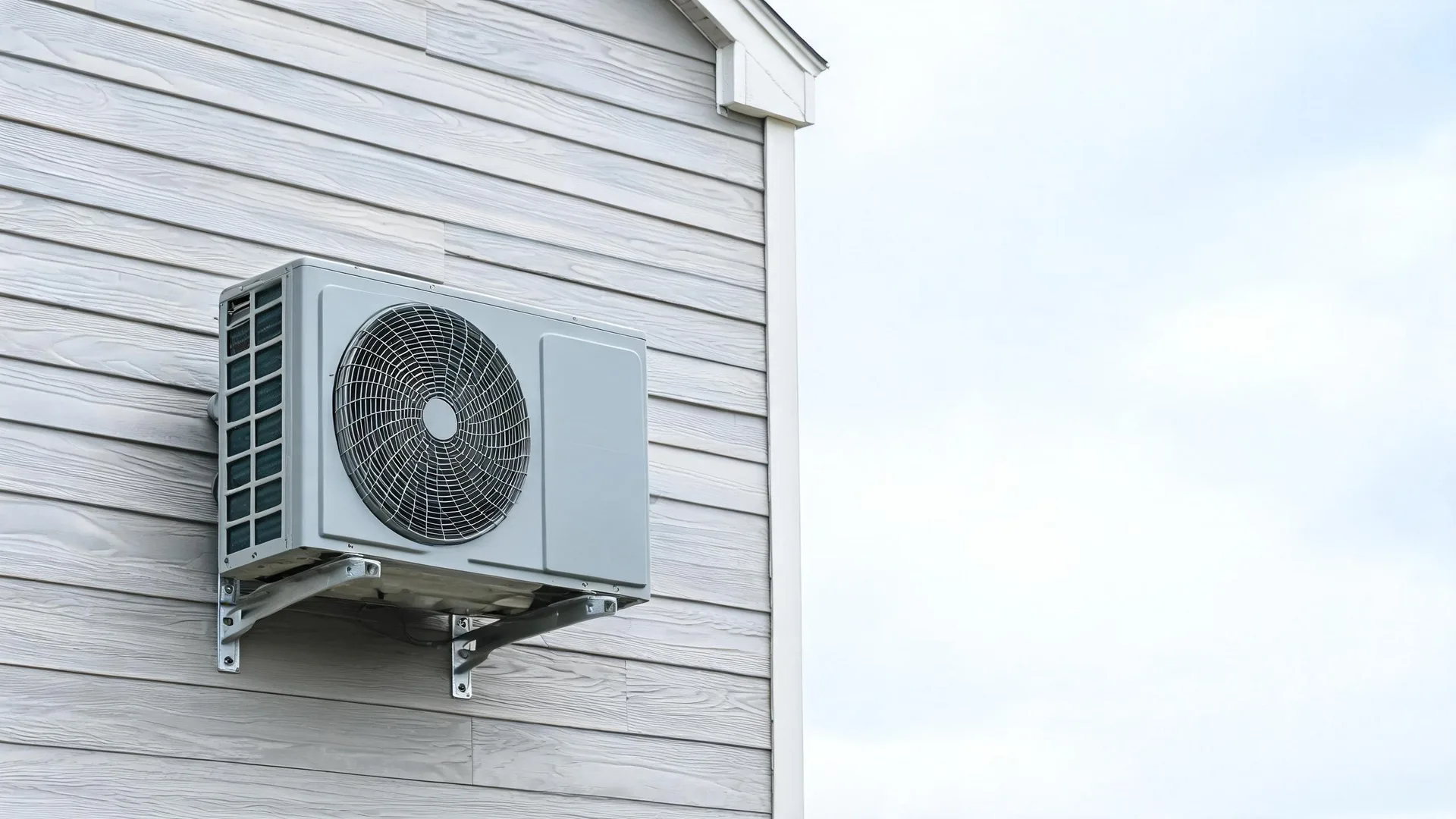
Installation day starts outside. The outdoor unit gets mounted on a pad or brackets, in a spot with clearance on all sides for airflow and a clear path for the line set to reach indoors. The line set and drain run through a wall, usually through a small hole just big enough for them to pass. That line set carries refrigerant, so before anything turns on, the installer pulls a vacuum on the system to clear out air and moisture. Skip that step and the compressor is working against moisture from the first day it runs. The indoor head goes up last, and it gets tested running in both directions, cooling and heating, before anyone calls the job done.