Gas heats this county
Utility gas heats 49.9% of occupied homes in Fayette County. Another 29.4% run on bottled or LP gas. Electric heat covers 14.2%.
Takes about a minute. No obligation.
Utility gas heats 49.9% of occupied homes in Fayette County. Another 29.4% run on bottled or LP gas. Electric heat covers 14.2%.
Most homes here already have a furnace handling the cold months. A mini split installed alongside it takes over cooling, and can handle heating on the mild shoulder days without touching the gas line or ductwork.
NOAA nClimDiv, 1991–2020 normals
Iowa electricity ran 13.40 cents per kilowatthour in 2024.
A mini split earns its keep on comfort and reach, not a fast payback on the power bill.




Cooling only runs three months here, June through August, with afternoon highs averaging around 80°F. That's a light load next to places where the AC runs most of the year. A mini split sized for this county isn't working hard to keep up, so there's less wear on the compressor over its life. Heating is the bigger job in this zone, and a mini split here is mostly covering summer afternoons and the mild days in spring and fall. A reliable system handles that without strain. The top efficiency model on the shelf doesn't earn its keep on three months of work.
Fayette County falls in zone 5A, and any mini split installed new has to meet 14.3 SEER2 for cooling and 7.5 HSPF2 for heating, the federal minimum for split-system heat pumps. That's the floor a contractor has to install to here. A federal tax credit is available on qualifying equipment, worth looking into before you settle on a system.
Find a contractor
Whatever is heating and cooling the house now does not go away just because the mini split is in. If it is a furnace paired with a window unit or an older central system, most contractors will pull the equipment being replaced and cap or seal off what it was connected to. A window unit comes out of the window. A central air condenser outside gets disconnected and hauled off, and the line set and indoor coil come with it if they are not being reused. If the old system ran on a duct network that is being abandoned in part, those ducts usually get sealed off rather than left open, since an open duct is just a leak in the system still running. Anything with refrigerant in it has to be recovered before it is disconnected, that is not optional, it is handled before the equipment is removed. A furnace that is staying for heat just keeps running the same as before. The mini split does not touch it.
SEER2 tells you how efficiently the system pulls heat out of the house in summer. HSPF2 tells you how efficiently it puts heat into the house during the cold months. A mini split can rate well on one and only average on the other, so it's worth checking both instead of reading one number off the sticker.
SEER2 and HSPF2 are measured under set test conditions, not inside the house they end up in. A unit sized wrong for the room, or installed with a poor line set connection, runs below its rated efficiency no matter what the label says. The number tells you what the equipment is capable of. Reaching it is a matter of sizing and installation.
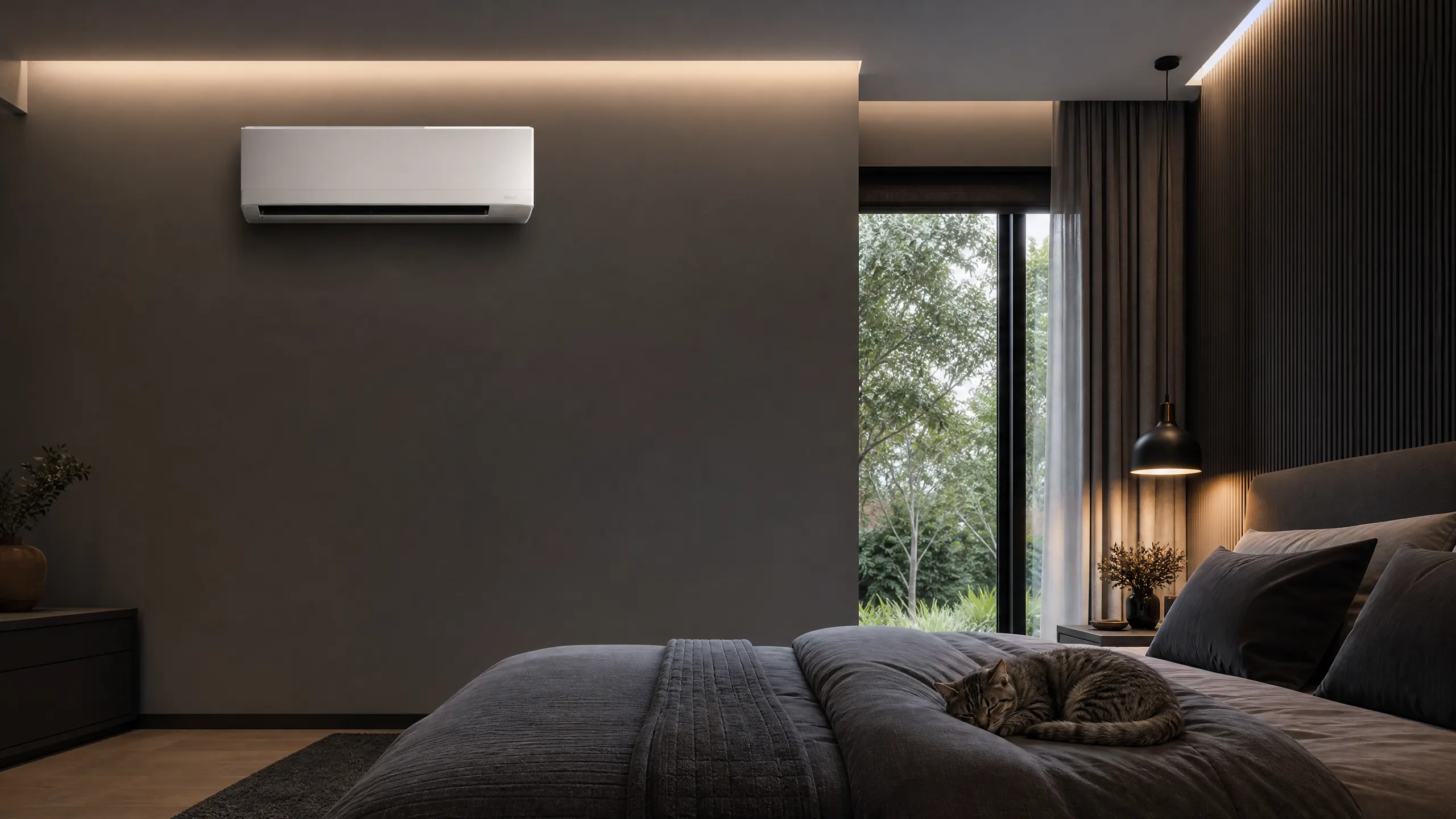
Comparing mini splits comes down to a handful of questions, and the number on the brochure isn't where to start. Ask how the room was sized, not just the floor area but the windows, the ceiling height, what's on the other side of the walls. A unit too big for the room cycles on and off instead of settling into a steady run, and that short-cycling wears on the compressor faster than steady use does. Ask about the line set too, whether it's a short clean run or something routed through tight spaces with extra joints, since every joint is a place a refrigerant charge can slowly leak from. Ask where the indoor head goes and which direction it throws air, because a head blowing straight at a wall or a doorway won't cover the room the way one placed well will. And ask who checks the refrigerant charge after it's installed. That check is what confirms the system is actually running the way it's rated to, not just installed and left.
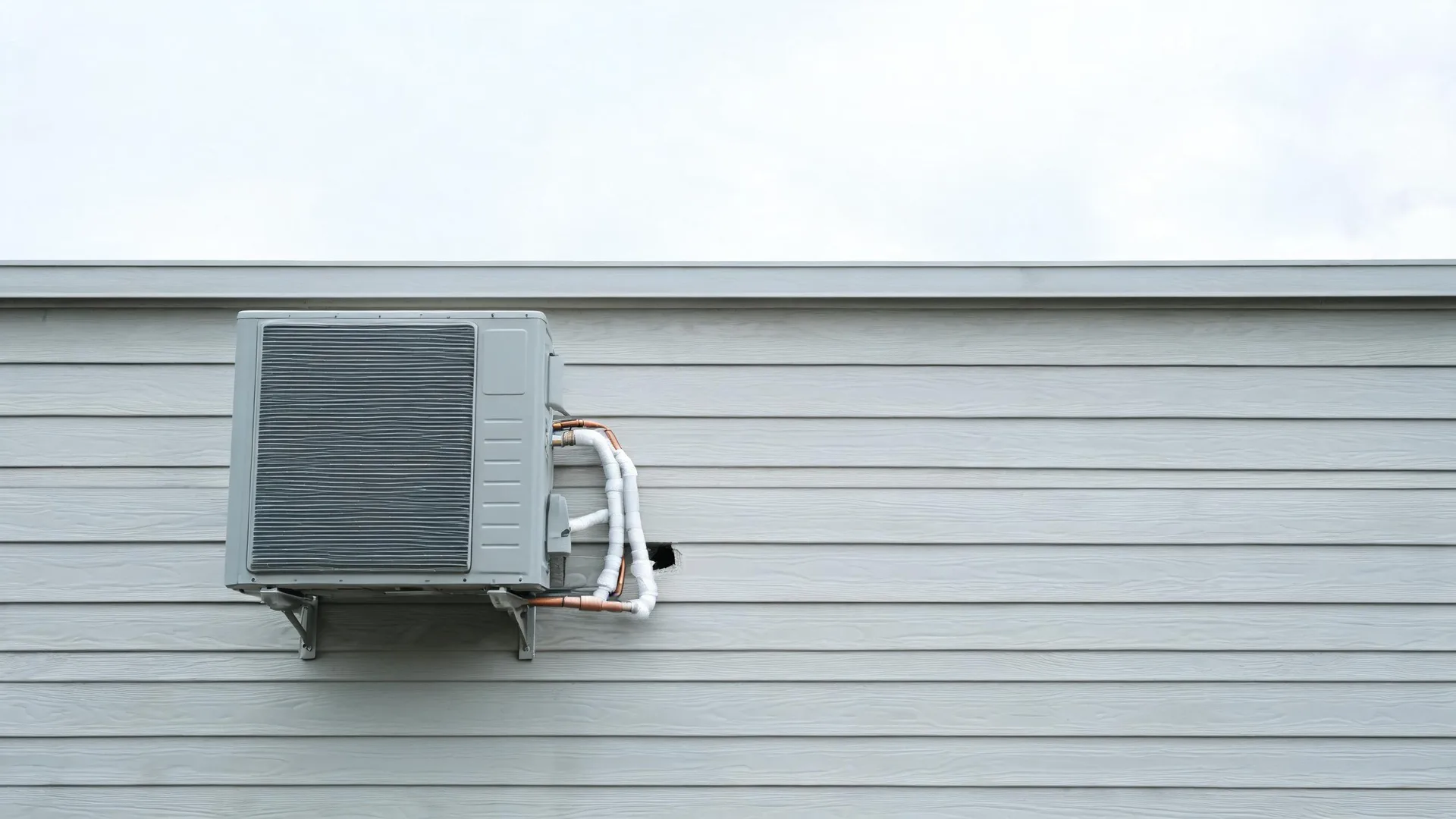
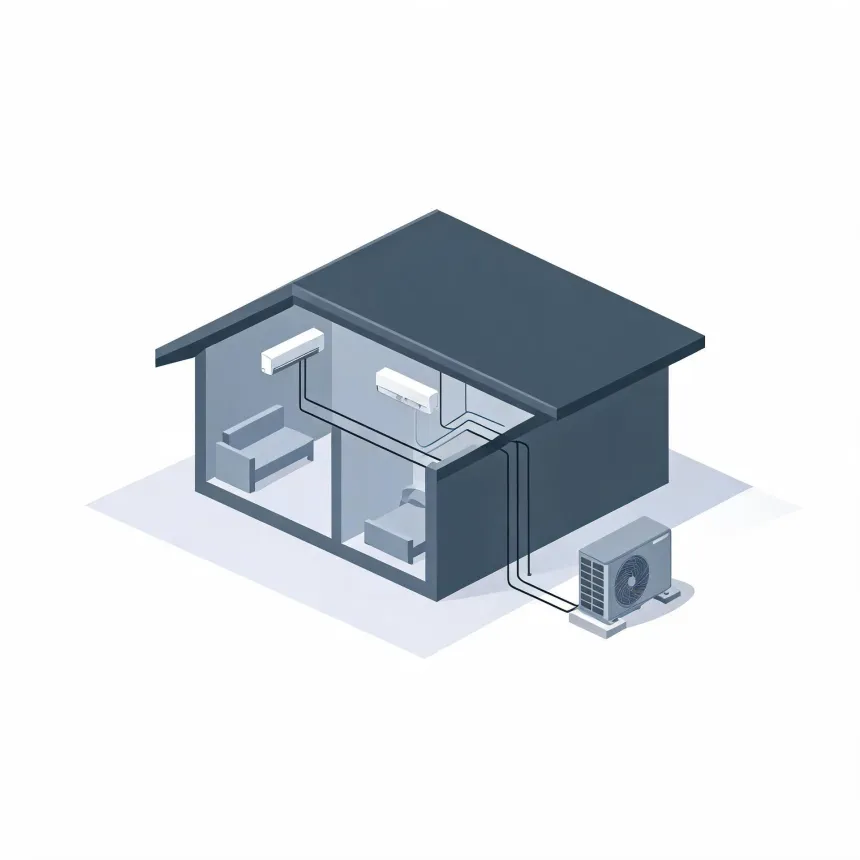
Installation starts outside, with the spot picked for the outdoor unit. It needs clearance on all sides for airflow and a line set run to wherever the indoor head is going, so that gets decided before anything is mounted. A small hole gets drilled through the wall for the line set, the refrigerant lines, power wire and condensate drain bundled together and run through it. The indoor head mounts on a bracket set into the wall, then the line set connects to it and runs back out to the condenser. Once both ends are connected, the whole line gets pressure tested to make sure there are no leaks at the joints, then pulled down to a vacuum to clear out any moisture or air before refrigerant ever moves through it. Only after that passes does the system get charged and switched on. The last part of the day is the startup check, running the system and confirming it's pulling the charge it's built for, not just that air is blowing cold or warm. That check is what tells you the number on the box and the system in your wall are actually the same thing.