Gas heats most homes here
Utility gas heats 52.8% of homes in Mahaska County, with electricity and propane making up most of the rest. A mini split usually joins a gas furnace rather than replacing it.
Takes about a minute. No obligation.
Utility gas heats 52.8% of homes in Mahaska County, with electricity and propane making up most of the rest. A mini split usually joins a gas furnace rather than replacing it.
A mini split can handle cooling in summer and take on the heating load on milder days, while the furnace stays in place for the coldest stretches of winter.
NOAA nClimDiv, 1991–2020 normals
An old wall unit or window AC doesn't just get thrown out with the new mini split in place.
Whoever installs the new system can tell you whether the old unit gets hauled away as part of the job or left for you to deal with.




Mahaska County falls in climate zone 5A, a cool zone where heating carries more of the year than cooling. Any mini split installed here has to meet the federal minimum for that zone on both ends. That means 14.3 SEER2 for cooling and 7.5 HSPF2 for heating, the same numbers that apply to a central heat pump. The standard doesn't set a separate bar for ductless systems, so a mini split has to clear this one. That rules out older or lower-tier units that fall short. A system that meets this standard may also qualify for a federal tax credit, worth asking about before you settle on a model.
Cooling here starts in June and runs through August, about three months. Get the mini split in before May and it's running on day one of the heat, not fighting a backlog of installs everyone else waited to book.
Find a contractorSummer cooling here runs about three months, June through August, with afternoons averaging 83°F. That's a short season for a mini split to carry. Most of the strain on a cooling system comes from long stretches of high heat, and Mahaska County doesn't ask for that. A unit sized right for this house will spend most of the year idle or handling light duty on mild days. You don't need the highest-efficiency model on the shelf. Pick one built well and sized correctly, and age or a skipped filter change will wear on it long before the workload does.
A mini split that's oversized cools the room fast, then shuts off before it's pulled the moisture out of the air. The room feels clammy even at the right temperature, and the compressor spends its life cycling on and off instead of running steady. That on-off cycling wears parts faster than a unit sized right and left to run.
Sizing starts with a room-by-room load calculation, not a chart based on square footage alone. The installer looks at window area and direction, how much insulation is in the walls and attic, ceiling height, and what's on the other side of each wall. Rooms that look alike on paper can need different capacity depending on what's actually around them.
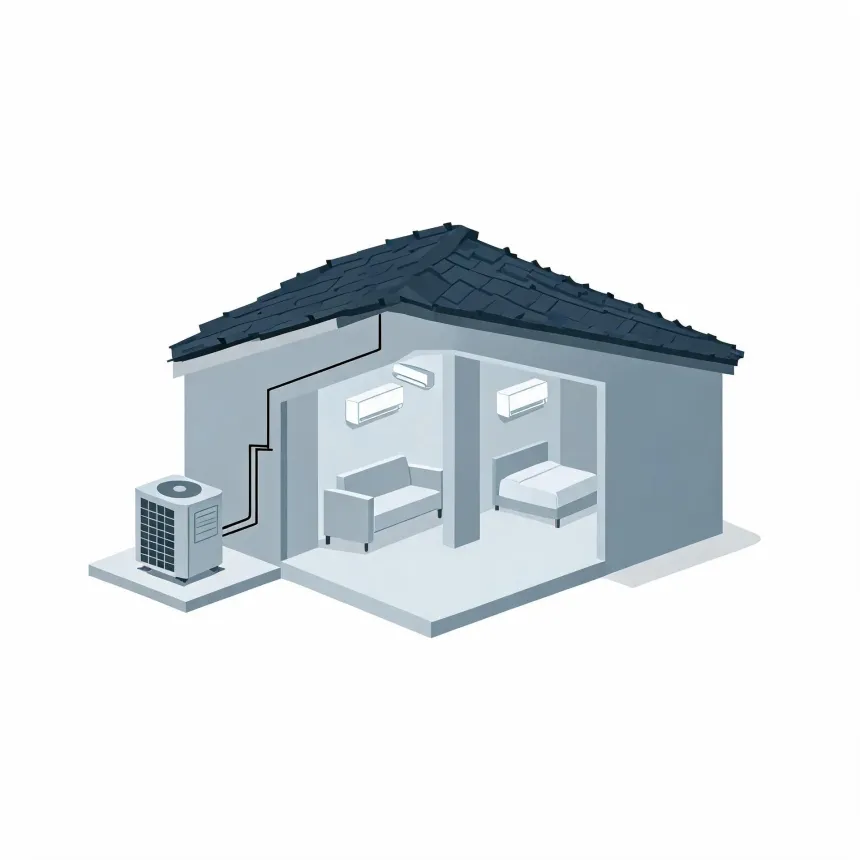
The number of indoor heads is the first thing that moves the price. One room needs one indoor unit and one outdoor compressor. A few rooms off a single outdoor unit costs more, since the outdoor unit has to be sized to carry all of them at once. Line set length matters too. Every extra foot of refrigerant line between the compressor and the indoor head means more copper, more insulation, and more labor running it through walls or along the outside of the house. Where the outdoor unit can sit factors in as well. A wall mount with a short, direct line run goes in fast. A unit that has to sit farther off, or needs the line routed through finished space, takes longer to do right. The electrical behind the wall adds its own cost. Some homes already have a circuit close enough to use. Others need new wire run back to the panel, and if the panel is full, that gets sorted out before the mini split goes in at all.
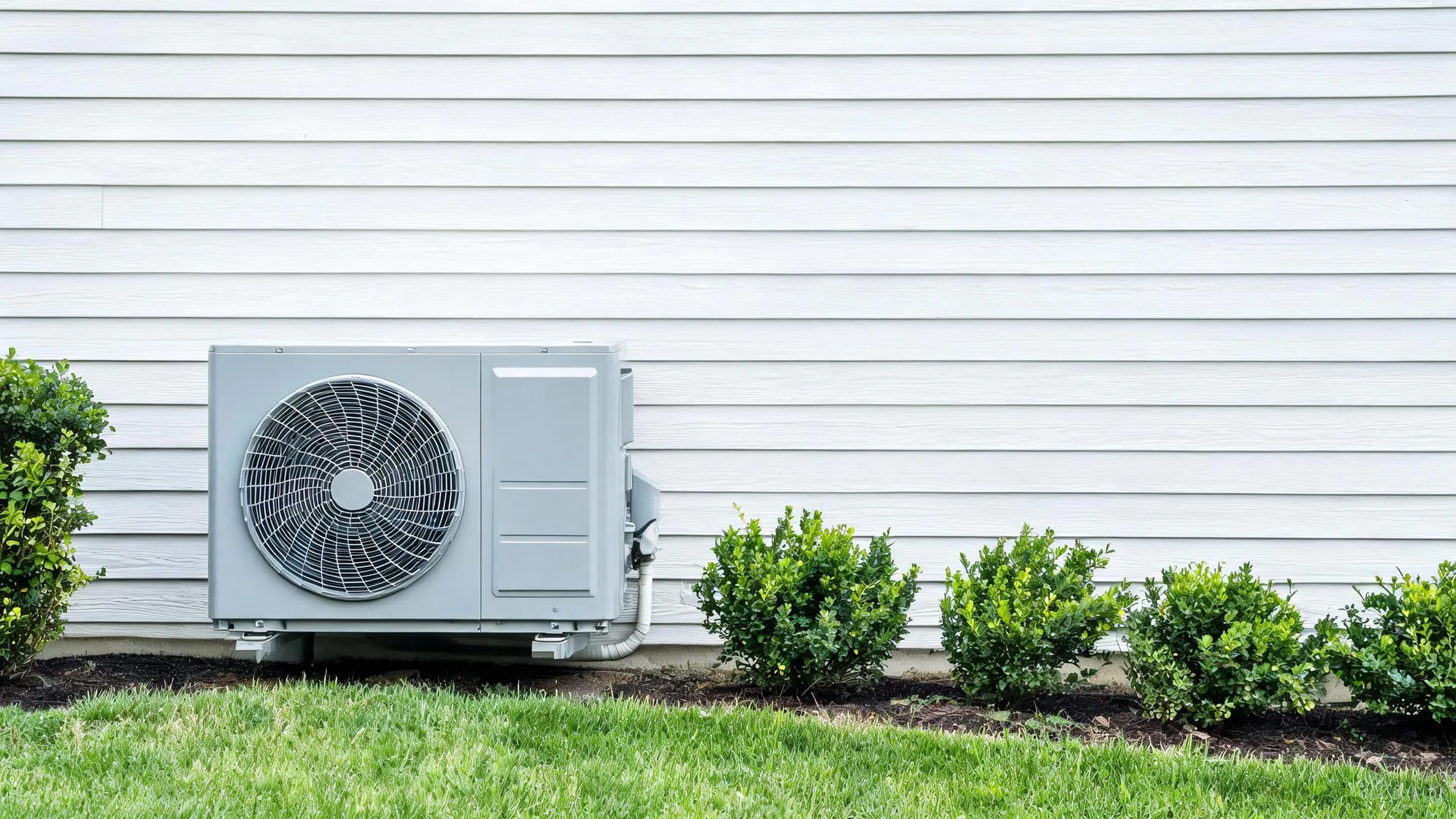
Install day starts outside and in at the same time. One tech mounts the outdoor compressor on a pad or brackets and gets the refrigerant lines run through the wall, usually behind where the indoor head will hang. Inside, the indoor unit mounts high on the wall, and the line set, drain line, and electrical whip all route through a single sleeve so there's one hole in the wall, not several. Once both units are set, the lines get connected, and the system is evacuated with a vacuum pump to pull out air and moisture before any refrigerant moves through it. Skip that step and moisture sits in the lines, which causes problems well after the crew is gone. After that the system gets charged, powered up, and tested on both cooling and heating before anyone calls it done.