Most of Ottumwa heats with gas
Utility gas heats 63.5% of homes in Wapello County, far more than any other fuel. Electricity comes next at 19.2%, with propane at 12.8%.
Takes about a minute. No obligation.
Utility gas heats 63.5% of homes in Wapello County, far more than any other fuel. Electricity comes next at 19.2%, with propane at 12.8%.
A mini split does not replace a gas furnace outright. It is usually added for a room that runs hot or cold, or for cooling where there is no ductwork to reach, while the furnace keeps handling the rest of the house.
NOAA nClimDiv, 1991–2020 normals
Every mini split job needs a place to run a line set between the outdoor unit and the indoor head, through a wall or a chase, and the distance and the path both affect the work.
A straight shot through one wall costs less labor than a line that has to run up, over, or around framing to reach the spot that needs heating or cooling.




Wapello County sits in climate zone 5A, a cool zone where the furnace carries more of the load than the air conditioner does. A mini split installed here still has to meet the federal minimum for a split-system heat pump. That means 14.3 SEER2 for cooling and 7.5 HSPF2 for heating, the same bar a central heat pump has to clear. The standard does not set a lower number for ductless equipment. A unit that meets this minimum and is used for heat may also qualify for the federal energy efficiency tax credit. Worth checking before deciding which unit to buy.
Electricity in Iowa runs 13.40 cents per kilowatt-hour, cheaper than most of the country. That changes the math on which mini split to buy. A high-efficiency model still costs more up front, and with power this cheap it takes longer to earn that back. For a unit that's covering one room, or filling in where the furnace can't reach, picking one that fits the space and runs reliably matters more than chasing the highest efficiency number on the shelf.
Find a contractorIf the place that needs a mini split is an addition, or a room where the wiring or framing doesn't match the rest of the house, say so when the contractor comes out to size the unit and plan the line set path. A system sized for a newer, tighter room won't fit one that loses heat differently. This is the kind of thing worth walking the contractor through room by room rather than over the phone.
SEER2 is the cooling number and HSPF2 is the heating number, and a mini split carries both because it does both jobs. A unit can be strong on one side and average on the other. If the room you're covering runs cold more than hot, the heating number is the one to weigh more heavily, and the other way around for a room that runs hot.
SEER2 and HSPF2 describe the outdoor unit and indoor head working together, not either piece alone. Pairing a high-rated outdoor unit with the wrong indoor head, or running a line set longer than the pair was tested with, pulls the real efficiency below what the label promises. The number on the sheet assumes the system is put together the way it was tested.
Adding a mini split doesn't mean anything happens to the furnace. The systems don't compete for the same job, so nothing gets decommissioned or capped off. The furnace keeps its ducts, its thermostat call, and its place as the main source of heat for the house. The mini split runs on its own remote or wall control, separate from the furnace thermostat, and only covers the room it's installed in. Some homeowners end up running the furnace less once the mini split is in, because the room that used to run cold or hot now has its own fix, but that's a choice made room by room, not a changeover. If a central air conditioner is what's being supplemented instead, that's a different question, since a mini split can take over cooling for a space in a way it generally can't replace whole-house heat in a cold climate.
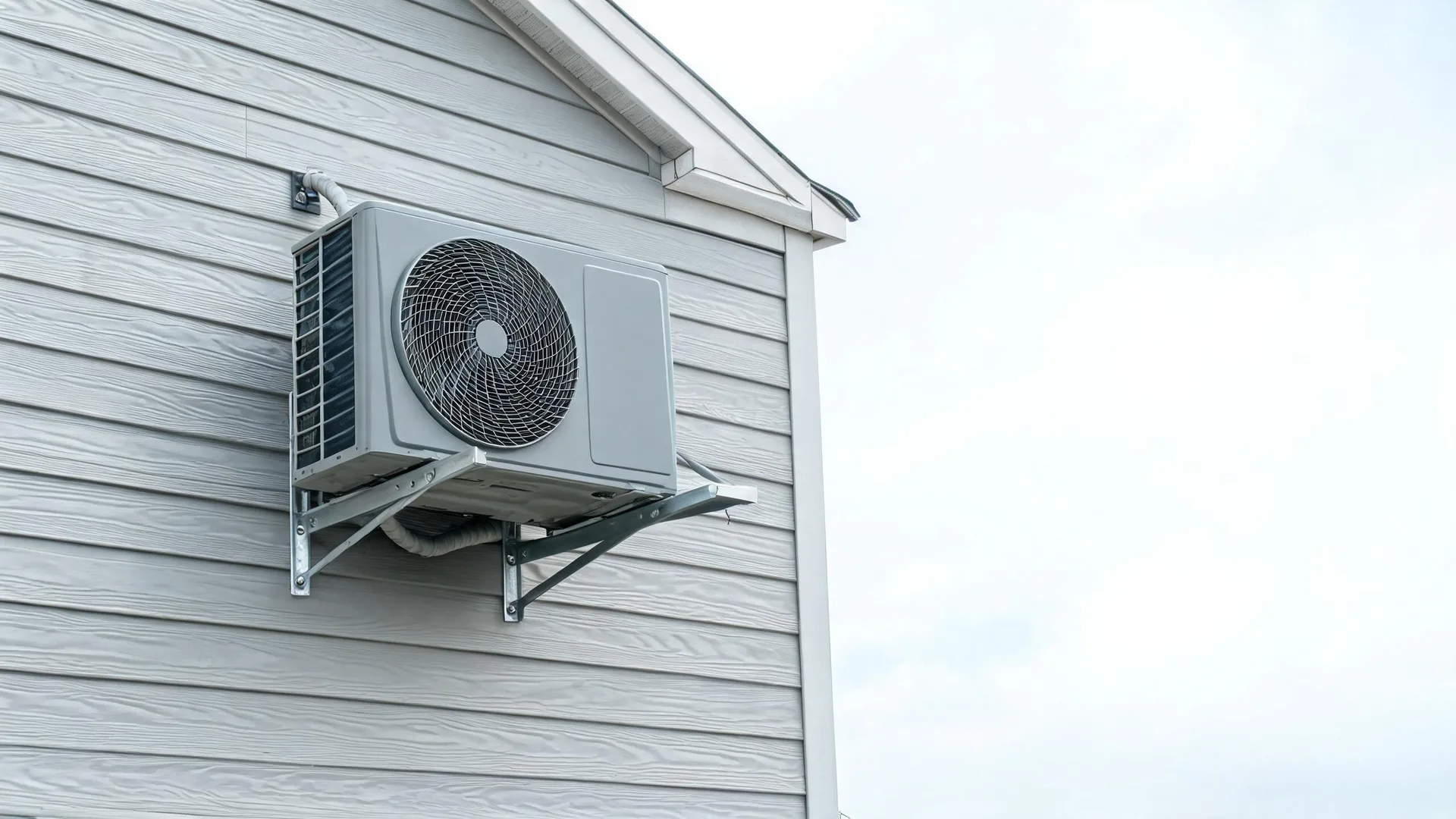
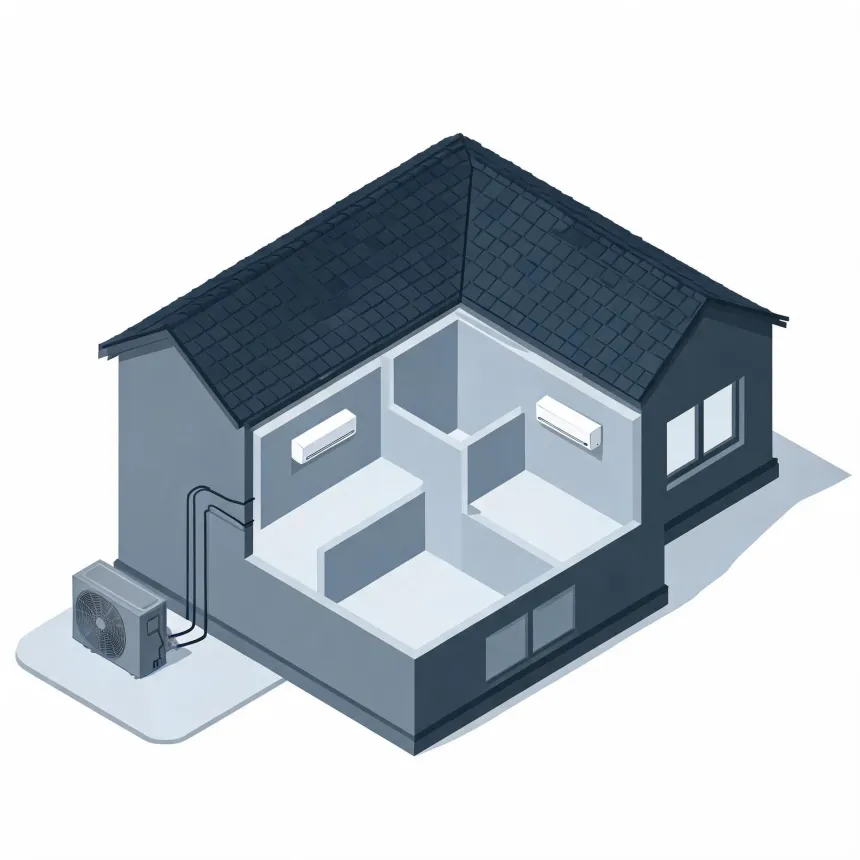
Installation day starts outside, with the contractor picking the spot for the outdoor unit. It needs clearance on all sides for airflow, and a path back to the room that keeps the line set short and protected. Inside, the indoor head goes up high on a wall or ceiling, over a small hole drilled through to the outside. That hole carries the line set, the refrigerant lines, a drain line for condensation, and the power wiring, all bundled together and sealed where they pass through the wall. Once both units are mounted, the lines get connected, the system gets evacuated to pull out moisture and air, and then it's charged with refrigerant. The last step is running it through both cooling and heating to check that the head is actually conditioning the room and that the drain line is clearing water the way it should.