




A row of dark-painted single-story houses with lawns and large deciduous trees, seen behind a tall trimmed hedge.

Mini Split Installation in Sioux Center, IA

Tell us about the job

Takes about a minute. No obligation.

New system or replacementMini-splitSioux County, IA
Step 1 of 2

What ZIP code is the job in?

Gas heats close to half the homes in Sioux County, electricity heats most of the rest, and LP gas covers a smaller share still. A mini split doesn't compete with any of those for the coldest months here. It earns its keep in the shoulder seasons, and as cooling, where it can replace or support a window unit or central AC. If your home runs on electric heat already, a mini split works alongside that setup without much to reconcile. If you're on gas or LP, the furnace keeps doing the job it does now, and the mini split takes on the rest of the year.

8 months
October through May, your system heats
3 months
June through August, it cools
11°F
the average winter night it heats against
82°F
the average summer afternoon it cools against
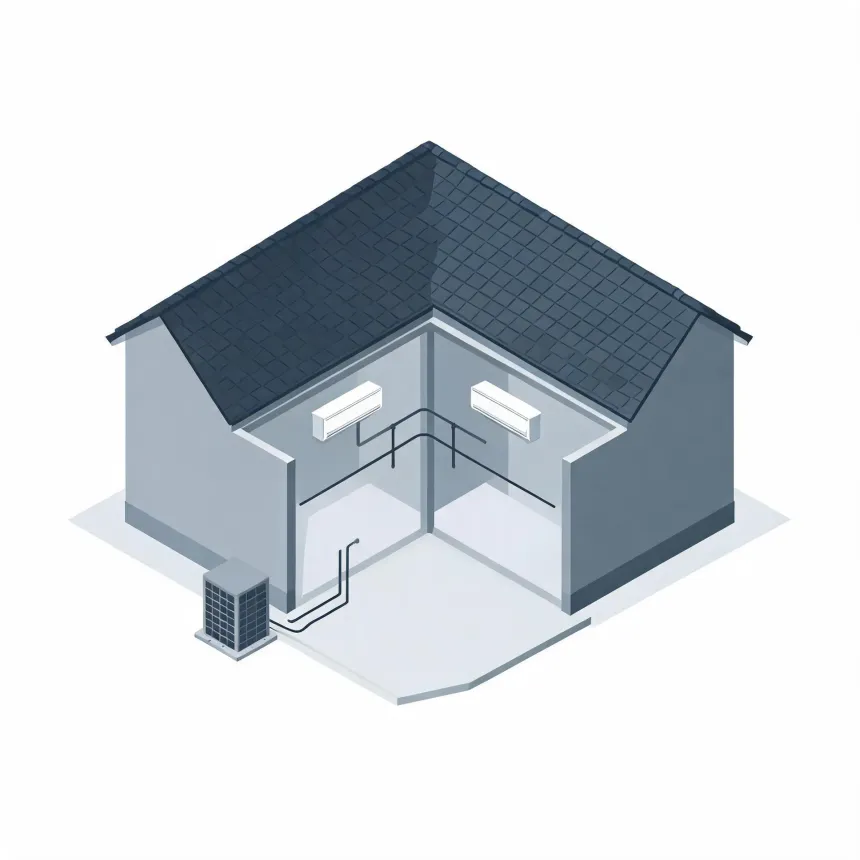
Isometric illustration of a cutaway gray house with a dark shingled roof, showing two wall-mounted indoor air conditioning units connected by piping to an outdoor condenser unit on the ground outside.
Your system heats October through May and cools June through August.

NOAA nClimDiv, 1991–2020 normals

Electricity in Iowa runs 13.40 cents per kilowatt-hour, below the national average.

A mini split still costs less to run than window units or baseboard heat, just don't expect a fast payback on the highest-efficiency model.

May is for installing. June is for cooling.

Cooling runs June through August
Summer afternoons average 82°F
67 damaging wind events from 2015 to 2024

Half the homes in Sioux County were built in 1973 or earlier. A house that age usually wasn't set up with the wiring or the wall layout a mini split needs, and it won't have existing line set routing like a newer build might. That's not a problem, it just means the installer is figuring out where the line set runs and whether the electrical panel has room for a new circuit, rather than following a path someone already laid out. Where the indoor unit goes often comes down to where a clean line to the outside is possible, not just where you'd want the air in the room. None of this rules anything out. It just means the walk-through matters more in a house this age than in one built last year.

A mini split here has a minimum to meet, and a credit worth knowing about

Zone 6A means any mini split installed here has to hit at least 14.3 SEER2 for cooling and 7.5 HSPF2 for heating, the same split-system minimum that applies everywhere else in the country. That floor is already built into what manufacturers ship, so the question is less about meeting it and more about how far above it you want to go. A federal tax credit is available for qualifying equipment, worth looking into before you settle on a unit.

Find a contractor
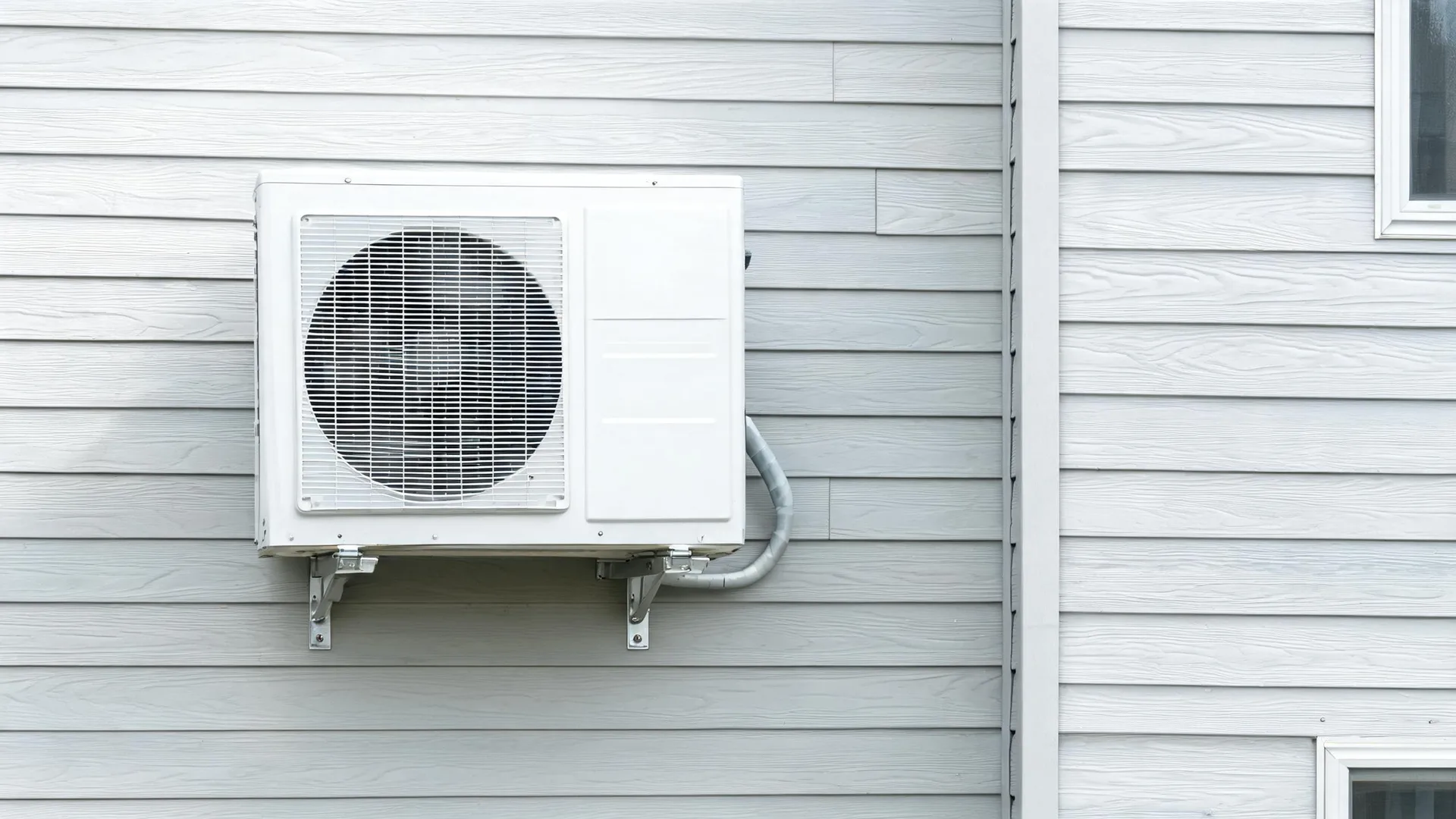
A white mini-split air conditioner outdoor condenser unit mounted on metal brackets against a beige stucco exterior wall, with a blue sky and scattered clouds in the background.

Sized to the room, not the square footage

Size this wrong and the mistake runs every hour the unit does. A mini split too big for the room cools the air fast and shuts off before it pulls the moisture out, so the room feels cold and damp at once. One too small runs flat out and still can't hold the temperature on the hardest days, and running flat out all the time wears on the compressor faster than cycling on and off ever would. The right size comes from a load calculation, not the square footage of the room by itself. That calculation looks at the windows and which way they face, how much insulation is behind the walls, the ceiling height, and what else is already generating heat in that space. Rooms that look alike on paper can need different equipment because of what's inside them. A good installer walks the room before recommending a unit, not after.

How many zones, and from one outdoor unit or several

A single outdoor unit can run more than one indoor head, each with its own thermostat, or you can run one outdoor unit per room. More heads on one outdoor unit costs less to install but means if that outdoor unit needs service, every zone on it goes down at once. Ask how the system is being split before you ask about the equipment itself.
What happens when the outdoor temperature drops

Every mini split has a point where its heating output starts to fall off, and that point is different from one model to the next. Ask where that line is for the unit being quoted, not just what it's rated for at mild temperatures. A unit that keeps its output at low temperatures costs more, and that difference matters more in a room with no backup heat than in one where a furnace is still doing the coldest-day work.

If you're adding a mini split rather than replacing anything, there's no old system to deal with. The new lines and the head just join what's already running. Replacing a window unit is simple. It comes out, the wall opening gets sealed up properly so it isn't leaking air all summer, and the mini split takes over. Replacing central air is a bigger job. The old outdoor unit, the indoor coil, and the line set all come out, and if the ductwork isn't being reused for anything else, it either stays in place unused or gets removed depending on what else the ducts serve. A furnace being replaced at the same time is its own separate removal. The furnace and the AC don't share parts even when they've been sitting side by side for years. Whoever does the install should also be the one hauling the old equipment off. Refrigerant has to be recovered properly rather than vented, and that's not a step to skip or leave to chance.

Installation day itself is mostly about the line set and the mount, not the indoor head. The outdoor unit gets set on a pad or brackets, leveled so condensate drains the way it should and the compressor doesn't rack itself to death over time. The installer runs the line set through a wall penetration, usually a single hole, and that hole gets sealed against weather on both sides. Indoors, the mounting plate goes up first, then the head hangs on it once the lines and the condensate drain are connected and the electrical is tied in. After everything's connected, the line gets evacuated with a vacuum pump to pull out moisture and air before refrigerant ever enters it. That step matters more than it looks like from the outside, because moisture left in the line corrodes it slowly and shows up as a problem months later, not that day. Once the system's charged, the installer checks the line set pressures against what the manufacturer specifies for that length of line, not just whether the thing turns on and blows cold air.