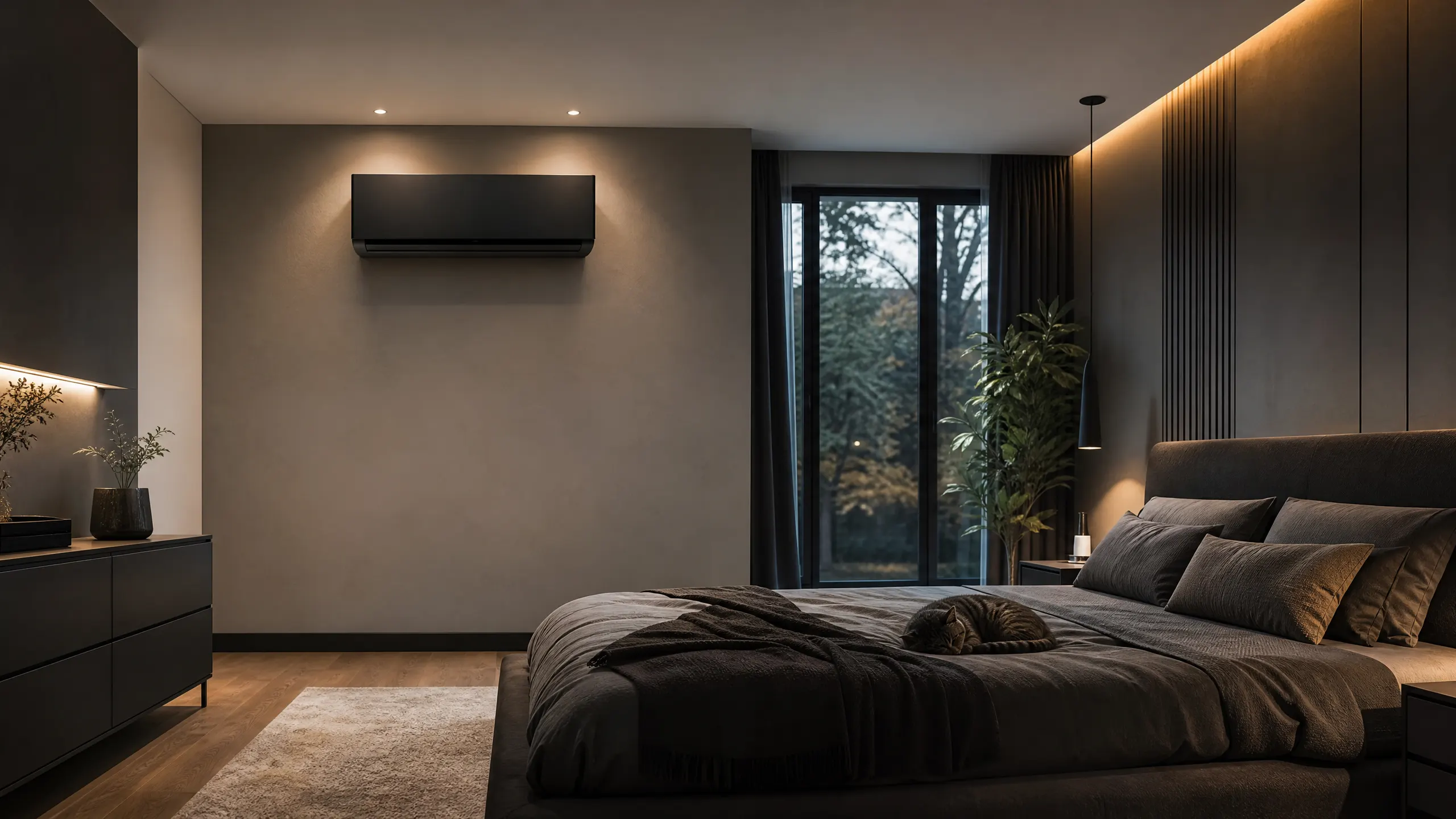






A dark, minimalist bedroom with a king-size bed, wall-mounted air conditioning unit, and large windows, with a cat sleeping on the duvet.

Mini Split Installation in Sioux City, IA

Tell us about the job

Takes about a minute. No obligation.

New system or replacementMini-splitWoodbury County, IA
Step 1 of 2

What ZIP code is the job in?

Gas heats close to 6 in 10 homes in Woodbury County, more than any other fuel. A mini split does not replace that furnace, it works alongside it. On the mild days of spring and fall it can carry the house on its own and let the furnace sit idle. On the coldest days the furnace still does the heavy lifting. Where a mini split changes things most is summer, cooling rooms a central system skips or struggles to reach evenly.

8 months
October through May, your system heats
3 months
June through August, it cools
14°F
the average winter night it heats against
83°F
the average summer afternoon it cools against
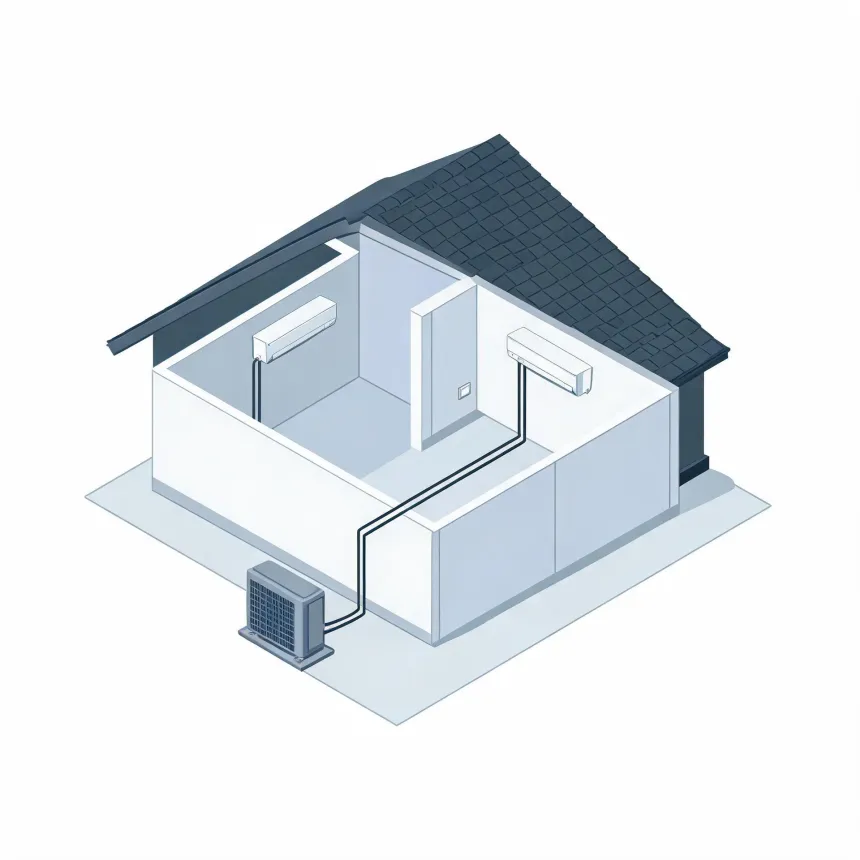
Isometric cutaway illustration of a small house with a dark shingled roof, showing two wall-mounted indoor air conditioning units in separate rooms connected by lines to an outdoor condenser unit on the ground outside.
Your system heats October through May and cools June through August.

NOAA nClimDiv, 1991–2020 normals

Cooling in Woodbury County starts in June.

Have the mini split in before May runs out, so the install isn't competing with the first hot week.

Sioux City weather asks nothing extra of a mini split

172 severe weather events from 2015 to 2024
15% of homes statewide lost power a day or more in 2024
88 damaging wind events from 2015 to 2024
Sioux City weather asks nothing extra of a mini splitSummers here average 83°F and last about three months, June through August. A standard mini split handles that without upsizing.

Half the homes in Woodbury County were built in 1959 or earlier. A house that age was built for a furnace and nothing else, with no thought given to where a mini split's line set or condenser might go. That doesn't rule anything out. It just means the installer is working around decisions made decades before heat pumps were common here, not fitting a system into a blank slate. The crew sizing your install needs to see the actual walls and the actual roofline, not just the square footage.

Here, fit and reliability matter more than squeezing out extra efficiency

Electricity in Iowa runs 13.40 cents a kilowatt-hour, cheaper than most of the country. A mini split will still cut what you spend cooling the rooms your central air can't reach, but a higher-efficiency model won't pay off much faster than a standard one here. Pick the system that fits your house and holds up, not the one with the best number on the label.

Find a contractor
A man in a cap, gray shirt and brown work pants walks up steps toward a dark green front door, carrying a canvas tool bag beside a potted shrub.
A white outdoor air conditioner condenser unit mounted on metal wall brackets against gray horizontal siding, with a blue sky and white clouds behind it.

The placement has to be right the first time

Once it's in, the mini split runs on its own schedule, not the furnace's. A unit mounted on an old plaster wall or run through a tight chase doesn't get to come out again easily if the first placement is wrong. Ask the installer to walk you through where the line set goes and why before the holes get cut.

A mini split doesn't send anything to the curb

Adding a mini split doesn't touch the furnace or the central air already in the house. Nothing gets removed, disconnected or hauled away because of the install. The new system just takes over the rooms it's assigned to cool.
The old thermostat zone just gets quieter

Once the mini split is handling a room, the central air stops working as hard to reach it. The vents feeding that space are still there and still open, but the compressor cycles less because the mini split is carrying the load on its own.

Comparing systems comes down to a few straight questions, not a spec sheet. Ask how many indoor heads the system supports and whether one outdoor condenser is meant to run all of them or just one. A multi-zone setup lets several rooms share a single outdoor unit, but each head still needs its own line set run, and that changes what the install actually involves. Ask what happens if one zone needs service, whether the whole system shuts down or just that head. Ask about the sound rating of the indoor unit, since some run quiet enough for a bedroom and others don't. And ask what warranty covers the compressor versus the labor to replace it, because those are often different lengths and the difference matters more than any number on the brochure.

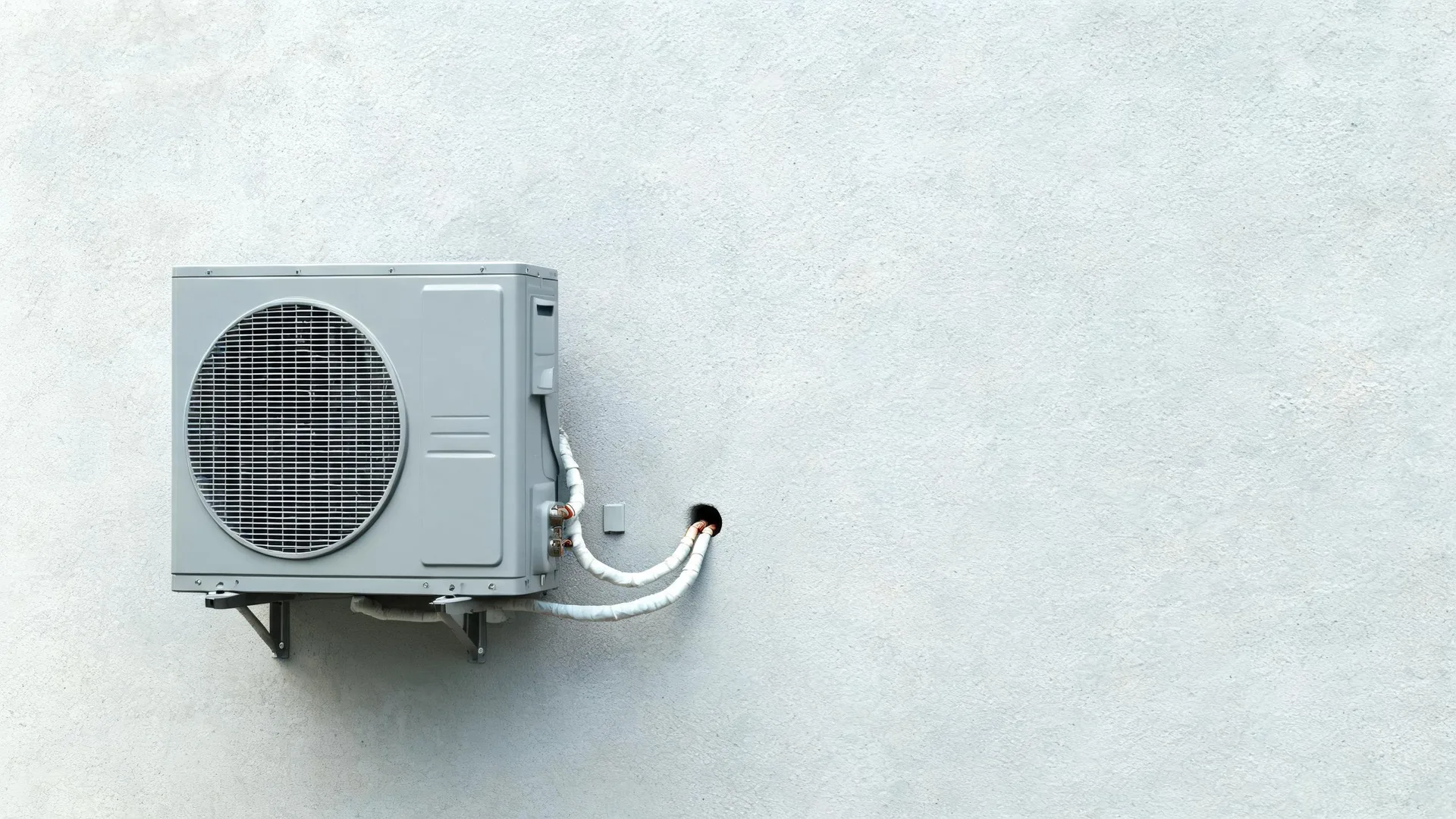
Installation day starts outside, not in. The outdoor unit gets mounted on a pad or brackets, then the installer runs the line set, a bundle carrying refrigerant lines, power, and a drain, from the condenser to the indoor head. That line set has to pass through an exterior wall, so there's one hole cut for it, usually hidden behind or near where the indoor unit hangs. Once the lines are connected at both ends, the whole system gets evacuated with a vacuum pump to pull out air and moisture before any refrigerant moves through it. Skipping that step is what causes a system to fail early, so it's worth asking whether it's part of the process. After that the refrigerant charge gets checked against what the manufacturer specifies for the length of line set actually run, since a longer run needs more charge than a short one. The last part is power and controls, getting the breaker or disconnect wired in and the indoor head talking to its remote or thermostat. A clean install ends with the tech running the system in both heating and cooling mode before they leave, checking the temperature split at the vent and making sure the condensate drain is actually draining.