A quiet suburban street at twilight featuring two-story brick homes with illuminated windows and large trees lining the sidewalk.

Mini Split Installation in Spirit Lake, IA

Tell us about the job

Takes about a minute. No obligation.

New system or replacementMini-splitDickinson County, IA
Step 1 of 2

What ZIP code is the job in?

Gas heats most homes here

57.3% of homes in Dickinson County heat with utility gas, and another 15.0% run on bottled or LP gas. Electric heat covers 26.0%. A mini split works alongside any of these rather than replacing the furnace, since it's built to handle cooling and shoulder-season heating.

What that means for a mini split

In a gas-heated home, a mini split takes over the months the furnace would otherwise cycle on for just a little warmth, and it covers cooling on its own. In an electric-heat home, it can take a bigger share of the heating load since it moves heat rather than generating it.

8 months
October through May, your system heats
3 months
June through August, it cools
10°F
the average winter night it heats against
81°F
the average summer afternoon it cools against
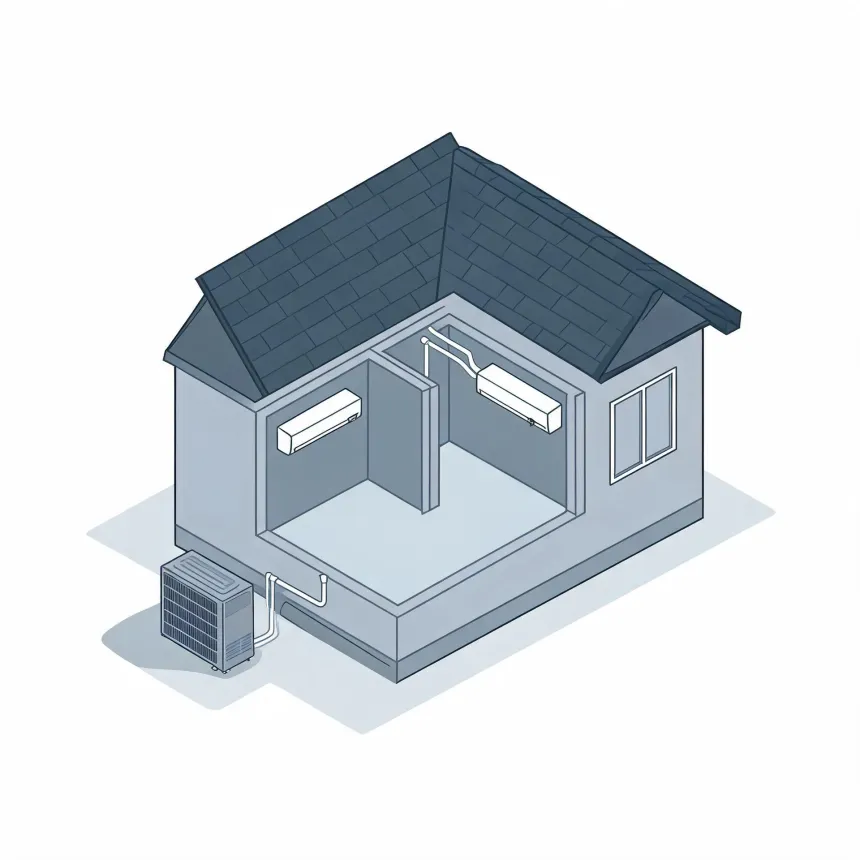
Isometric line illustration of a cutaway house with a shingled gable roof, showing two wall-mounted indoor air conditioning units connected by piping to an outdoor condenser unit on the ground outside.
Your system heats October through May and cools June through August.

NOAA nClimDiv, 1991–2020 normals

The cost of a mini split job comes from how many rooms it has to reach and how hard the line set is to route.

A single zone run along one exterior wall costs less than a multi-zone setup snaking lines through closets and attic space to reach several rooms.

Summers here call for nothing more than a standard mini split

Cooling runs June through August
Summer afternoons average 81°F
72 damaging wind events from 2015 to 2024

A standard single or multi-zone mini split is sized for this job, nothing more. Dickinson County has logged 170 severe weather events between 2015 and 2024, counting wind, hail, winter storms and a handful of tornadoes, but none of that changes what the unit itself needs to be. A mini split still has to move the same amount of heat in summer and shoulder-season cold whether the county had a quiet year or a rough one. Where weather does matter is the power behind it. Outages happen, and a mini split, like any electric system, sits idle until power comes back on its own. That's a reason to ask about a surge protector or backup power if losing heat or cooling for a stretch worries you, not a reason to size up the unit.

Electricity here runs 13.40 cents a kilowatt-hour, so pick the system that fits the house

Power in Iowa is cheap enough that the highest-efficiency mini split won't pay for the difference as fast as it would somewhere with pricier electricity. What matters more is getting a unit sized and routed right for this home. Get a quote and see what that looks like here.

Find a contractor
A man in a dark long-sleeve shirt and tan work pants climbs porch steps toward a dark green front door, carrying a worn canvas and leather tool bag, with a potted conical shrub beside the entry.
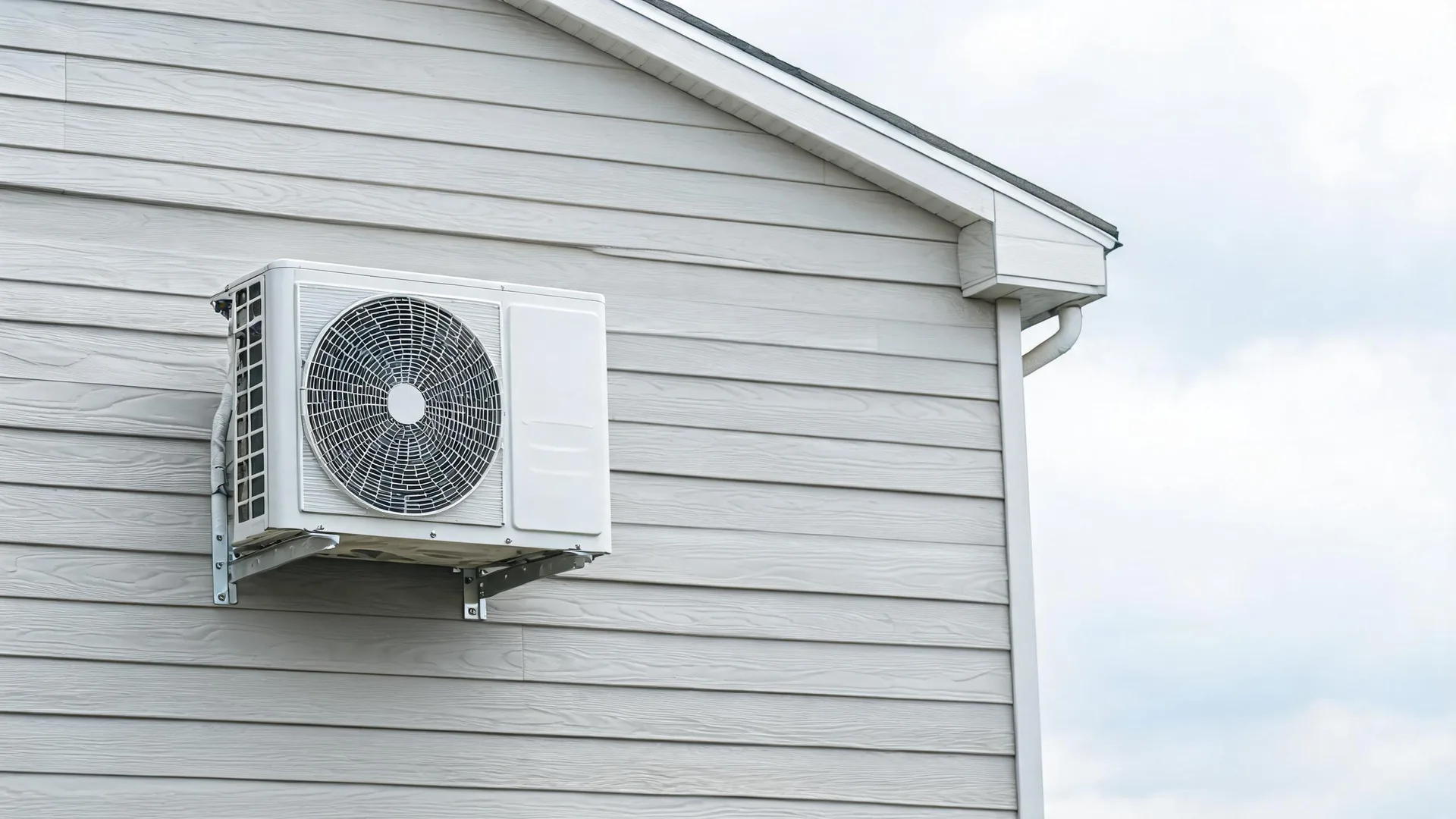
A beige split-system air conditioner outdoor condenser unit mounted on metal wall brackets atop a stucco wall.

Get it in during May, while nothing depends on it yet

Cooling here runs June through August, three months out of the year. Put the mini split in during May, before that first hot week hits, and the contractor is mounting the outdoor unit and routing the line set with no deadline on either end. Wait until June and you're calling the same week everyone else with a broken AC is calling too.

Sizing comes from a room by room heat load calculation

A contractor works out how much heat each room gains in summer and loses in winter, based on square footage, window area, insulation and how the rooms connect. That number, not the size of the old system or a rule of thumb per square foot, decides which outdoor unit and which indoor heads go in.

Oversized hurts more than undersized

A mini split that's too big cools the room fast, shuts off, then starts again a few minutes later. That short cycling means it never runs long enough to pull moisture out of the air, so the room feels cold and damp rather than just comfortable. A correctly sized unit runs longer at a lower output and holds the temperature steady instead.

If this is replacing window units or a single older mini split, that equipment doesn't need to stay in the picture. An outdoor condenser gets disconnected, the refrigerant recovered, and the unit hauled off. A wall-mounted indoor head comes down with it, and the line set that ran through the wall gets pulled or capped. The small hole left in the siding and in the interior wall gets sealed, not just covered over, since an open penetration is a path for air and moisture either way. None of this touches the furnace or ductwork already in the house. The mini split and whatever heats the home now are separate systems, so removing one doesn't affect the other.

Install day starts outside, mounting the condenser on a pad or brackets against the exterior wall, then moves in. The line set runs from there to each indoor head, usually through a short hole drilled straight through the wall behind where the head will hang. Once the lines are run, the refrigerant lines get connected, the system gets evacuated to pull out air and moisture, and then it's charged. That vacuum step matters more than anything else that day. Any air or moisture left in the lines turns into a problem months later, not an immediate one, so a contractor who rushes it is setting up a callback. After the charge, the indoor heads get mounted, powered, and run through a cycle in both heating and cooling to check that each one is pulling the temperature where it should.