A row of dark-painted single-story houses with gabled shingle roofs behind a trimmed hedge and mown lawn, surrounded by large leafy trees under an overcast sky.

Mini Split Installation in Storm Lake, IA

Tell us about the job

Takes about a minute. No obligation.

New system or replacementMini-splitBuena Vista County, IA
Step 1 of 2

What ZIP code is the job in?

Most homes here run on gas

Utility gas heats 54.8% of occupied homes in Buena Vista County, with electricity and LP gas making up most of the rest. A mini split works alongside that setup rather than replacing it, handling the shoulder seasons or specific rooms.

What this means for a mini split

A mini split doesn't need a gas line or ductwork, so it adds cooling or zoned heating to a home no matter what fuel runs the main system. For a house already set up with gas heat, it's a way to cover the months that furnace doesn't need to run.

8 months
October through May, your system heats
3 months
June through August, it cools
12°F
the average winter night it heats against
81°F
the average summer afternoon it cools against
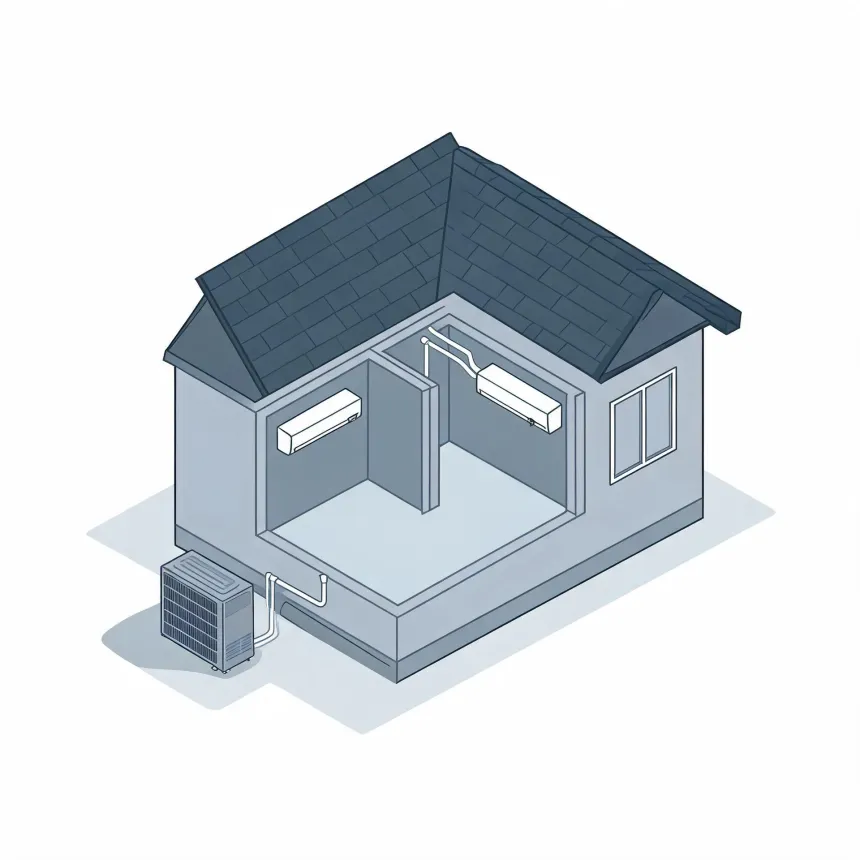
Isometric line illustration of a cutaway house with a shingled gable roof, showing two wall-mounted indoor air conditioning units connected by piping to an outdoor condenser unit on the ground outside.
Your system heats October through May and cools June through August.

NOAA nClimDiv, 1991–2020 normals

Cooling runs June through August in Buena Vista County.

May is the month to get a mini split installed, before the first hot week puts it to work.

Three months of real heat a year, so the system behind this page doesn't have to work hard to earn its keep

Cooling runs June through August
Summer afternoons average 81°F
41 damaging wind events from 2015 to 2024
An older home needs a system that fits itHalf the homes in Buena Vista County were built by 1964.

Iowa electricity runs 13.4 cents per kilowatt-hour, cheaper than most of the country. That changes the math on a mini split. A high efficiency rating saves more money where power costs more, and power doesn't cost much here. A unit priced higher for a better efficiency number will take longer to earn that back in Storm Lake than in a state with steeper rates. What matters more is whether the system is sized right for the room and holds up over the years it runs. Reliability and a good installation count for more here than squeezing out another point of efficiency.

Any new mini split here has to clear zone 5A's minimum

Buena Vista County falls in climate zone 5A, where heating is the bigger job for a system to handle. A mini split installed new has to meet 14.3 SEER2 for cooling and 7.5 HSPF2 for heating, the same floor as any other split system heat pump. That still leaves room to pick a unit based on what the room needs and what holds up, and a federal tax credit is available toward the cost.

Find a contractor
A man in a dark long-sleeve shirt and tan work pants climbs porch steps toward a dark green front door, carrying a worn canvas and leather tool bag, with a potted conical shrub beside the entry.
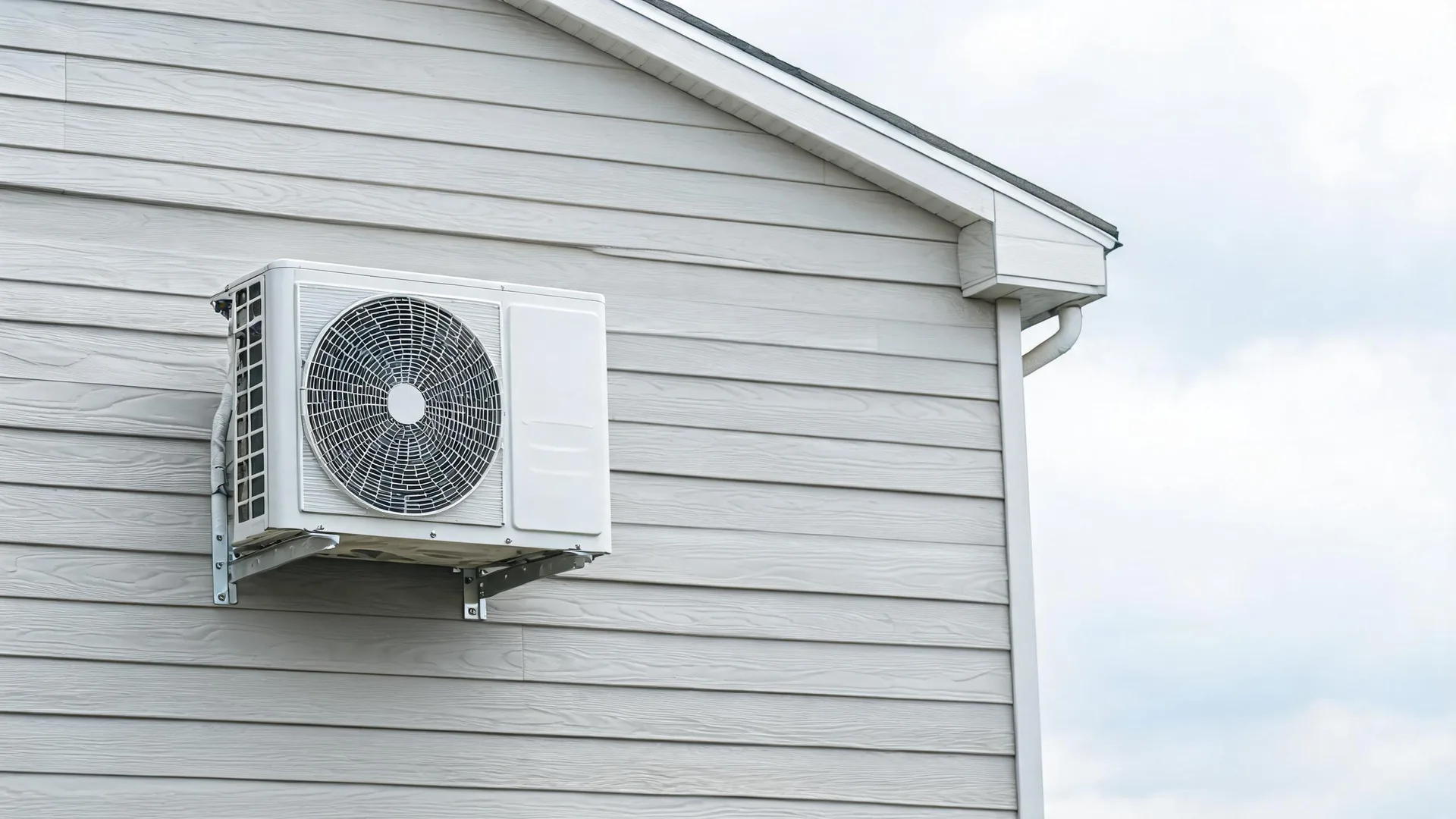
A beige split-system air conditioner outdoor condenser unit mounted on metal wall brackets atop a stucco wall.

Built for storms, not for strain

Three months of cooling a year is a short season, so pick this unit for reliability over the highest efficiency number on the shelf. A mini split sized right for the room and installed well will cover those June through August days without strain. What matters more here is what's outside. Buena Vista County sees damaging wind and hail most years, and the outdoor condenser sits exposed to both. A unit built to hold up matters more than one built to shave another point off its efficiency rating.

Bigger isn't better here

A mini split sized too large cools the room fast, shuts off, and starts again a few minutes later. That short cycling leaves the room feeling damp and uneven. It also wears on the compressor faster than running a full cycle would. The unit needs to run long enough to pull moisture out of the air, not just drop the temperature and quit.

The room decides the number

Sizing a mini split means working out the heat load for that specific room. A tech looks at how big it is, how many windows face the sun, how well it's insulated, and what's on the other side of the walls. Square footage alone doesn't answer it. Rooms that look the same on paper can need different capacity depending on what surrounds them.

The rating on the label, SEER2 for cooling and HSPF2 for heating, tells you how much heat the unit moves for the power it draws. A higher number means less electricity for the same comfort. That number comes from a lab test, not from the room it ends up in. A unit with a strong rating still depends on a clean filter, a clear outdoor coil, and a refrigerant charge that matches the line running to it. Skip any of that and the real performance falls short of what the label promised. The rating tells you what the equipment is capable of. Whether the room gets that performance comes down to sizing and installation, not the sticker.

Ask how many zones one outdoor unit is supposed to run, not just how many it can physically support. Manufacturers list a maximum, but running several indoor heads off one compressor means they share capacity. On the hardest days each room gets less than it would on its own. Ask what happens at the line set too. A longer run between the outdoor unit and the indoor head costs some efficiency, and every joint along that line is a place a refrigerant leak can start. Ask what's included in the quote and what gets billed later. The pad for the outdoor unit, the electrical whip, the permit. Bids for the same equipment can be quoting very different amounts of work. Ask what the warranty actually covers too. Parts coverage from the manufacturer is common, but labor coverage depends on who installed it, and that's the part that costs more if something fails down the road.