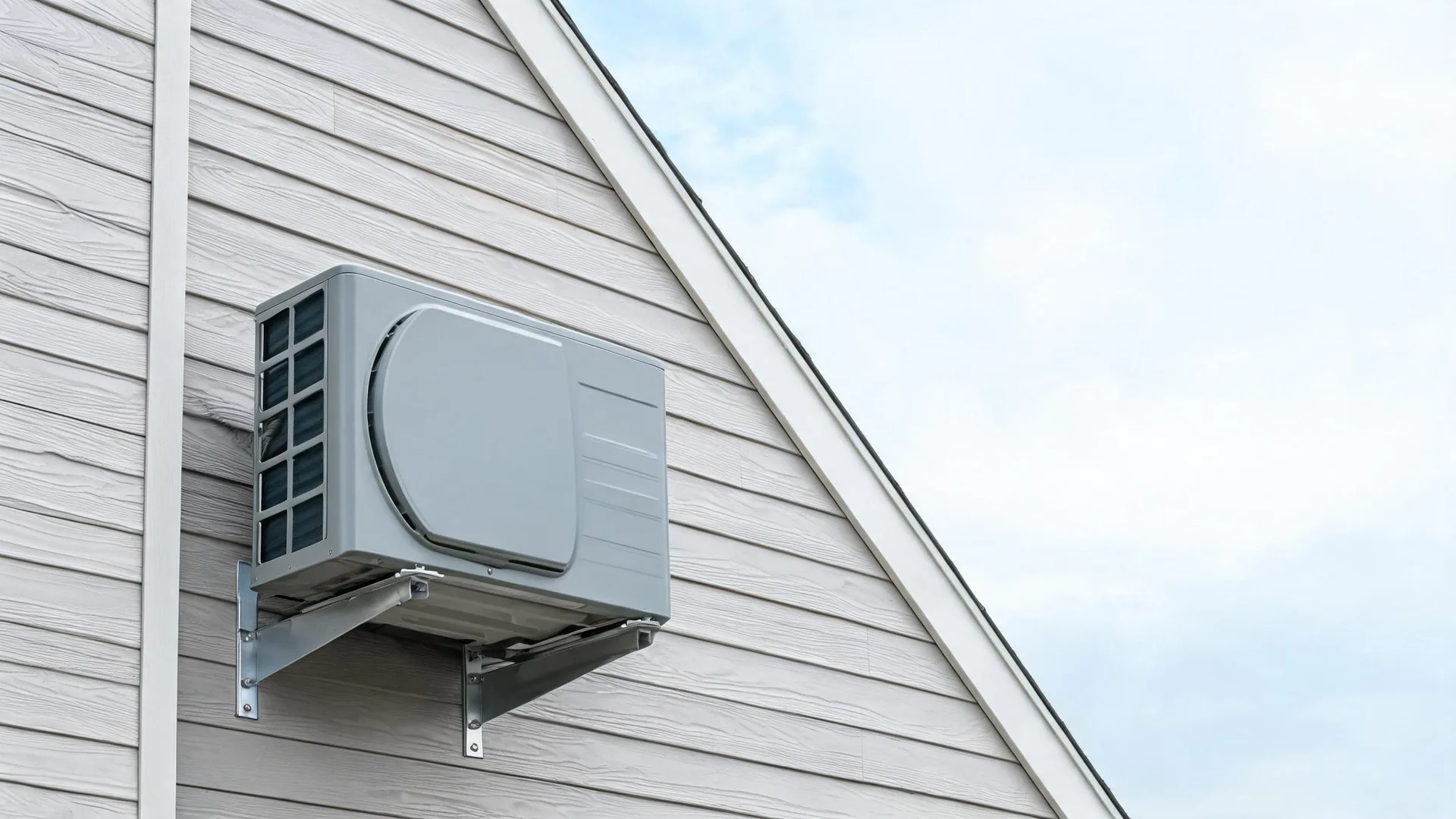
Most homes here run on gas
Just over half of Cedar County homes heat with utility gas, and another 30.6% use bottled or LP gas. A furnace is the default here, not the exception.
Takes about a minute. No obligation.
Just over half of Cedar County homes heat with utility gas, and another 30.6% use bottled or LP gas. A furnace is the default here, not the exception.
Adding a mini split doesn't mean ripping out the furnace. Most installs here pair it with the existing gas system, using the mini split for zones or seasons where it makes more sense to skip firing up the furnace.
NOAA nClimDiv, 1991–2020 normals
Iowa electricity runs 13.40 cents a kilowatt-hour, below the national average.
A high-efficiency mini split still costs less to run here, but it takes longer to earn back the extra you paid for that efficiency.




Cooling runs June through August here, three months total. May is the month to get a mini split in. Wait until the first hot week and you're asking for a same-week install, maybe a few days of sweating it out until someone's free. Go in May and the crew can take their time with the line set and the mounting, and you're not paying any kind of rush. The unit sits ready for June either way. Only difference is whether you picked the timing or the weather did.
Cedar County sits in climate zone 5A, the cold side of the map, with heating as the bigger job over the year. Any mini split installed new has to hit 14.3 SEER2 for cooling and 7.5 HSPF2 for heating. That's the federal minimum for split-system heat pumps, ductless included. A federal tax credit is available on top of that for a qualifying system.
Find a contractor
Every mini split quote should come with a load calculation, not just a price for equipment. Ask whether it was done room by room or estimated off square footage, because that number drives everything else about the quote. Ask what SEER2 and HSPF2 the specific indoor and outdoor pair carries together, since those ratings apply to the matched set, not either unit alone. If someone quotes a head without naming the condenser it pairs with, the rating on paper may not hold. Ask how many zones one outdoor unit is expected to run and what happens to capacity when every zone calls for heating or cooling at the same time. A unit sized to run comfortably with a couple of zones can struggle once more get added later. Ask about the line set length and how many bends it needs to make, since longer runs and extra elbows cut into efficiency and can affect warranty terms on the compressor. And ask what happens to the old system, if there is one. Pairing a mini split with an existing furnace and removing one outright are different jobs with different scopes.
SEER2 rates how much cooling a mini split gets from the electricity it uses. HSPF2 does the same for heating. A unit can be strong on one and average on the other, so check both before comparing prices between models.
A mini split's rating is measured the same way for every unit so you can compare them fairly. What you actually pay to run it depends on the thermostat setting, how well the indoor and outdoor units were sized to the space, and how many zones run at once. A high rated system installed wrong can cost more than a modest one installed right.
Sizing a mini split comes down to the heat gain and heat loss of the specific room or zone it's covering, not a rule of thumb based on square footage alone. A contractor works this out room by room, factoring in window area, insulation, ceiling height, and how many walls face outside. Too big and the unit short cycles, hitting the set temperature fast and shutting off before it's pulled the moisture out of the air, so the room feels cool but clammy. Too small and it runs flat out all day trying to catch up, which wears on the compressor and still leaves the room short of comfortable on the hottest or coldest days. Getting it right also means matching the indoor head to the outdoor condenser correctly, since mismatched components can hurt both efficiency and lifespan. This is also why a load calculation for one zone doesn't transfer to another room in the same house, even one that looks similar.
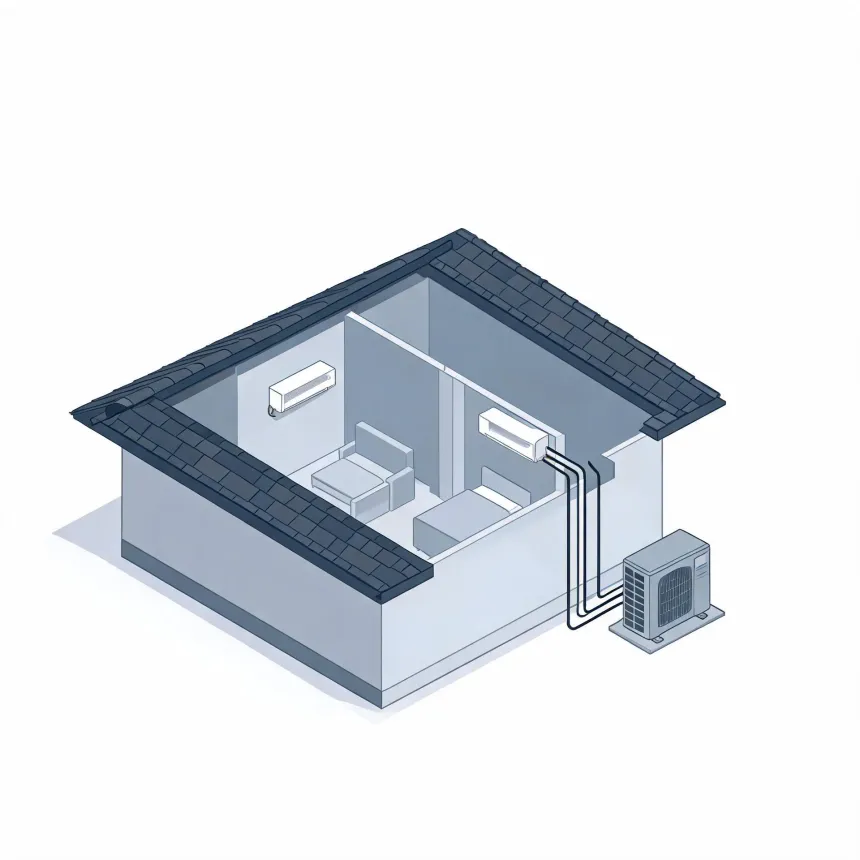
Install day starts outside with the condenser placement, since that unit needs clearance on all sides to pull air through and drain properly. Inside, the crew marks where the line set will run between the indoor head and the outdoor unit, usually through a single hole drilled at a slight downward angle so condensation drains out instead of back into the wall. The line set carries refrigerant lines, a power cable, and a drain line together, wrapped and sealed once they're run. After the indoor head goes up and the lines connect, the system gets evacuated with a vacuum pump to pull out air and moisture before refrigerant is released into the lines. That step matters more than people expect, since trapped moisture or air left in the lines can damage the compressor down the road. Once it's running, the crew checks refrigerant pressure and airflow at the head before calling it done.