A lit brick residential street at dusk showing a row of two-story homes with covered porches and mature trees.

Mini Split Installation in Vinton, IA

Tell us about the job

Takes about a minute. No obligation.

New system or replacementMini-splitBenton County, IA
Step 1 of 2

What ZIP code is the job in?

Most of Vinton heats with gas

Utility gas heats 55.4% of occupied homes in Benton County, with LP gas heating another 20.5%. A mini split isn't replacing a furnace here so much as working alongside one, handling rooms the ducted system doesn't reach well or taking over cooling and shoulder-season heat.

What that means for the install

A mini split can run on its own as the sole heat and cooling source, but in a gas-heating area most homeowners pair it with the furnace already in place. That changes the conversation with a contractor from one system to two, and how they're meant to work together.

8 months
October through May, your system heats
3 months
June through August, it cools
14°F
the average winter night it heats against
82°F
the average summer afternoon it cools against
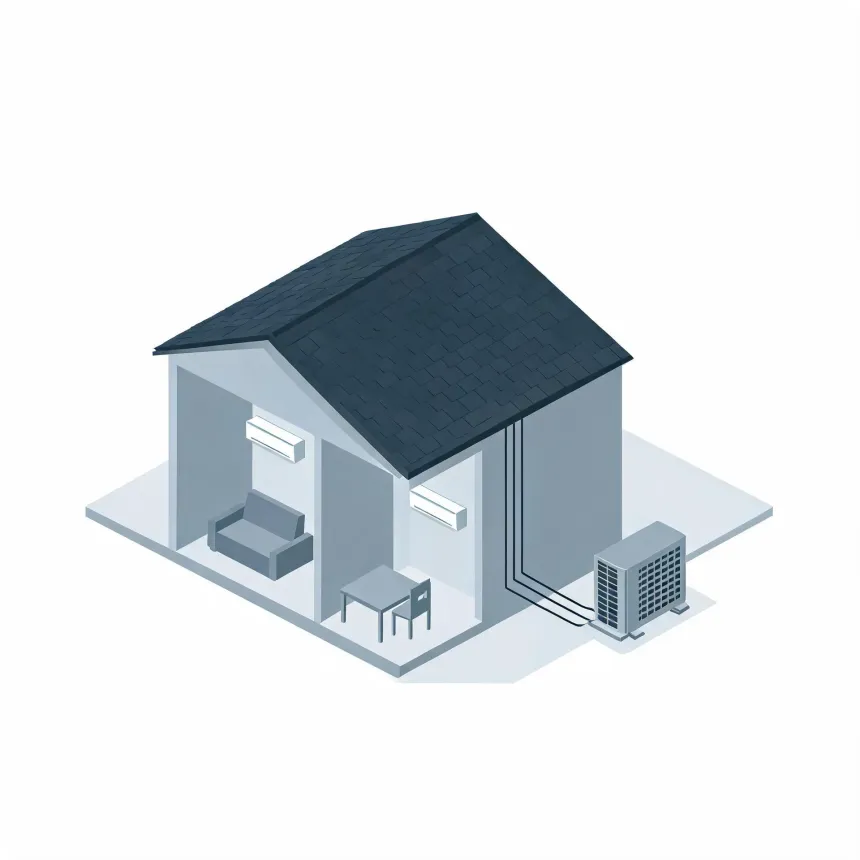
Isometric illustration of a cutaway house with a dark shingled gable roof, showing two wall-mounted indoor air handlers, a sofa, table and chair inside, and refrigerant lines running to an outdoor condenser unit beside the building.
Your system heats October through May and cools June through August.

NOAA nClimDiv, 1991–2020 normals

Every quote should list how many zones and how many indoor heads it covers, not just total capacity.

A system sized right for a couple of rooms won't perform the same if it's quoted to cover the whole house.

Half the homes here were built in 1964 or earlier, and a mini split has to match the house it's going into

Half the homes here were built by 1964
Cooling runs June through August
Summer afternoons average 82°F

Electricity in Iowa runs 13.4 cents per kilowatt-hour, cheaper than most of the country. That changes what a mini split's efficiency rating is worth to you. A high-SEER2 unit costs more up front, and here it takes longer to earn that cost back in lower bills. That doesn't make efficiency pointless, it just means it shouldn't be the only thing you're shopping on. With power this cheap, how well the system fits your rooms and how long it holds up matter more to what you actually pay over the years.

Have it in before June

Cooling in Benton County starts in June and runs through August. Get the mini split in during May and it's ready the first warm week instead of something you're scrambling to schedule once everyone else wants cooling too.

Find a contractor
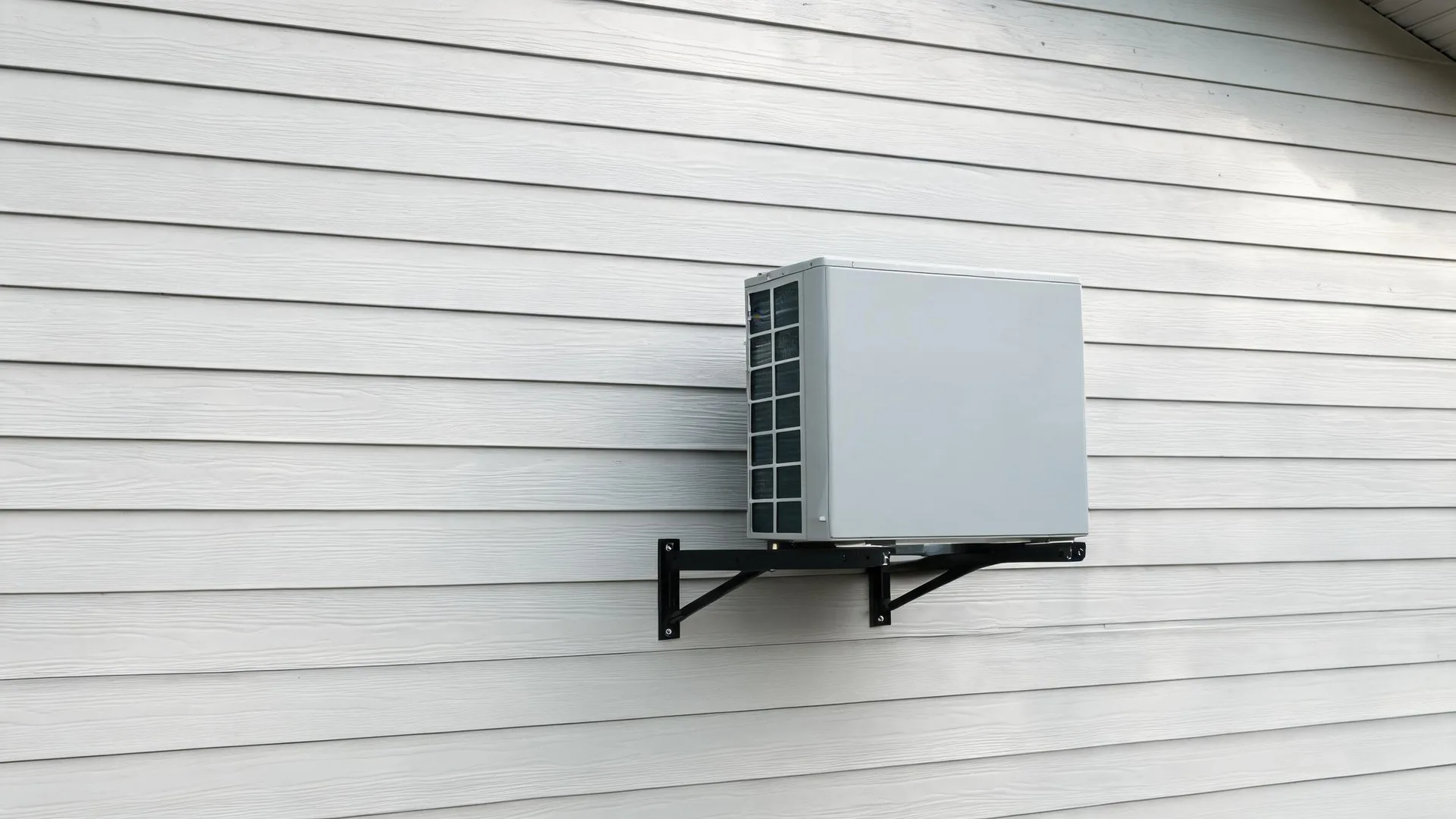
A white outdoor air conditioner condenser unit mounted on metal wall brackets against gray horizontal siding, with a blue sky and white clouds behind it.

Half these homes went up in 1964 or earlier

That's worth asking about before the contractor shows up. A site visit matters more here than a phone quote, since the only way to know where a line set can run is to look at the walls. The zone count matters for the same reason. A head placed to cover one room in an older house may not cover the room next to it the same way.

The line set run adds up

Every foot of refrigerant line between the outdoor unit and the indoor head costs money to run, insulate and seal. A straight shot through one exterior wall is the cheapest version of this job. Routing the line set around corners, through a chase, or up to a head on another floor means more material, more labor and more joints that need to be sealed right for the system to hold its charge.

Each head is its own install

An indoor head needs its own power, its own mounting, its own condensate drain, and its own line set run back to the outdoor unit. Adding a zone doesn't just mean adding a head on the wall. It means adding all the work behind it, which is why a multi-zone quote isn't priced the same way as the first one.

The SEER2 number on the label tells you how much cooling a system gives you for the electricity it uses, averaged over a season of real starts, stops and partial loads. It isn't a measure of how strong the unit is or how fast it cools a room. Systems with the same rating can perform very differently if one is sized and installed right and the other isn't. A mini split also carries a separate rating for heating, since the compressor does different work pulling heat out of cold outdoor air than it does rejecting heat in summer. That rating is measured with a clean filter, the correct refrigerant charge, and a line set sized for the run. Skip any of that during install and the system won't deliver what the label promised, no matter how high the number was to start.

Install day starts outside, mounting the condenser on a pad or brackets where it has room to pull air through the coil. Inside, the crew sets the mounting plate, drills through the wall for the line set, and runs refrigerant line, power and the condensate drain through that one opening. The lines get connected, then the system gets evacuated with a vacuum pump to pull out moisture and air before any refrigerant moves. That step matters more than people expect, since trapped moisture in the line set causes problems well after the crew is gone. Once the vacuum holds, the refrigerant charge is set, the head gets tested on heat and cool, and the condensate drain gets checked to make sure it actually carries water away instead of pooling behind a wall.