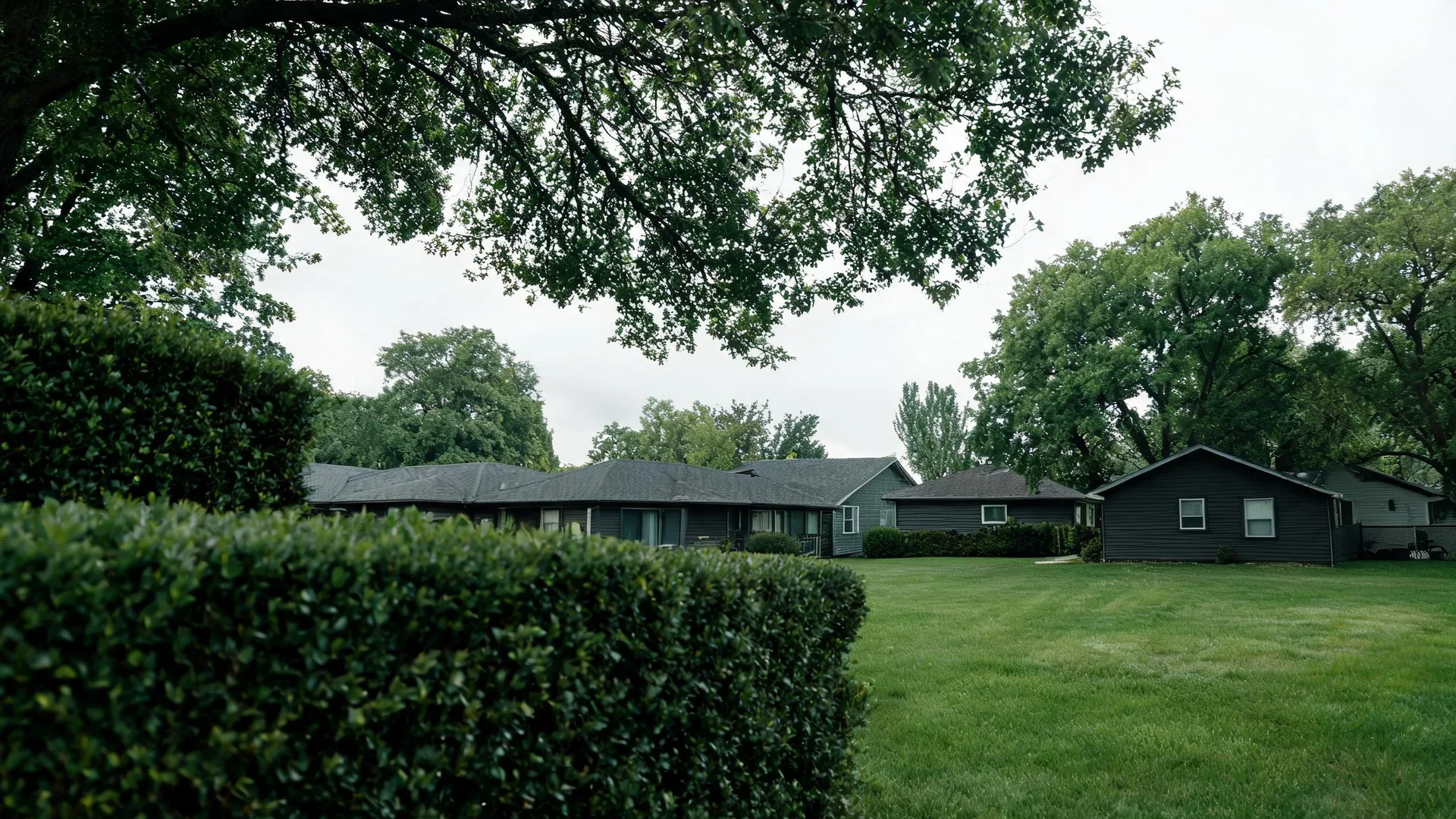




A mowed lawn bordered by a tall trimmed hedge, with single-story houses and large leafy trees under an overcast sky.

Mini Split Installation in Washington, IA

Tell us about the job

Takes about a minute. No obligation.

New system or replacementMini-splitWashington County, IA
Step 1 of 2

What ZIP code is the job in?

Just under half the homes in Washington County heat with utility gas, and about one in five run on bottled or LP gas instead. That split matters for a mini split, since in most of these homes it isn't the only system running. It's there to handle the shoulder months without firing up the furnace, and to cover cooling without central air. Electricity heats roughly a quarter of homes here, and in those houses a mini split often takes on more of the load year round. Either way, what you're adding works alongside what's already there, not replacing it outright.

8 months
October through May, your system heats
3 months
June through August, it cools
17°F
the average winter night it heats against
83°F
the average summer afternoon it cools against
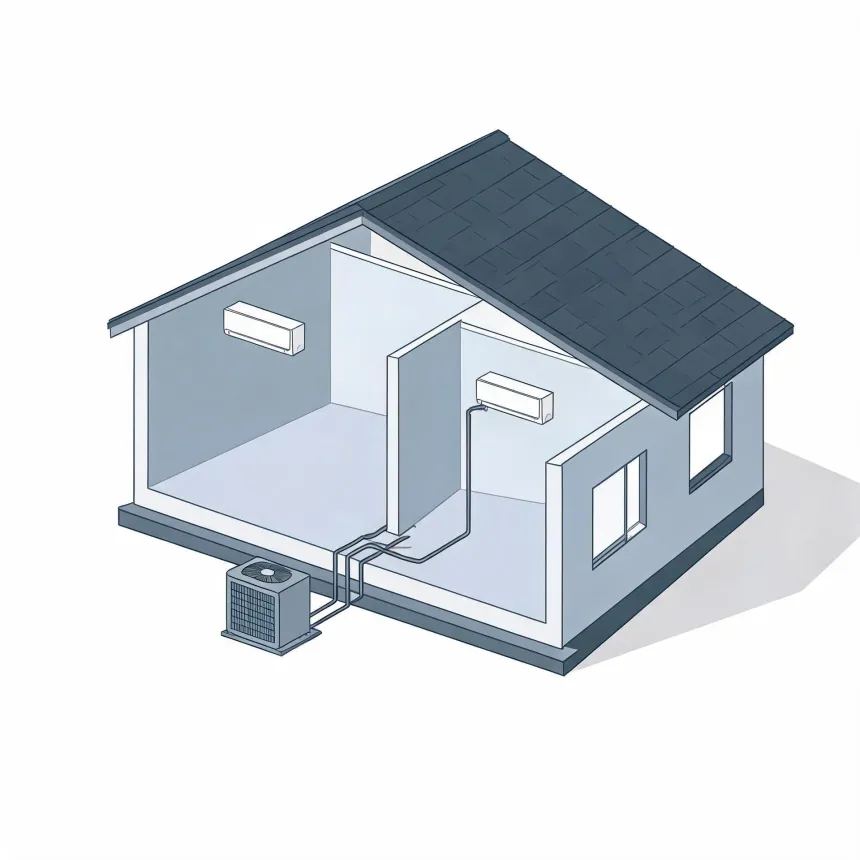
Isometric cutaway illustration of a small house with a dark shingled roof, showing two wall-mounted indoor units connected by lines running to an outdoor condenser unit beside the building.
Your system heats October through May and cools June through August.

NOAA nClimDiv, 1991–2020 normals

Cooling here runs June through August.

Get the mini split installed in May, so it's ready before the first hot week.

Cheap power here means payback is slow, so pick a mini split for reliability, not the efficiency rating

Power costs 13.4 cents a kWh statewide
Cooling runs June through August
Summer afternoons average 83°F

Half the homes in Washington County were built in 1964 or earlier. A mini split going into a house that old has to work with what's already there, not some assumed layout. Where the line sets run, how many zones make sense, where the outdoor unit can sit, all of that depends on the house in front of the installer, not its age on paper. If your place still has the original walls or the original wiring, that's worth mentioning when you're getting quotes, since it can change where a line set can run or whether the electrical panel needs a look before the install.

A new mini split here has to clear 14.3 SEER2 and 7.5 HSPF2, and a federal credit can help cover it

Any mini split going in here has to meet 14.3 SEER2 for cooling and 7.5 HSPF2 for heating, the federal minimum for split-system heat pumps. Washington County sits in zone 5A, a cool, humid climate where heating carries the bigger share of the year. A federal tax credit is available toward the cost of a qualifying system.

Find a contractor
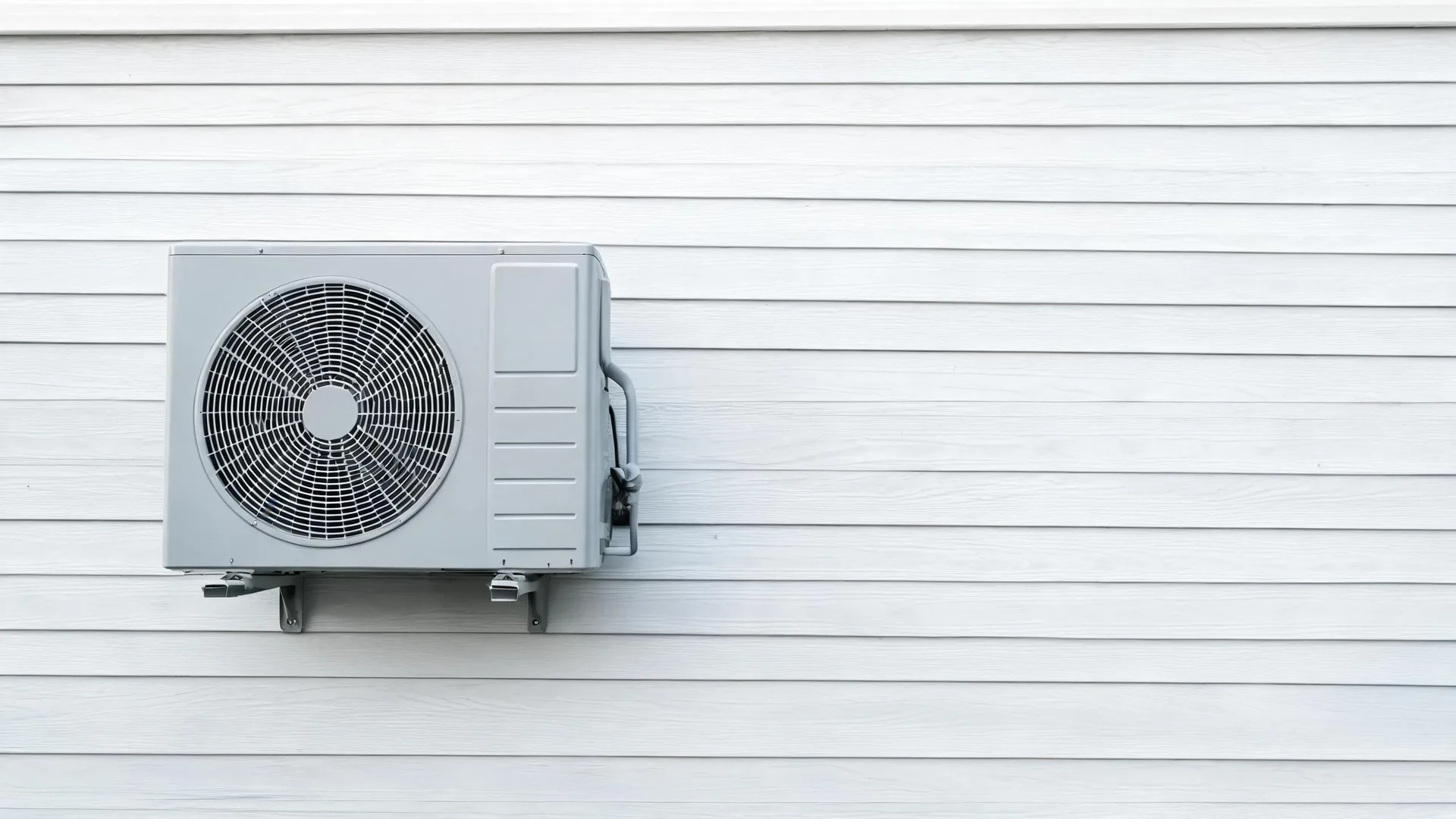
A white mini-split air conditioner outdoor condenser unit mounted on metal brackets against a beige stucco exterior wall, with a blue sky and scattered clouds in the background.

Three months of cooling, a long stretch of heating

Three months of cooling a year is a light load for any system. June through August, afternoons average 83 degrees, nothing close to the stretches that wear a compressor down faster than it should. The bigger share of the work falls on heating, since this is a zone 5A climate where winter runs long. A mini split sized for this place doesn't need to be built for extremes it won't see here. Standard sizing, matched to the house it's going into, is what carries the load.

Sizing comes from a load calculation, not square footage

A contractor works out heat loss and heat gain room by room, looking at window area, insulation, ceiling height and how the space is used, then adds it up for the whole house or the zone being served. Square footage alone skips all of that, which is why houses of the same size can still need different equipment.
Oversized hurts more than undersized does

A mini split that's too big cools or heats the room fast, then shuts off before it's pulled the moisture out of the air or settled into steady operation. It short cycles, meaning the compressor stops and starts more than it should, and that wears parts down faster. Undersized just runs longer to keep up. Oversized runs worse the whole time it's on.

What drives the cost on a mini split job is mostly the number of zones and how far the lines have to run. One indoor head talking to one outdoor unit is the simplest install there is. Add zones and you add line sets, wall penetrations and labor for each one, plus an outdoor unit sized to handle all of them at once. Distance matters too. A short, straight run between indoor and outdoor units takes less refrigerant line and less time than one that has to snake through framing or cross a longer wall. The electrical side counts as well, since a dedicated circuit may need to be added or the panel may need room it doesn't have. None of that shows up until someone's actually looked at the house, which is why the same system can price out differently from one job to the next.

Install day starts with the outdoor unit and the line set, not the indoor head. The installer runs refrigerant lines, a condensate drain and a power whip from the outdoor condenser to each indoor unit, usually through a small hole drilled where the wall backs up to the outside. That penetration gets sealed against weather once the lines are in. Each indoor head mounts on a bracket set level on the wall, then connects to its line set and drain before anything gets powered on. Once everything's connected, the system gets evacuated to pull moisture and air out of the lines, then charged with refrigerant to the amount the manufacturer specs for that line length. Only after that does the installer run it through both heating and cooling to check static pressure, airflow at each head and that the system holds its charge.