






A illuminated two-story red brick house on a quiet residential street at dusk, flanked by mature trees under a deep blue evening sky.

Mini Split Installation in Waukee, IA

Tell us about the job

Takes about a minute. No obligation.

New system or replacementMini-splitDallas County, IA
Step 1 of 2

What ZIP code is the job in?

Utility gas heats 59.2% of homes in Dallas County, most of it through a furnace tied to ductwork. A mini split doesn't connect to that gas line at all. It runs on electricity and moves heat instead of burning fuel for it, so it works alongside a furnace rather than replacing it, covering a room an addition the ducts never reached, or handling cooling without new ductwork cut in. For the 32.1% of homes already heating with electricity, a mini split can take on more of the year round load instead of just filling a gap.

8 months
October through May, your system heats
3 months
June through August, it cools
15°F
the average winter night it heats against
83°F
the average summer afternoon it cools against
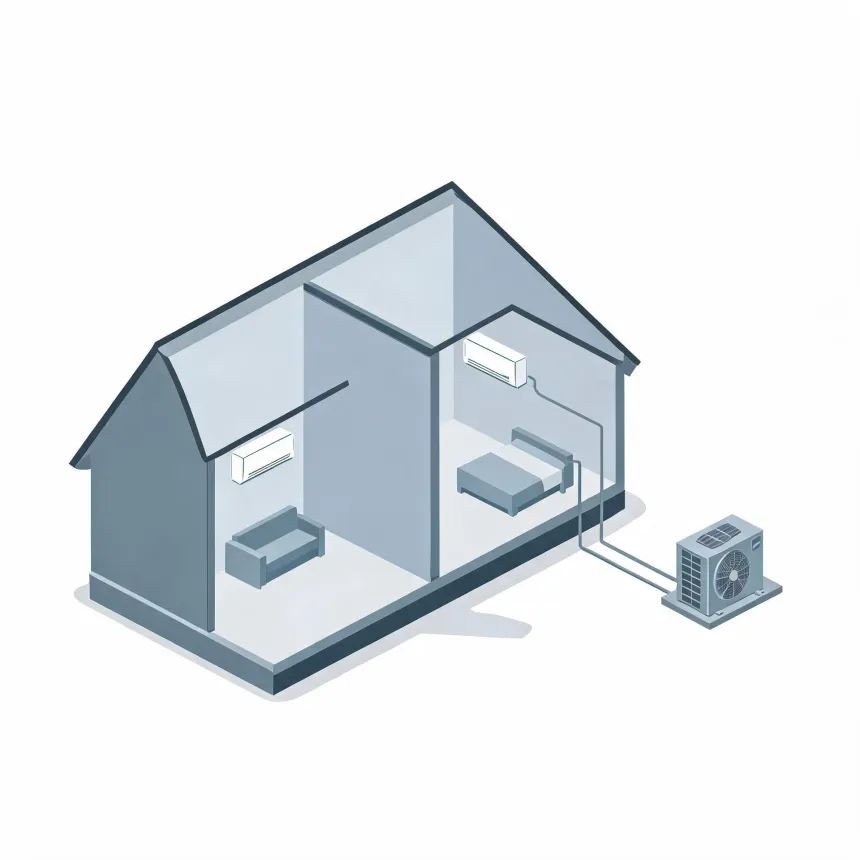
Isometric grey illustration of a cutaway house showing two rooms with wall-mounted indoor air conditioning units connected by lines to an outdoor condenser unit beside the building.
Your system heats October through May and cools June through August.

NOAA nClimDiv, 1991–2020 normals

An old wall unit or window AC coming out doesn't need to leave a hole behind.

The line set and mounting plate for the new mini split can often use that same wall penetration.

May is the month to get it in, before June starts asking for it

Cooling runs June through August
Summer afternoons average 83°F
96 damaging wind events from 2015 to 2024
Sized for three months of heatCooling runs June through August here, with afternoon highs averaging 83°F.

Iowa electricity ran 13.40 cents per kilowatt-hour in 2024, cheaper than most of the country. That changes the math on which mini split to buy. A higher-efficiency unit still costs less to run month to month, but the extra you pay upfront for the top-tier model takes longer to earn back here than it would somewhere with pricier power. That doesn't make efficiency pointless, it just means it shouldn't be the only thing deciding the purchase. How well the unit is sized for the room, and how it holds up over the years, matters more to the outcome than squeezing out another point of SEER2.

Meet the standard here

A new system here has to meet this region's minimum efficiency, which limits what can go in.

Find a contractor
A man in a dark jacket, tan work pants and cap, seen from behind, carries a canvas tool bag up concrete steps toward a dark green front door beside a potted shrub.
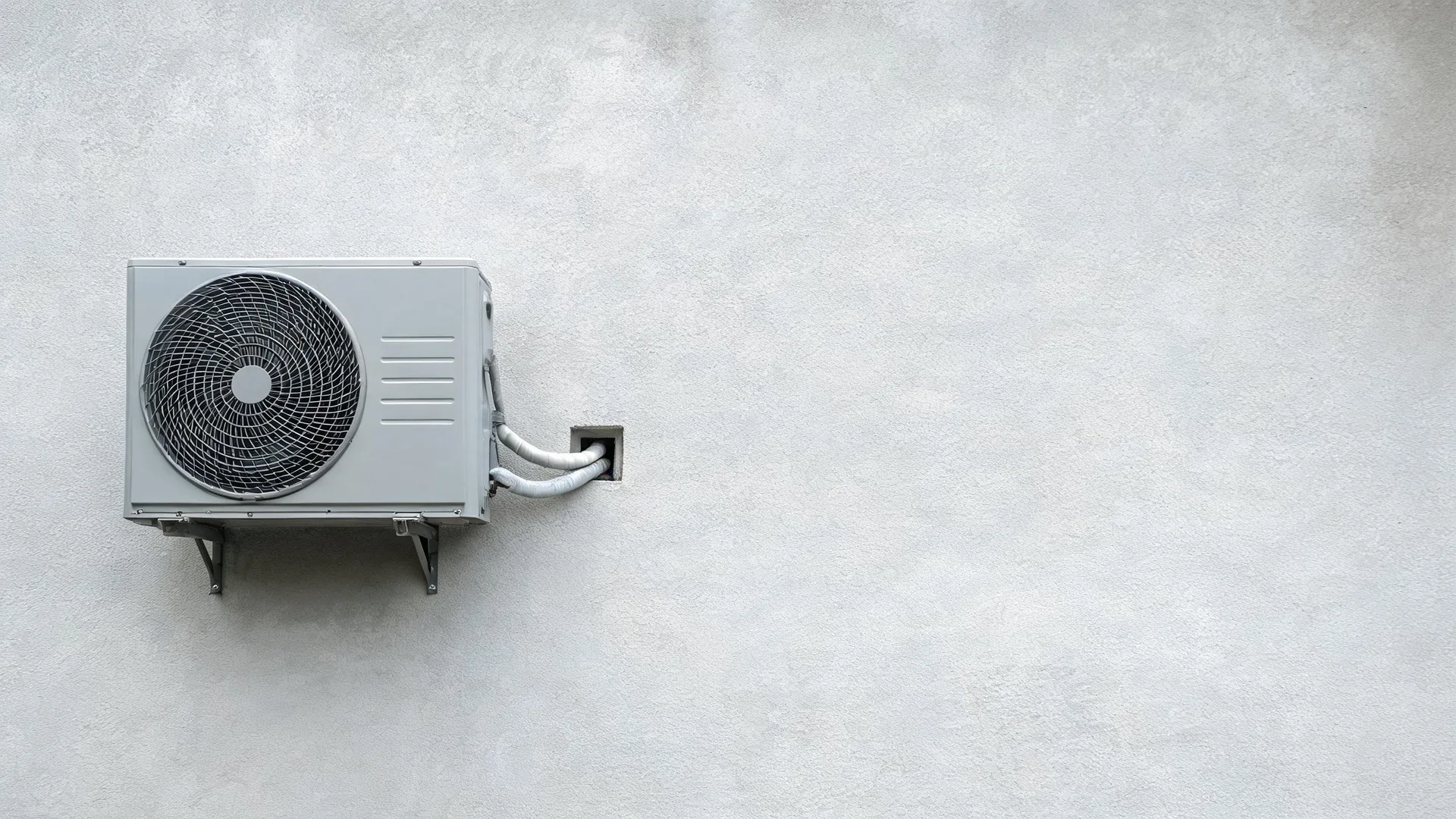
A white mini-split air conditioner outdoor condenser unit mounted on metal brackets against a beige stucco exterior wall, with a blue sky and scattered clouds in the background.

Built to run for years, not just a season

A mini split installed to run most of the year earns its keep differently than one that only kicks on for a few weeks of extreme heat or cold. The compressor is built to modulate, running at low speed for long stretches rather than cycling on and off like a window unit. That steady low-speed running is actually easier on the parts than constant starting and stopping. What wears a unit down over years of heavy use is dirt, not hours. A clogged filter or dirty outdoor coil forces the compressor to work harder to move the same amount of heat, and that extra strain is what shortens its life. A unit asked to run through more of the year needs that filter checked more often, not a different kind of care.

Ask what each zone is doing, not just the total output

A multi-zone system splits its capacity across every indoor head running at once. A contractor sizing the job should walk through each room on its own, what it's used for, what walls or windows it has, and size that head to the room rather than dividing one number evenly across the house. If nobody asks about the rooms individually, the sizing is a guess.
Ask what happens if one indoor head needs service

Multi-zone systems share one outdoor compressor across several indoor heads. Some manufacturers let a single indoor head be serviced without draining the whole system's refrigerant, others don't. That difference doesn't show up on a spec sheet, so it's worth asking directly before deciding between systems that otherwise look alike.

SEER2 and HSPF2 tell you how much heat the unit moves for the electricity it uses, cooling and heating. They aren't a measure of how big a unit is or how fast it can heat or cool a room, and a higher number doesn't mean it will keep up better on the coldest or hottest day. Units that carry the same rating can still behave differently, because that rating is measured under set test conditions, not in your actual room with your actual walls and windows. It isn't fixed for life either. A unit that's never had its filter cleaned or its outdoor coil washed off will pull more power to do the same job than its rating promised, no matter how good that rating was on day one. Where the rating earns its keep is comparing one unit against another, not predicting what either one will actually cost to run.

Installation day starts outside, not in. The outdoor unit needs a spot on a pad or wall bracket where air can move freely through the coil, away from a spot where snow piles up or a roofline sheds water right onto it. Inside, the mounting plate goes up first, then the indoor head hangs on it once the line set is run. That line set carries refrigerant lines, a drain line and electrical wiring through a single wall penetration, usually sleeved and sealed so weather can't track in behind it. Once everything's connected, the lines get pulled down to a vacuum before any refrigerant moves, which clears out moisture and air that would otherwise sit in the system and cause problems later. The last step is running the unit through both modes and checking that condensate actually drains where it's supposed to, not down the outside wall.