





A nighttime street view of several illuminated two-story red brick homes with front porches, flanked by a large tree.

Mini Split Installation in Waverly, IA

Tell us about the job

Takes about a minute. No obligation.

New system or replacementMini-splitBremer County, IA
Step 1 of 2

What ZIP code is the job in?

Utility gas heats 57.9% of occupied homes in Bremer County, and most of the rest run on propane or electric heat. A mini split doesn't replace that system here. It works alongside it, handling the shoulder months and taking the load off the furnace, or covering a room the ducts never reached well. Some homeowners run the mini split for cooling only and let the furnace carry winter the way it always has. Others lean on it for heat too, down to whatever temperature the unit is rated for, and let the furnace take over below that. Either way, the furnace or boiler already in the house stays the main heat source, and the mini split gets added on top of it.

8 months
October through May, your system heats
3 months
June through August, it cools
12°F
the average winter night it heats against
81°F
the average summer afternoon it cools against
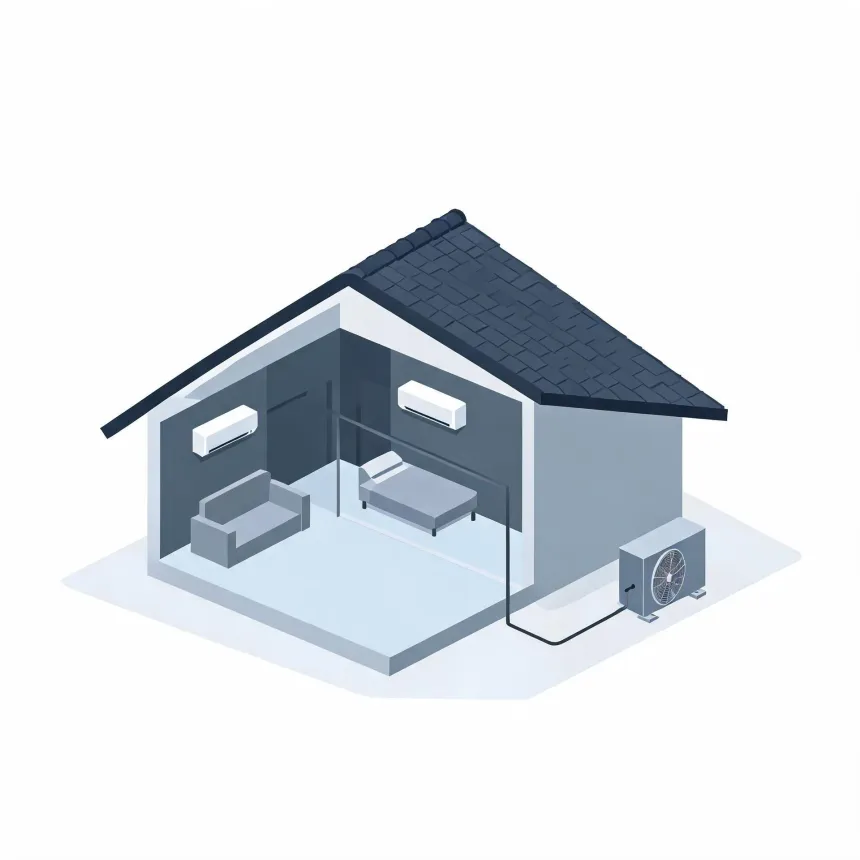
Isometric illustration of a cutaway house showing two wall-mounted indoor air conditioning units connected by a line to an outdoor condenser unit beside the building, with a sofa and bed inside.
Your system heats October through May and cools June through August.

NOAA nClimDiv, 1991–2020 normals

Half the houses in Bremer County went up in 1970 or earlier.

An old house rarely has a layout built for ductwork, so the lines and head placement have to fit the rooms you've got.

Cooling starts in June. Get the mini split in before summer asks anything of it.

Cooling runs June through August
Summer afternoons average 81°F
37 damaging wind events from 2015 to 2024
Cheap power changes what's worth buyingElectricity here runs 13.4 cents a kilowatt-hour, so the priciest unit on the shelf takes longer to pay you back.

With no ductwork to route around, the line set is what has to fit the house. It runs from the outdoor unit to each indoor head through a hole a few inches wide, drilled through an exterior wall at whatever point makes the shortest run. In a house built in 1970 or earlier, that wall could be plaster, block, or brick veneer, not the open stud bays a newer build might offer. The contractor pricing the job needs to see the actual walls and rooms before settling on where the heads go, not after.

Three mild months of cooling means you don't need to overbuy

Summer here only asks three months of work, June through August, with afternoon highs averaging 81. A mini split sized for that kind of summer doesn't need to be the top-tier model to hold up. Put it in now and it's ready before June arrives.

Find a contractor
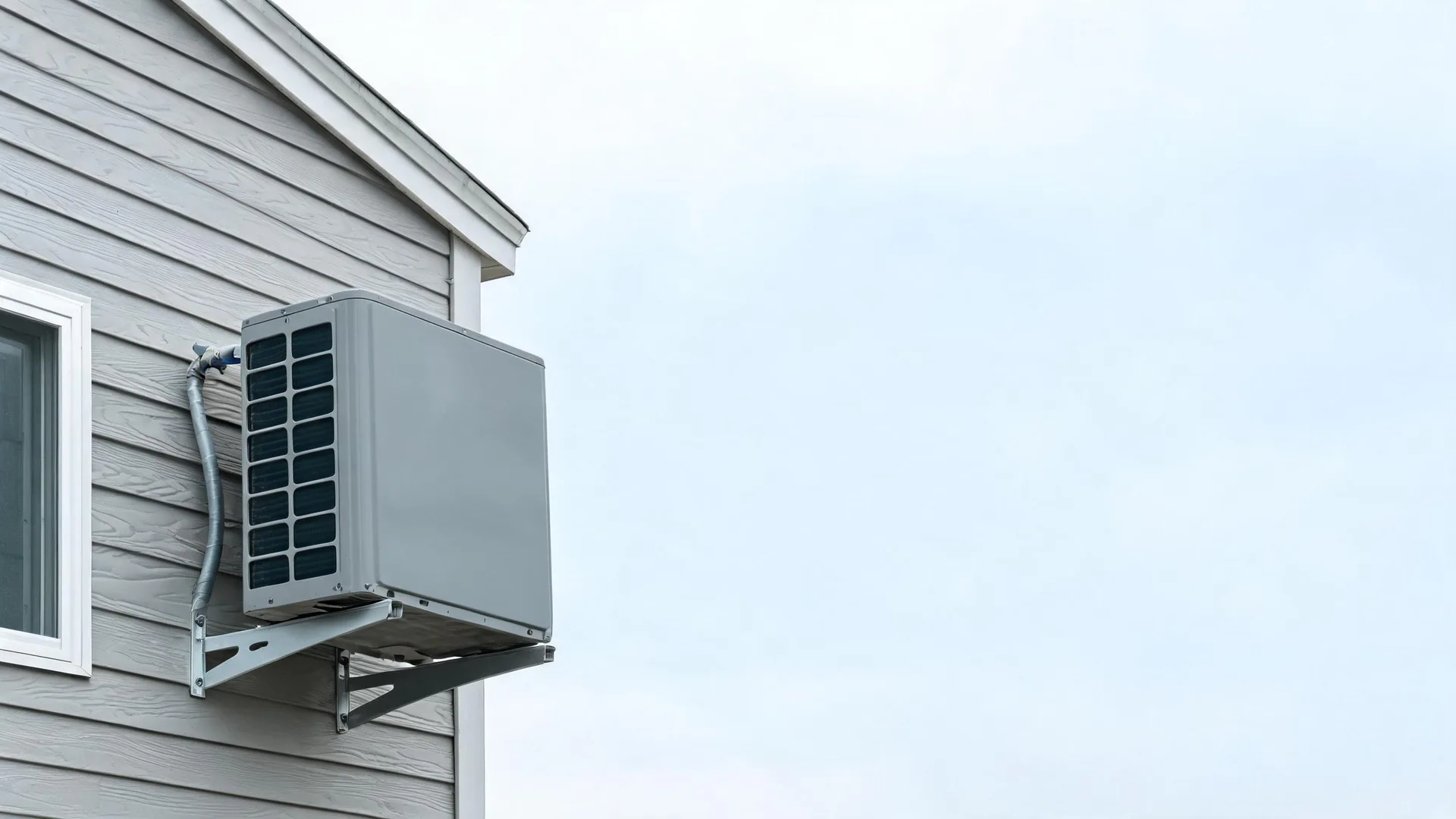
A white mini-split air conditioner outdoor condenser unit mounted on metal brackets against a beige stucco exterior wall, with a blue sky and scattered clouds in the background.

Light duty, most of the year

Three months of real work a year is not much strain on a compressor. The rest of the year it sits idle or helps out on mild days, and that kind of duty cycle is exactly what a mid-range unit is built for. Skipping the flagship model here is not a compromise, it just matches the system to what it will actually be asked to do.

The number of zones sets the baseline

A single head cooling one room costs less to install than a multi-zone system feeding several rooms off one outdoor unit. Each extra zone means another line set run, another indoor head mounted and leveled, and another spot on the wall or ceiling picked out. The outdoor unit for a multi-zone job also has to be sized to cover every head running at once, not just one.
What the wall is made of changes the labor

Drilling the line set hole through open framing is quick work. Drilling through block, brick, or plaster takes longer and sometimes calls for a different bit or a bit of patching once the line is through. The contractor won't know which kind of job it is until they've looked at the actual wall the line needs to cross.

Sizing a mini split is not about matching the room's square footage to a number on a brochure. The contractor works out how much heat the space gains in summer and loses in winter, accounting for window area, ceiling height, insulation, and what's on the other side of each wall. Get it oversized and the unit cools the room fast, shuts off, then starts again a few minutes later. That short cycling never lets it run long enough to pull moisture out of the air, so the room feels cold and clammy at once. Undersized, and it runs flat out without ever catching up on the hottest days. The right size runs longer, steadier cycles, which is both what keeps the room comfortable and what keeps wear on the compressor low. None of that comes from a chart matched to room size alone, it comes from someone actually measuring the space and doing the load calculation room by room.

Install day starts outside, with the outdoor unit set on a pad or wall bracket somewhere level and clear of roof runoff. Indoors, the contractor mounts the bracket for each head, runs the line set through the wall where it was measured and drilled, and connects the refrigerant lines, condensate drain, and electrical whip. Once everything's connected, the lines get pulled down to a vacuum to clear out any air and moisture before the refrigerant is released into the system. Air or moisture left in the lines is what causes a compressor to fail early, so that step doesn't get skipped. After that, the contractor checks refrigerant charge, runs the system through both heating and cooling to confirm each head responds, and walks through the thermostat or remote before leaving. A single zone usually wraps up in a day. A multi-zone job with several heads and longer line runs can carry into a second.