




When to replace a heat pump in Iowa City, IA

I'm done searching

A heat pump in Johnson County works harder than almost anywhere else it gets installed. It has to pull you through a sticky summer and then carry a hard Iowa winter, often with little help from a backup furnace since most homes here lean on gas only for the coldest stretch. That strain shows up as higher bills, a system that runs longer to hit the same temperature, or a compressor that finally gives out. Figuring out whether yours is worth repairing again or ready to be replaced isn't something you can look up for your exact unit. It takes someone who can look at the age, the repair history, and how it's been running through last winter and this summer. Instead of calling around Iowa City for quotes and explaining the same problem three or four times, send the form here. From there, finding the right contractor for your situation is off your plate, and you can stop weighing it on your own.

Most heat pumps here are worth replacing between 10 and 15 years old, sooner if the compressor fails or the system can't keep up on the coldest days. Johnson County asks a lot of this equipment. It has to cool a muggy summer, then switch over and carry most of the heating load through a hard winter, since most homes here use gas only as backup. That extra work wears parts faster than in places with milder winters. A unit that's icing over, running constantly, or struggling to hold a temperature even with the backup furnace kicking in is telling you it's reaching the end. If yours is in that range and you're calling for repairs more than once a season, the repair bill is a sign to start pricing a new system instead of patching the old one again.

How hard does your heat pump have to work in Johnson County?

  • Winter nights average 16°F

    Overnight lows average 16°F in December, January and February, so your heat pump is pulling heat from air that cold most winter nights.

  • Heat runs October through May

    Heat runs October through May here, about eight months of the year, which is most of your heat pump's workload before summer even starts.

  • Cooling runs June through August

    Cooling only runs June through August, so the compressor spends far more of the year heating your home than cooling it.

NOAA nClimDiv 1991-2020

How a Struggling Heat Pump Shows Itself

  • Below about 25°F to 30°F, a heat pump's output drops and the compressor runs longer to make the same heat.
  • Most systems here pair with electric resistance backup, which kicks in on the coldest nights and costs more to run than the heat pump itself.
  • An aging compressor loses capacity gradually, so a system that handled last January may fall behind this one without any single breakdown.
  • Refrigerant leaks and worn valves show up as longer run times first, then as rooms that never quite reach the thermostat setting.
  • Defrost cycles reverse the system briefly to melt ice off the outdoor coil, and a unit that's struggling will defrost more often and still ice up again.
  • A heat pump that short cycles, turning on and off in quick bursts, is usually losing the fight against either the compressor or the charge.

A heat pump does not fail all at once most of the time. It loses ground slowly, and the signs show up in how it behaves on the coldest nights before they show up as a breakdown. Every heat pump pulls less heat out of cold air as the temperature drops, and below 25°F to 30°F the compressor has to run longer to move the same amount of heat into the house. That is normal. What is not normal is backup heat running constantly instead of kicking in only on the worst nights, because that backup is electric resistance heat and it costs more to run than the heat pump itself. Watch the defrost cycle too. The outdoor unit reverses briefly to melt ice off its coil, then goes back to heating. A healthy system does this occasionally and clears the ice. A system with a weak compressor or a low refrigerant charge will defrost more often and still carry ice afterward, because it cannot generate enough heat to finish the job. Short cycling, where the unit turns on and off in quick bursts rather than running a steady cycle, points to the same two culprits: the compressor or the charge. None of these are things you wait out. A heat pump that struggled through last January and is showing these signs again this winter is not likely to improve on its own.

A bearded man in a dark sweater leans back in a black leather armchair with his eyes closed, with a bookshelf, potted plant, window and a sofa holding a folded newspaper behind him.
A man in a blue sweater sits in an armchair with his eyes closed, beside a window and a side table holding a mug and a folded newspaper, with a dark bookshelf behind him.
A man in a gray knit sweater leans back on a brown leather sofa with his eyes closed, in a room with bookshelves, a lamp, plants, and a side table holding a folded newspaper and a dark mug.
A man in a dark gray sweater reclines in a brown leather armchair with his eyes closed, beside a wooden table holding a striped mug and folded newspapers, in a living room with a sofa, bookshelf, lamp, and window blinds.
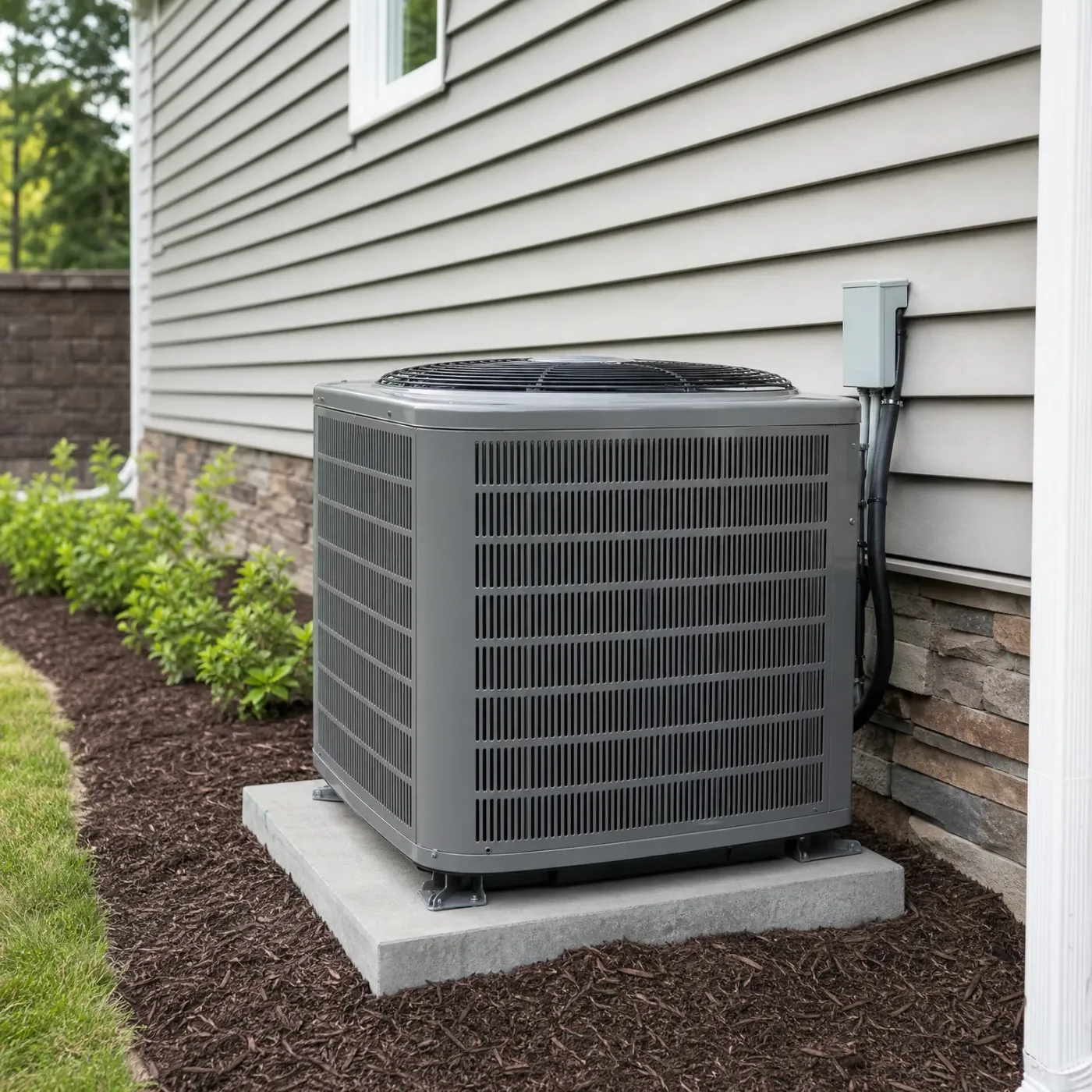
A gray outdoor condenser unit on a concrete pad beside a house with horizontal siding and stone veneer, with a disconnect box and refrigerant lines on the wall, surrounded by mulch, shrubs, and lawn.

Send one request and you're done looking

Answer a few questions instead of calling shop after shop.

Send the form and stop researching installers for the new heat pump.

Answer a few questions

You're not committing to anything by asking.

Is your heat pump keeping up this winter?

You might notice the house never quite reaches the temperature on the thermostat, or the air coming out feels cool instead of warm. The backup heat may be running more than it used to, which shows up as a higher bill without much change in comfort. Some systems start cycling on and off more often, or run almost constantly on the coldest days without catching up. You might hear the outdoor unit working harder, or notice frost that doesn't clear during the defrost cycle. If the compressor is struggling, the system leans on backup heat to make up the difference, and that backup heat costs more to run than the heat pump itself.

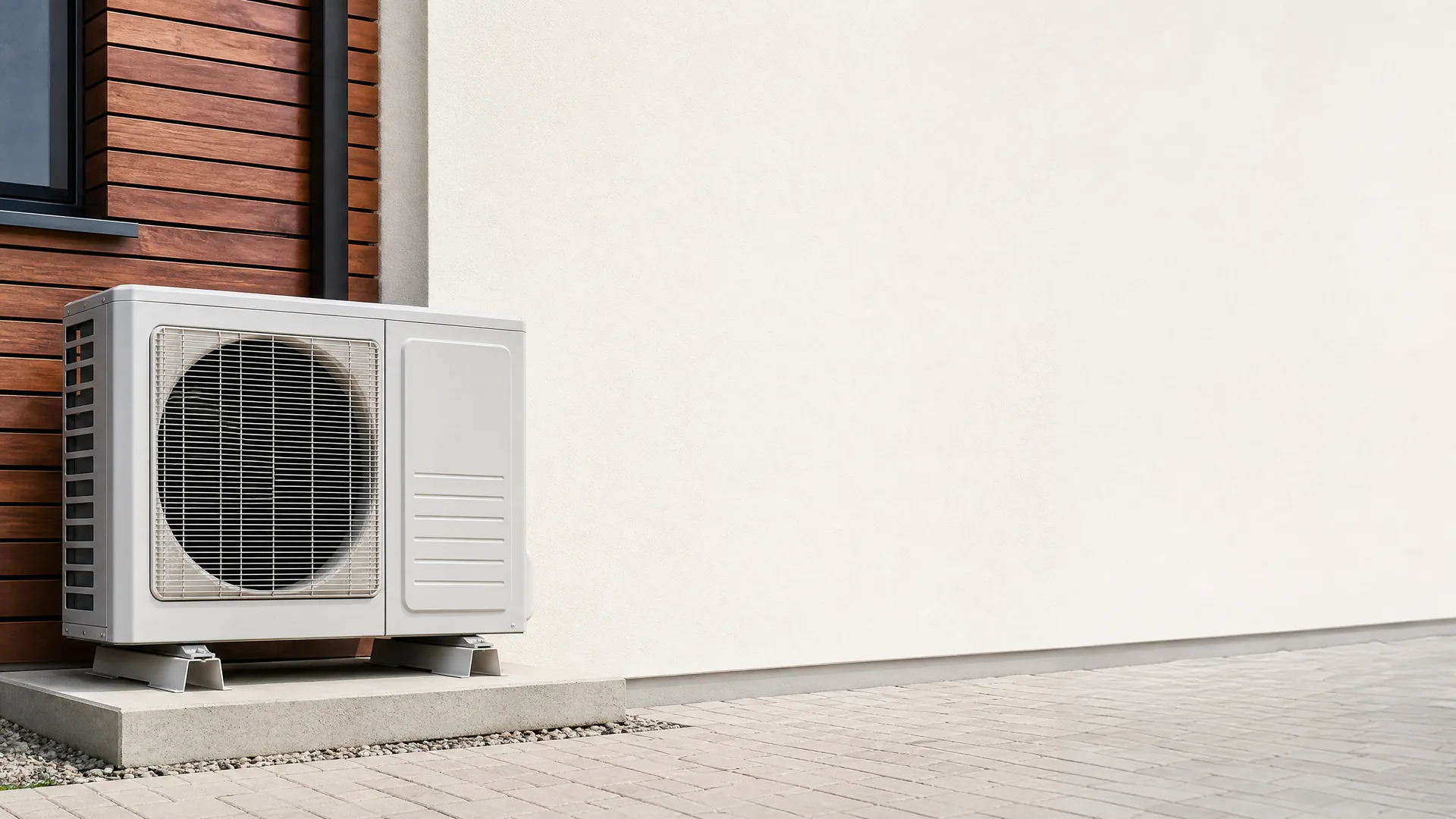
A white outdoor heat pump unit on a concrete pad beside a house with wood-slat siding and a large plain light-colored stucco wall, with paving stones in the foreground.

Repair makes sense now

If your heat pump is under 10 years old and the compressor is still sound, a repair is usually the right call. A bad capacitor, a stuck reversing valve, a refrigerant leak that gets found and sealed, these are normal fixes for a system that still has years in it. Paying for the repair costs less than paying for a new system before you have to. If the unit has kept up on the coldest nights so far, one repair doesn't change that.

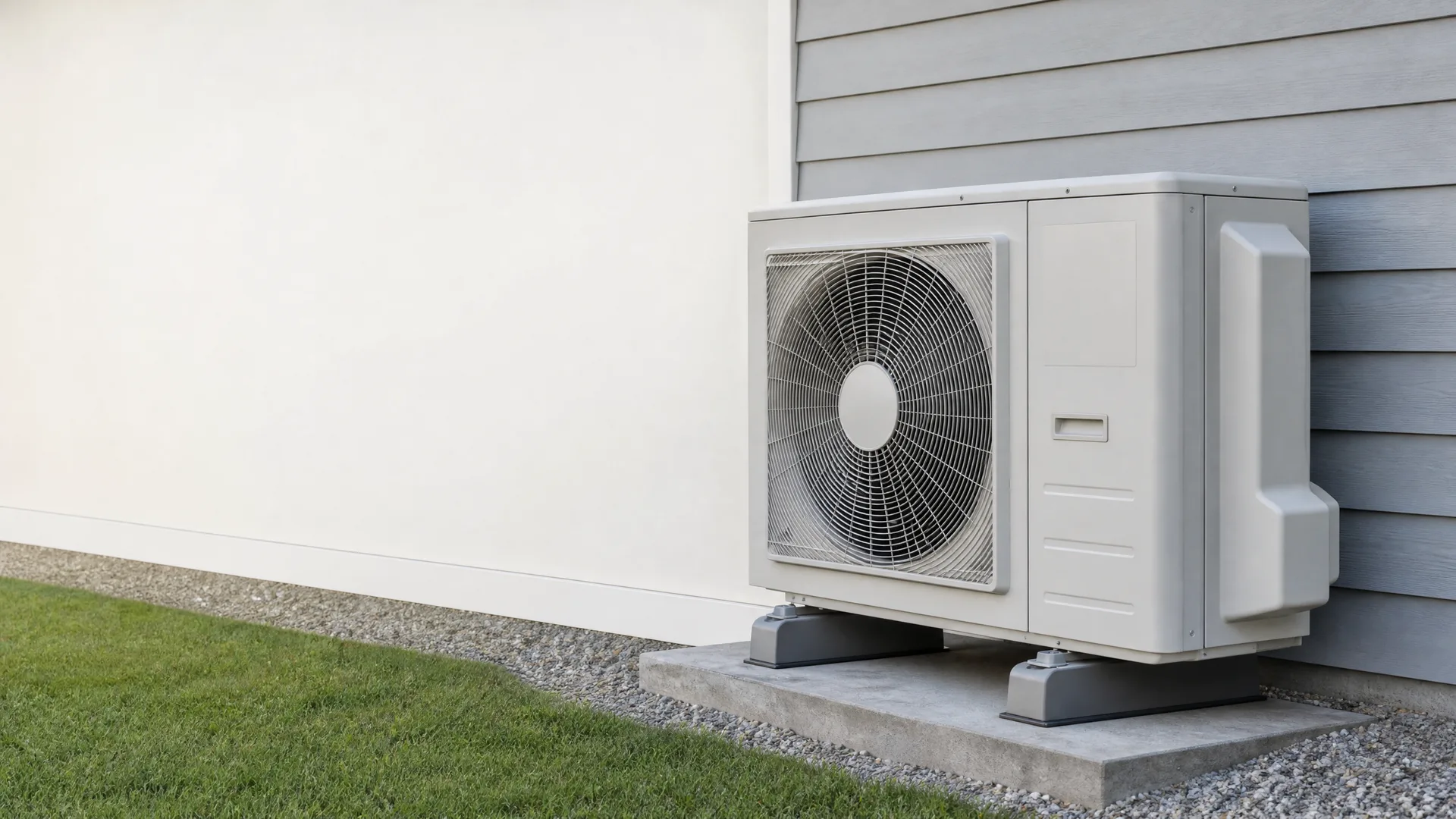
A white outdoor heat pump unit on rubber feet sits on a concrete pad beside a gray-sided house wall, next to a smooth light wall, gravel strip and lawn.

Replacement makes sense now

Past 10 years, Johnson County winters have put a lot of hours on the compressor, and a second major repair on a system that age is money spent on borrowed time. If the house isn't holding temperature on the coldest days, or the backup heat is running more than it used to, the heat pump is already losing the fight it's built for here. A new system sized for this climate stops that slide instead of just slowing it.

Power here costs 13.00 cents per kilowatt-hour

At 13 cents a kilowatt-hour, an aging heat pump leaning hard on electric backup will show up on your bill before you ever hear it struggle. A unit that still runs efficiently keeps that cost down even through a hard Iowa winter.

EIA-861 2025

A gray outdoor heat pump unit on a concrete pad beside a house with horizontal lap siding, connected by conduit and a flexible line to a wall-mounted disconnect box, with low shrubs and mulch nearby.

Running the way it should

A heat pump mounted clean on its pad, lines wrapped and the disconnect box tied in neat, is just doing its job. It cycles on, pulls heat or cold out of the air, and shuts off again without anyone in the house noticing. That's what a system still inside its working years looks like, under 10 years old, or older but still holding its charge and keeping the house at the temperature on the thermostat.


An outdoor air conditioner condenser unit on a concrete pad beside a house with horizontal lap siding, with a shrub to the left, bare dirt in front, and conduit and a metal disconnect box on the wall.

Struggling to keep up

Look for ice on the lines in summer, a unit that short cycles or runs constantly without catching up, or a compressor that's gone quiet when it should be running. If yours is past 10 years and showing this, replacing it now beats paying to keep patching a unit that's already losing ground against a Johnson County winter.

Why does my heat pump short cycle in cold weather?

You've noticed the outdoor unit kicking on, running for a couple minutes, then shutting off again, over and over, on the coldest days. It's not warming the house right and you're wondering if something's broken or if this is just what heat pumps do once it gets cold out.

Short cycling means the system can't finish a heating cycle before something shuts it down

A heat pump pulls heat from outside air and moves it inside through the refrigerant cycle, a process that needs time to run its full course. When it shuts off early and restarts a few minutes later, something is cutting that cycle short. Low refrigerant charge, a frozen outdoor coil, or a failing defrost control are common causes, and any of them get worse as the temperature drops, since the system is already working harder to pull heat from cold air. Short cycling also wears on the compressor, since starting draws far more strain than running steady. A unit doing this through an Iowa winter is telling you it needs a look before the coldest nights push it further.

A gray outdoor heat pump unit on a concrete pad beside a house with horizontal lap siding, with a conduit running to a wall-mounted disconnect box and a green shrub to the left.

Working the way it should

A heat pump like this sits clean on its pad, conduit run neat to the disconnect, nothing leaking or caked on around the cabinet. It cycles on, moves heat in or out, and shuts off again. You shouldn't have a reason to walk over and look at it.

An outdoor air conditioning condenser unit on a concrete pad beside a house with horizontal siding above a brick foundation, with a flexible conduit running to a wall-mounted disconnect box.

Showing its age

Dust and grime built up like this over years of running means the coils underneath have been working dirty for a long time too. A unit that looks like this outside is usually struggling the same way inside, pulling more power to do the same job it used to do easier.

A closed laptop and a stoneware mug on a wooden table, with a kitchen counter, wood cabinets, white tile backsplash, potted plants and a window behind.

Know where your heat pump stands

A heat pump between 10 and 15 years old, struggling through a cold snap or leaning hard on backup heat, has told you what it needs. One that's younger and still holding its temperature through the night just needs the repair in front of it. Either way the answer comes from what the unit is actually doing in your house this winter, not from a date on a calendar.

Once you know which one you're dealing with, the next step is getting someone out to look at it rather than spending evenings calling contractors, explaining the same short cycling or the same high bill to each one, and sorting through quotes that are hard to compare against each other. Send the form once and that search becomes someone else's job instead of yours.

A living room with a cream sofa and knit throw beside a window, with a wooden coffee table in the foreground holding a round woven tray, a small bowl, and a speckled vase of green leafy branches.
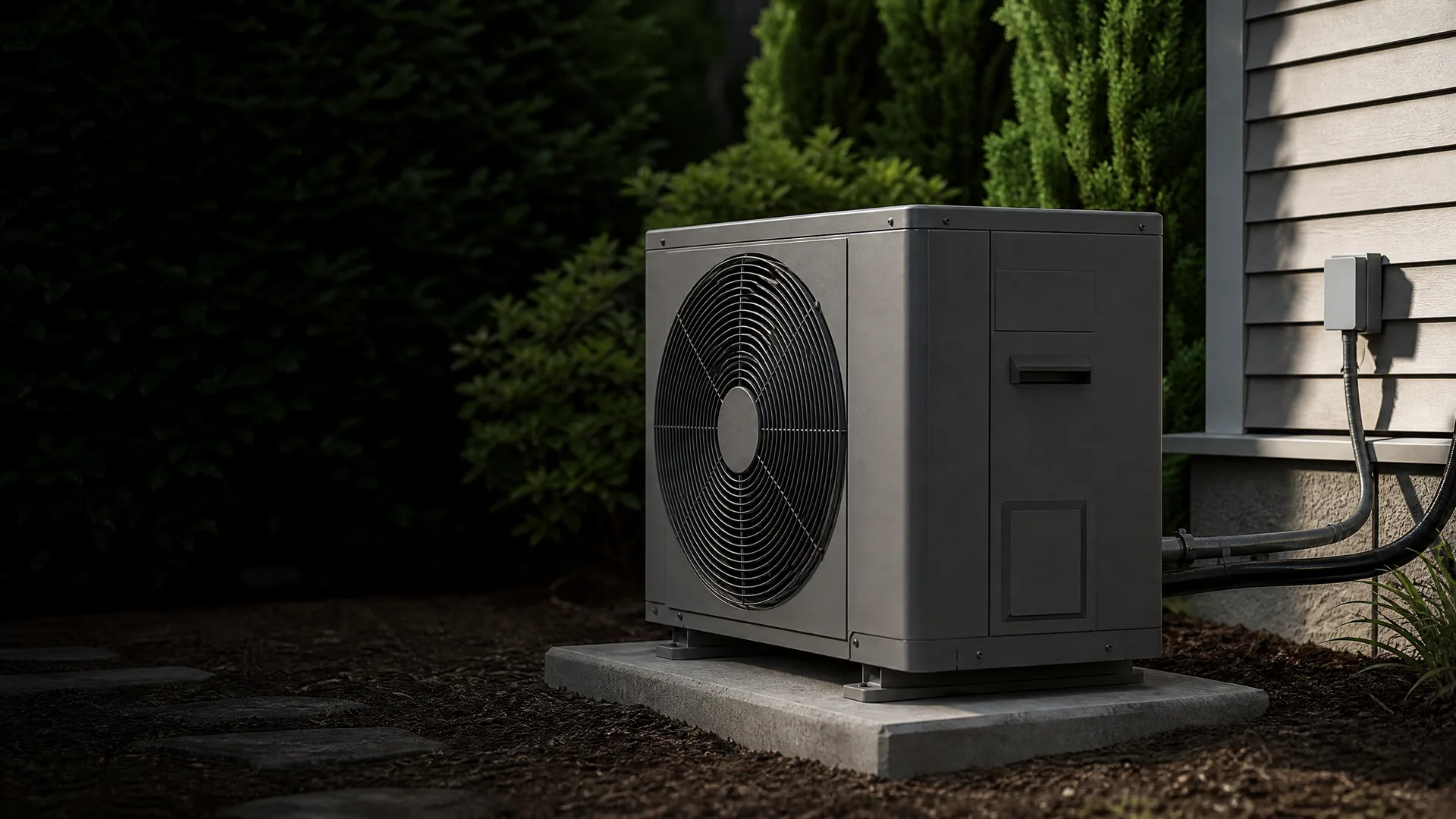
A gray outdoor heat pump unit with a large circular fan grille sits on a concrete pad beside a house with lap siding, with refrigerant lines running to an exterior electrical box and dark shrubs behind.

Finding a pro stops being your job

New system or replacementHeat PumpJohnson County, IA
Step 1 of 2

What ZIP code is the job in?