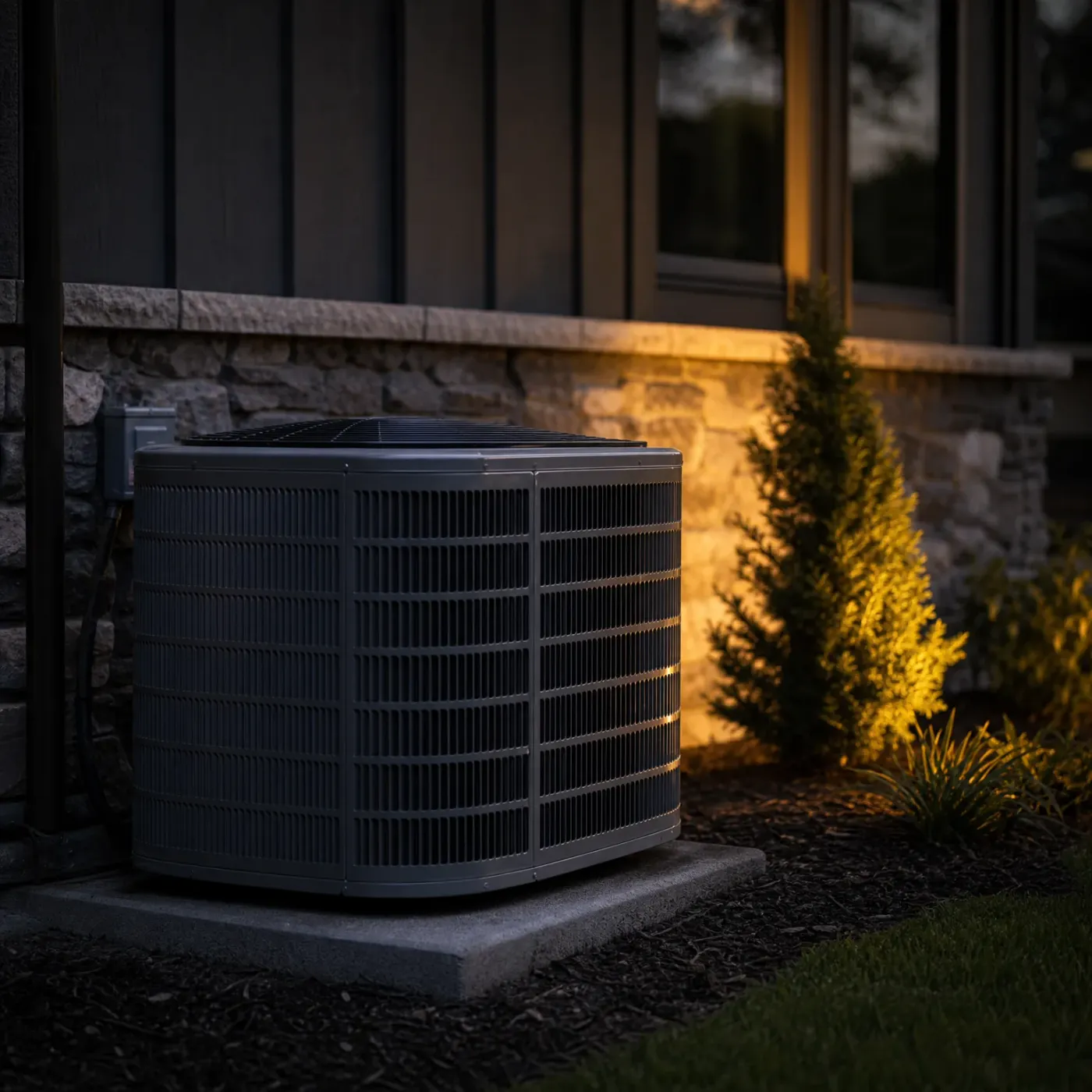





An outdoor air conditioning condenser unit on a concrete pad beside a house with stone veneer and vertical board siding, with a small shrub and mulch bed lit by a ground light at dusk.

One request and it's handed off

What temperature to set your AC in Iowa summers

A number on the thermostat only tells part of it. What matters in Iowa's humidity is whether your air conditioner can hold that number and keep the air from feeling wet, and that comes down to how well the system is running, not just where you set the dial. This page gets into both. When you're ready for a hand with it, send the form and let someone else take it from there.

Let a pro reach out

78 degrees is the usual starting point, with 75 to 78 when you're home and a few degrees higher when the house is empty. In most of the country that's the whole answer. In Iowa it isn't, because the air here carries so much moisture that 78 can still feel damp if the system isn't pulling humidity out along with the heat. A properly charged, properly maintained air conditioner strips moisture as it cools, so 78 feels dry and fine. One that's low on refrigerant or running a dirty coil can hit 78 on the thermostat and still leave the air sticky, which is usually what sends people reaching for 74 or 73 instead. That workaround costs more to run and still leaves the house feeling damp, because the real problem was never the number you picked. The setting is only half the answer. The other half is whether the equipment behind it is doing its job.

A smiling man in a navy long-sleeve shirt sits at a wooden table in a kitchen and dining area, with a ceramic mug, a potted plant, and a sliding glass door behind him.
A smiling bearded man in a green henley shirt stands at a kitchen island with a gray mug, looking off to the side, with a dining area and shelves blurred behind him.
A smiling bearded man in a navy sweater sits at a white kitchen island with a ceramic mug, with open shelves, potted plants and a range hood behind him.
A smiling man in a dark olive long-sleeve shirt sits in a kitchen beside a counter with a dark mug, with a dining table, sideboard and hallway visible in the blurred background.
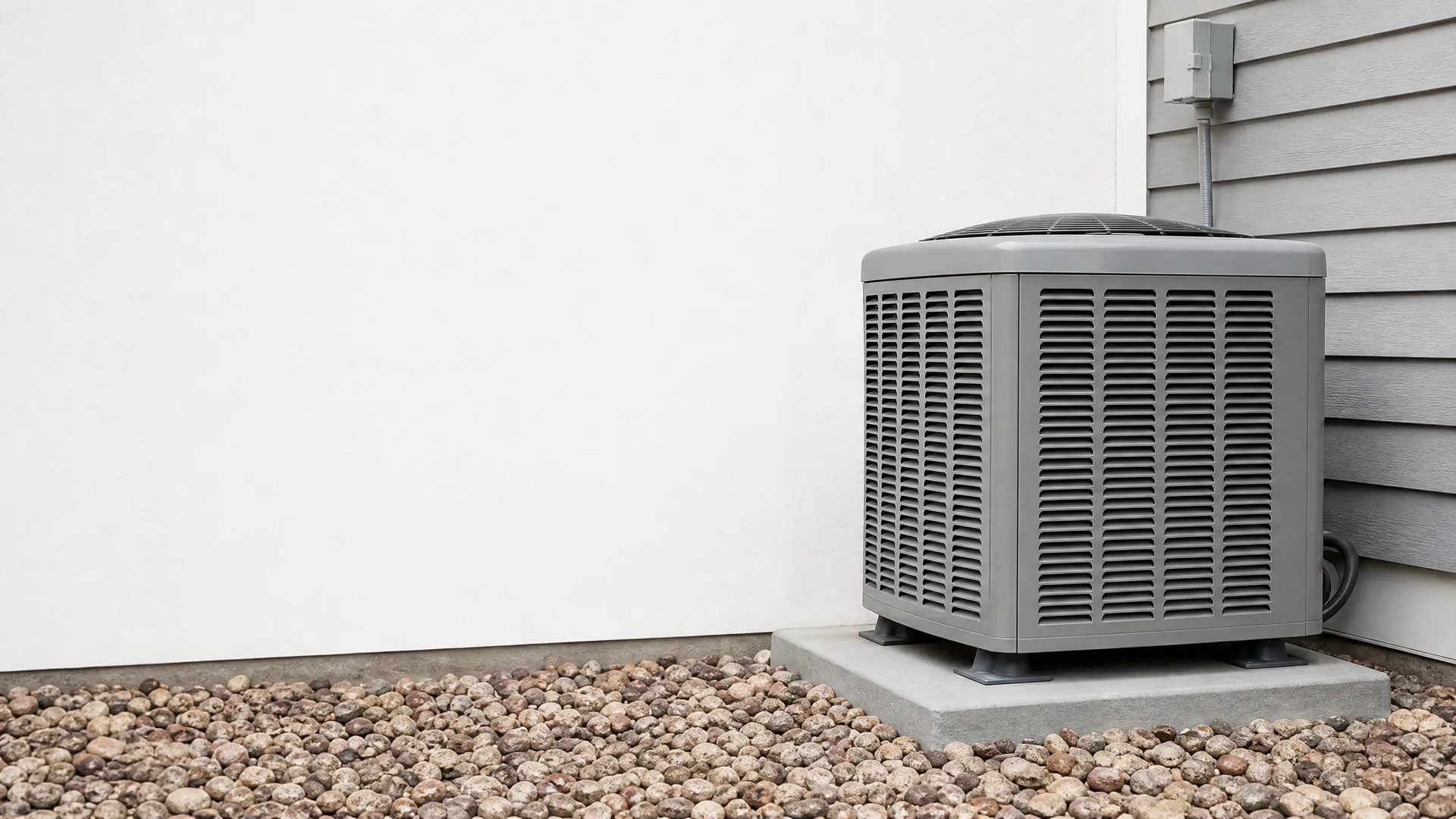
A gray outdoor air conditioning condenser unit on a concrete pad beside a house with horizontal gray siding, with a wall-mounted electrical disconnect box and insulated refrigerant lines, and blue hydrangeas in a mulched bed to the left.

Running clean

This is what lets 78 degrees actually feel like 78. The coil is clear, the pad is level, and the lines run straight into the wall without strain. A system kept up like this pulls the moisture out of the air along with the heat, so the number on the thermostat means something.

A gray outdoor air conditioner condenser unit on a concrete pad beside a house with beige horizontal siding, with an electrical disconnect box and insulated refrigerant lines on the wall and dry leaves on the ground.

Running on rust

Dirt packed into the fins and rust on the shroud mean the unit works harder to move the same amount of heat. It can still cool the house, but it struggles to pull the humidity down with it, so 78 feels more like 82 no matter how long it runs.

Is your house actually holding 78, or just reading it

Walk through your own house and check. The thermostat says 78, but the air near the windows feels heavier than that, or the basement feels fine while the upstairs bedrooms don't cool down until midnight. You notice the air feels damp against your skin even though the number hasn't moved. Maybe the system runs almost constantly on the muggiest days and the house still doesn't feel dry. These are signs the system is struggling to pull moisture out of the air, not just drop the temperature. Left alone through a full Iowa summer, that strain adds up, and a system working that hard every day is more likely to need a repair right when you need it most.

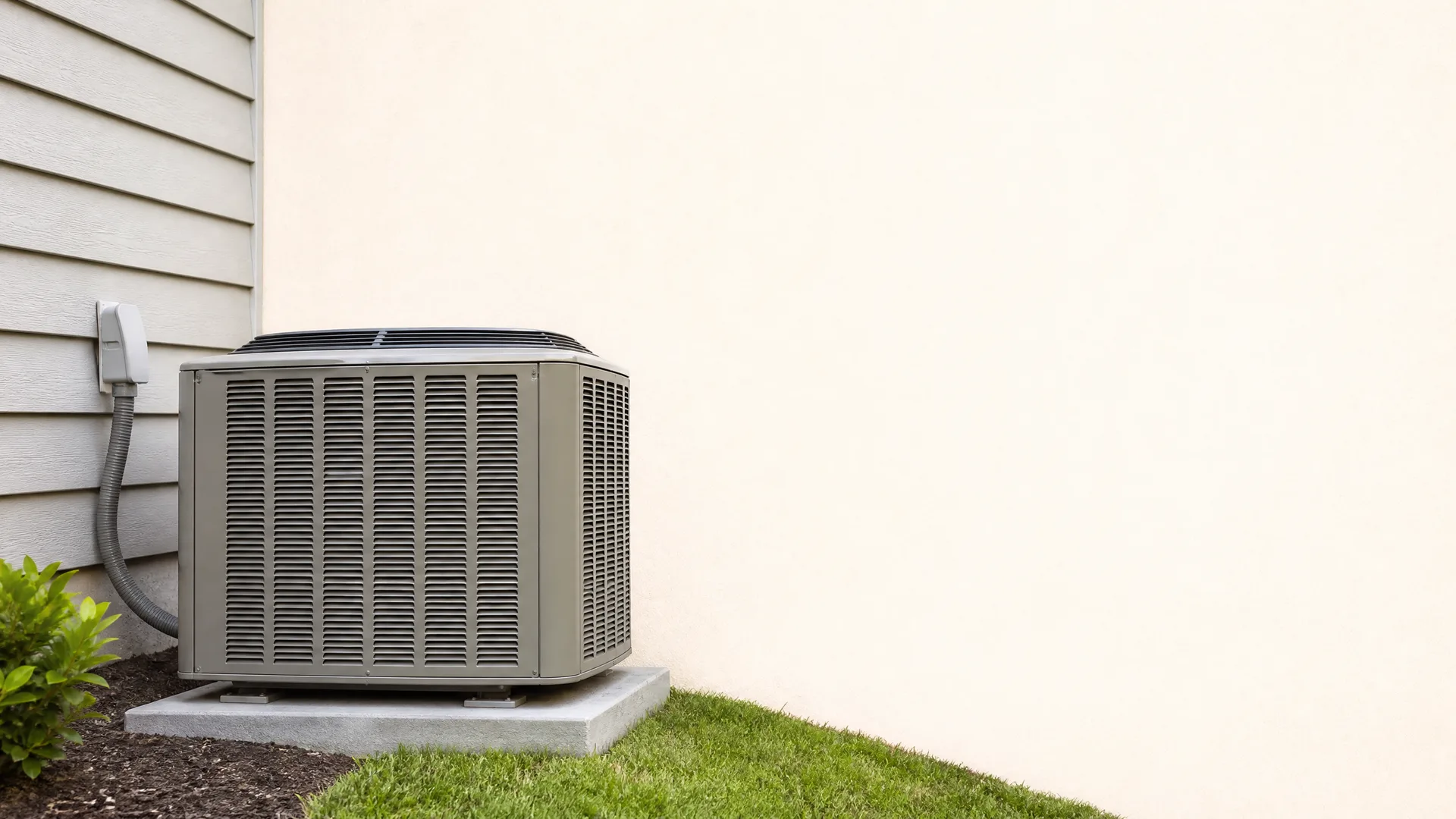
An outdoor air conditioning condenser unit on a concrete pad at the corner of a house, next to vinyl siding and a plain light-colored wall, with grass and a mulch bed in the foreground.

Why the thermostat can lie

A thermostat only reads the air right next to it. It doesn't know that the air coming out of your vents is cooling the room but not pulling the moisture out of it. That happens at the evaporator coil. As air passes over the cold coil, humidity condenses out and drains away. If the coil is caked with dust or the airflow across it is weak, the coil still cools the air some, but it can't wring the water out of it, so 78 on the dial doesn't feel like 78 in the room.

A gray outdoor air conditioning condenser unit sits on a concrete pad beside a white stucco wall and gray horizontal siding, surrounded by rounded landscaping gravel, with an electrical disconnect box mounted on the siding above.

What a tune-up checks

A maintenance visit in Iowa looks at the things that decide whether 78 holds: refrigerant charge, coil condition, airflow across the coil, and the condensate drain that carries the moisture out of the house. Low charge or a dirty coil can cut what the system pulls out of the air by a real margin, even when the room temperature looks fine on the thermostat. Catching that early means the dial you set is the temperature and the humidity you actually get, not just a number the thermostat is reporting.

Power costs 13.62 cents per kilowatt-hour statewide

At 13.62 cents a kilowatt-hour, running your AC a couple degrees lower doesn't hit the bill as hard here as it does in most states. That gives you room to chase comfort first. If 78 still feels damp, dropping to 76 and having the system serviced so it actually removes that moisture costs less in Iowa than it would almost anywhere else.

EIA-861 2025 statewide residential average

  1. Thermostat calls for cooling when the air warms past your setting

  2. Refrigerant inside the coil pulls heat out of the air passing over it

  3. Humidity condenses on that cold coil and drains away outside

  4. Blower pushes the drier, cooled air back through your ducts

A smiling man in a dark blue T-shirt sits on a light gray sofa in a living room with a wooden shelf and window behind him, with a laptop edge visible in the foreground.
A bearded man in a plaid flannel shirt stands indoors looking out a frost-covered window, with a steaming dark blue mug on the wooden sill and snow-covered trees outside.

Done looking for an air conditioner pro

You've already read what 78 degrees is supposed to feel like here, and what it takes for your system to actually hit that number instead of just displaying it. Finding out which one your house is doing means getting someone to look at the coil, the drain line, the charge, the whole system, and that usually starts with calling a few places, explaining the same thing about your upstairs bedrooms or your damp basement over and over, then waiting on quotes to compare. Send the request here and that part stops being yours to do. One contractor gets it, not five, and you stop being the one chasing it down. That matters more in a summer like Iowa's, where the gap between a thermostat reading 78 and a house that feels like 78 is the whole problem. Get the system looked at now and you find out which one you've been living with, before the next stretch of humid days makes the difference impossible to ignore.

Where this leaves you

  • 78 degrees is a reasonable target in Iowa, but only when the coil and drain line are doing their part to pull moisture out along with heat.
  • A thermostat that reads 78 while the upstairs still feels sticky at midnight is telling you about airflow and humidity, not just temperature.
  • Cheap power here means dropping a couple degrees costs less than it would in most states, so comfort doesn't have to lose to the bill.
  • A system that isn't maintained can hit its setpoint and still leave the air feeling wet, because the number on the wall and the moisture in the room are two different jobs.
  • Catching a weak coil or a clogged drain line now is what keeps 78 from quietly turning into 76 or 74 by August.
  • Where you land on the thermostat matters less than whether the equipment behind it can actually deliver what that number promises.

78 degrees works in Iowa. That's been true through every part of this. What decides whether it works for your house is the coil, the drain line, and whether the system behind the thermostat is actually pulling moisture out of the air, not just chasing a number. A house that holds 78 cleanly has a system doing both jobs. A house where 78 still feels damp at midnight has one doing only half of it, and that's worth catching before August asks more of it than it can give. Power here is cheap enough that a couple degrees lower doesn't cost what it would elsewhere, so you're not choosing between comfort and the bill. You're choosing between fixing what's actually wrong and living with a thermostat that lies to you all summer.

Finding out which one your house is doing takes a look at the coil, the drain line, and the airflow, not a guess from the couch. You could start calling contractors yourself, explaining the same sticky-upstairs, fine-downstairs story to each one, then sitting with a stack of quotes trying to tell a fair price from a padded one. Or you could send this once and let someone qualified take it from there. Either way the equipment needs the same look. Only one way has you repeating yourself four times to get it.

A modern two-story house with dark siding and stone base at dusk, with lit soffit lights, a path of large rectangular pavers set in dark gravel, planting beds, a lawn, and an orange and blue sunset sky above distant trees and water.

Air Conditioner Maintenance

It's off your list after this

Tune-up, service, or cleaningCentral ACIowa
Step 1 of 2

What ZIP code is the job in?

  • A gray upholstered sofa arm with a cream knit fringed throw sits beside a wooden side table holding a stack of books, a shallow wooden bowl, and a ceramic vase of leafy branches, on a wood floor near a window.
    • A local pro who services air conditioners gets in touch about the tune-up.
    • Say what's going on with your air conditioner, and a pro who works on them reaches out.
  • A living room corner with a cream upholstered sofa and cushion beside a wooden side table holding a ceramic vase of olive branches and a small dark bowl, with a framed landscape painting on the gray wall and a linen curtain at the window.
    • After you send the request, you're done searching.
    • Send the form, and lining up the air conditioner tune-up stops being yours to chase.
  • A wood-framed armchair with a beige cushion and knitted throw sits beside a round wooden side table holding a ceramic mug, with a potted green plant near a window in the corner and a framed picture on the wall.
    • Describe your air conditioner job once, to one pro.
    • Fill out one form instead of calling around for an air conditioner tune-up.
  • Interior corner with beadboard wainscoting, a gray cabinet with wood countertop holding a vase of greenery below a window, and a potted leafy plant in a woven basket on a wood floor with a fringed jute rug.
    • A licensed local pro takes the request for your air conditioner tune-up.
    • The pro who reaches out is licensed in Iowa.