











AC drain line clogging in sticky Iowa summers

A local pro who services air conditioners gets in touch about the tune-up.

Find my pro

Why does my AC drain line keep clogging in the summer?

Every muggy stretch, the same thing happens. Water backs up near the indoor unit, or the system shuts itself off, and you're back to dealing with the drain line again. It feels like it should be a one-time fix, not something that comes back every few weeks once the humidity settles in for good.

Algae and mold build up inside the line faster in humid weather

Your AC pulls moisture out of the air all summer long, and that water has to go somewhere. It drips off the evaporator coil into a drain pan, then down a narrow line to the outside. That line stays wet for months at a stretch in Iowa summers, and wet, dark, warm conditions are exactly what algae and mold need to grow. The buildup narrows the line a little at a time until water can't drain fast enough, or stops draining at all. Once it clogs, the water backs up into the pan and can trip a safety switch that shuts the system off, or overflow if there's no switch. The longer the line stays damp through a sticky summer, the more it has to grow back to.

An outdoor air conditioning condenser unit on a concrete pad beside a house with horizontal lap siding, with an electrical disconnect box and conduit on the wall and a green shrub in the lower left foreground.

Why humidity fills the pan faster

Your AC pulls moisture out of the air before it cools it, and the water drips into a pan under the coil, then down the drain line. When the air outside is heavy and wet, the system pulls more moisture than it would on a dry day. More water moving through that line means more chances for algae and sludge to build up where it sits between runs.

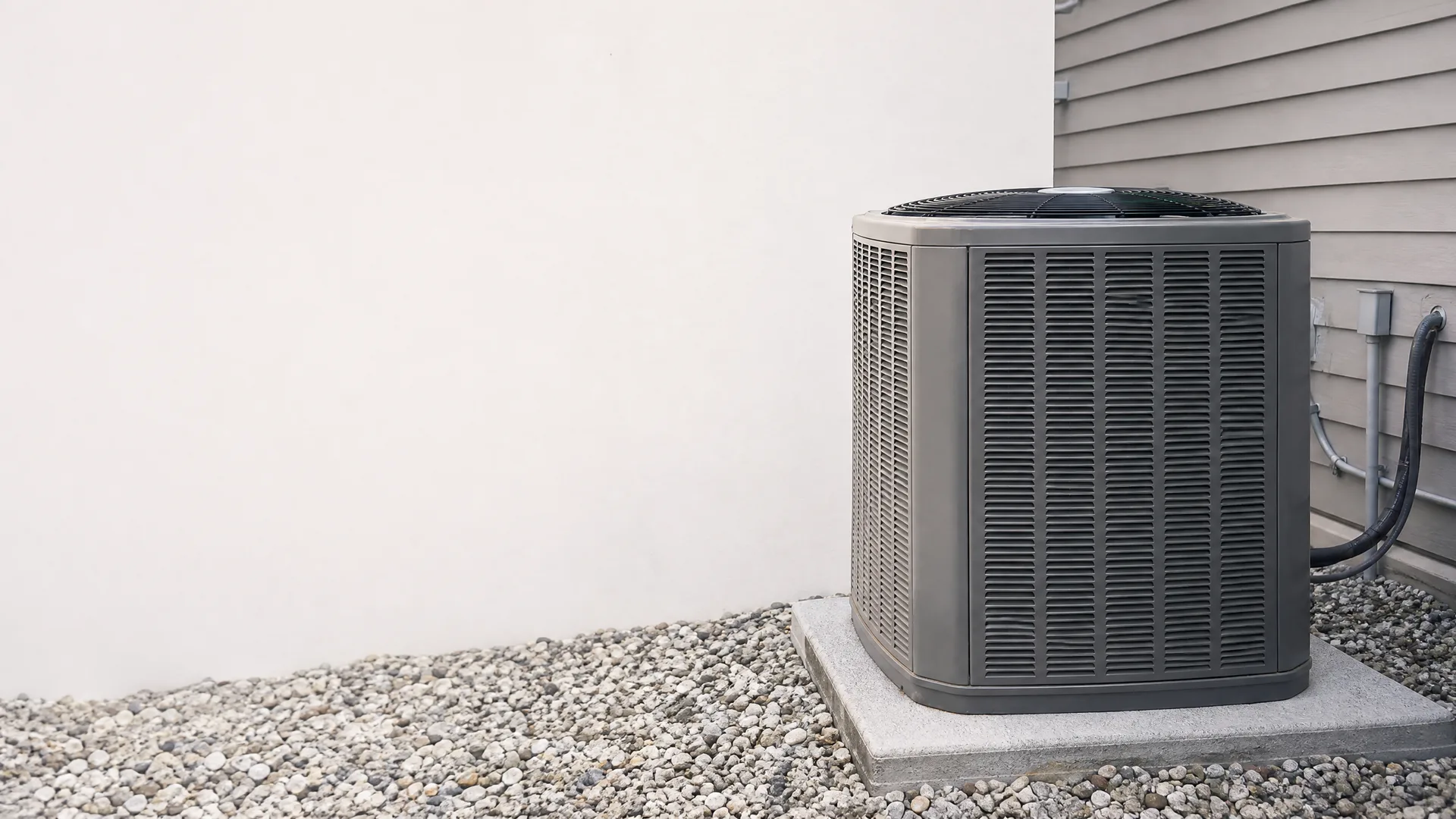
An outdoor air conditioner condenser unit on a concrete pad beside a light stucco wall and vinyl-sided wall, surrounded by gravel.

Where the clog actually forms

The line usually backs up at a low point or a bend, not at the drain pan itself. Algae grows in the standing water and narrows the pipe until water can't pass through fast enough. Once it's slow enough, the pan fills, the float switch trips, and the unit shuts off. Clearing that buildup before it packs the line tight is what keeps the water moving on the next humid day.

Wait For It, Or Stay Ahead

Ignore it

  • The pan fills and the overflow switch trips, shutting the whole system off on the next hot, sticky afternoon.
  • Algae and dust keep building inside the line until the clog is solid instead of a thin film you could've caught early.
  • Standing water sits near the indoor unit and can soak into the surrounding drywall or flooring before anyone notices.
  • Each clog gets found the same way, by the system failing, so the fix always comes with a shutdown instead of a quiet checkup.
  • You're left searching for someone to come out same-day, explaining the same backed-up drain line story over the phone to whoever picks up.

Stay ahead of it

  • A line that's flushed and checked before the muggy months hit has far less buildup to clear when humidity peaks.
  • Catching a slow drain early means dealing with a trickle, not a pan that's already overflowed onto the floor.
  • A system that isn't fighting a clogged line all summer runs the way it's supposed to, pulling moisture out at full pace.
  • Getting matched once with a contractor who knows this line means you're not calling around and re-explaining the problem every time it backs up.
  • Checking the line before the worst of the heat means you're not waiting on a repair slot in the middle of a heat wave.
An older man with gray hair and a beard, wearing a dark snow-dusted jacket and scarf, stands smiling in a warmly lit interior hallway with a lit table lamp, a vase of dried branches, and a framed picture in the background.
An older man in a dark snow-flecked overcoat and scarf stands smiling in a warmly lit home entryway, with a glass-paned door showing darkness outside and a lamp-lit room visible through a doorway behind him.
An older man with grey hair and a beard, wearing a dark coat dusted with snow, stands in a dimly lit entryway with a ceiling lamp, a side table with two shaded lamps, and a lit fireplace visible in a room beyond.
An older man with gray hair and a beard, wearing a dark coat dusted with snow, stands smiling in a doorway of a warmly lit home with a sofa, lamp and window visible behind him.

Matched to your air conditioner job

Fill out one form instead of calling around for an air conditioner tune-up.

There's no charge for the request.

You'll likely know it's clogged when the air stops feeling as cool, or you spot water stains on the ceiling under an upstairs unit, or the system just quits on the hottest day of the week.

None of that fixes itself. The line has to be cleared before the system runs right again, and a clog that caused water damage once will cause it again the next sticky week it's left alone.

An outdoor air conditioning condenser unit on a concrete pad beside a house with horizontal lap siding, with a conduit and electrical disconnect box on the wall at right.
Before you get your air conditioner maintenance
A gray outdoor air conditioner condenser unit on a concrete pad beside a house with horizontal lap siding, with a wall-mounted disconnect box and conduit to its right and shrubs to the left.
After you get your air conditioner maintenance

The line only works if gravity can do its job, so it's cut at a slope from the indoor unit to wherever it empties out. A sag from a bent hanger or a shift in the attic floor is enough to leave water sitting instead of running off, and standing water is exactly where algae takes hold. Once that growth builds up on the inside wall of the pipe, the opening narrows and the next heavy, wet stretch of weather is what finally stops it up. A float switch near the pan is what shuts the system down before water reaches the ceiling below. Most setups have a tee or cleanout near the indoor unit for exactly this problem, so a contractor can usually flush the line from there without taking anything apart. Where it clogs matters too. Sometimes the trouble isn't in the line at all but at the far end, in a condensate pump or a floor drain. And because PVC lines are glued joint to joint, a clog lodged deep in the pipe can mean cutting in rather than just running a brush through.

How the drain line actually works

  • The drain line slopes down and out to let water run off by gravity, so even a slight sag or kink lets water sit instead of draining.
  • Algae grows inside the line because it stays wet and dark in there all summer, and that growth narrows the pipe until water can't pass.
  • Most systems have a tee fitting or cleanout near the indoor unit built specifically so the line can be flushed from that point.
  • A float switch sits inside or near the drain pan and cuts power to the system the moment water rises past a set level.
  • The line usually runs to a floor drain, a condensate pump, or straight outside, and each of those exits can clog at the far end instead of inside the line itself.
  • PVC drain lines are often glued at every joint, so a clog deep in the line sometimes means cutting into the pipe rather than just running a brush through it.
A woman wrapped in a chunky knit blanket sits in an armchair with an open book on her lap, beside a lit table lamp and a window with frost and snow outside.
An older woman with short blond hair in a cream turtleneck sweater stands smiling and looking off-camera in a kitchen, with a loaf of bread, a lit candle, a window showing darkness outside, and wood cabinets behind her.

Clear it yourself each month

Some homeowners pour a cup of vinegar down the line's cleanout every few weeks through the summer to keep algae from building up. It takes a few minutes and costs nothing but the vinegar. The catch is remembering to do it, and doing it before the line is already slow rather than after. It also only reaches what's near the access point. If the clog or sag is further down the line, pouring vinegar in won't find it, and you won't know until water backs up again.
Have it checked with maintenance

A maintenance visit means someone looks at the whole line, not just the part you can reach, and catches a sag or a growing clog before it shuts the system off. You're not the one tracking a schedule or guessing whether the vinegar is still working. Instead of calling around for someone who can look at your system, explaining the backup each time it happens, and comparing quotes on your own, you get matched with a contractor who handles it and reaches out to you directly.

Power costs 13.62 cents per kilowatt-hour statewide

At 13.62 cents a kilowatt-hour, running your AC harder than it needs to shows up fast on the bill. A clogged drain line can trip the system off or make it strain to keep up, and either way you're paying for cooling you're not getting.

EIA-861 2025 statewide residential average

A clogged drain line in an Iowa summer comes down to algae and gravity, and both are things regular maintenance catches before they shut your system down. The slope has to stay true, the line has to stay clear, and the pan has to stay empty, every muggy month from June through September. Left alone, it's the same cycle: water backs up, the switch trips, the house goes without cooling until someone deals with it. Finding someone to deal with it is its own chore, calling around, explaining the same problem twice, trying to compare quotes that don't line up. You don't have to do that part. Answer a few questions about your system and your house, and a contractor who handles this in your area will reach out to you directly. No more searching, no more repeating yourself to the next name on a list.

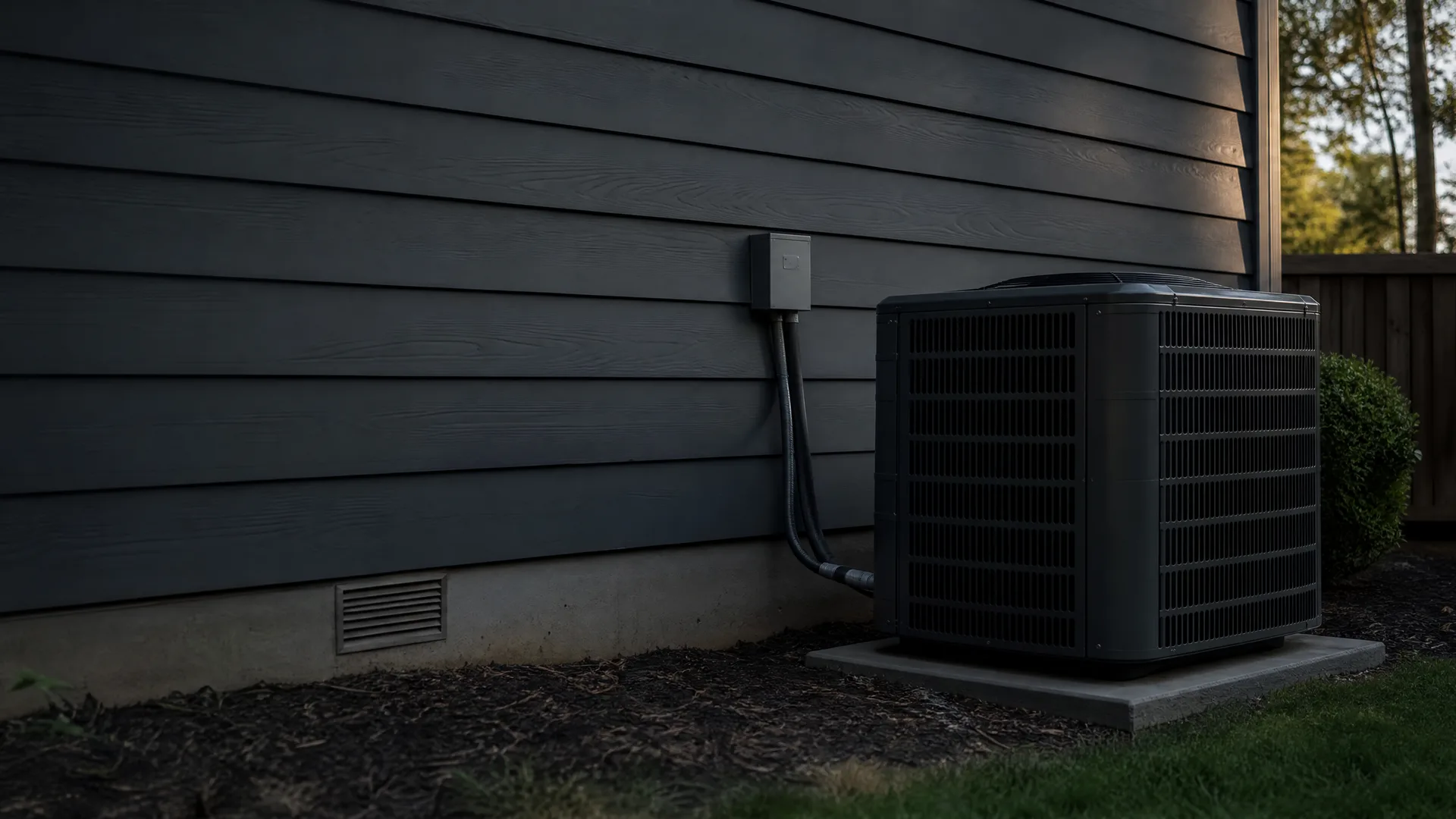
An outdoor air conditioning condenser unit on a concrete pad beside a dark gray horizontal lap-sided house wall, with a disconnect box and refrigerant lines on the wall, mulch bed and shrubs nearby.

An air conditioner pro near you

Skip calling around to set up an air conditioner tune-up.

Tune-up, service, or cleaningCentral ACIowa
Step 1 of 2

What ZIP code is the job in?