






Aerial view of a square outdoor air conditioning condenser unit on a concrete pad beside a house wall with a sliding glass door.

AC Installation in Boone, IA

Tell us about the job

Takes about a minute. No obligation.

New system or replacementCentral ACBoone County, IA
Step 1 of 2

What ZIP code is the job in?

That efficiency number on the label tells you how much cooling a unit gets out of the power it uses. A higher rated unit moves more heat out of your house for the same draw on the electric meter. It matters most over the life of the system, since that rating holds steady year after year as long as the unit is maintained. But the rating on the box is a lab number. What you actually get depends on whether the unit is sized right for your house and whether the ductwork can move the air it produces. A high efficiency condenser paired with the wrong coil or undersized ducts will not perform the way the label suggests. That's why the rating is a starting point for comparing units, not a promise about your power bill.

3 months
June through August, your air conditioner is on duty
82°F
the average summer afternoon it cools against
40 hail events
in ten years, and hail bends the fins on outdoor coils
13.4 SEER2
the federal minimum any new unit must meet
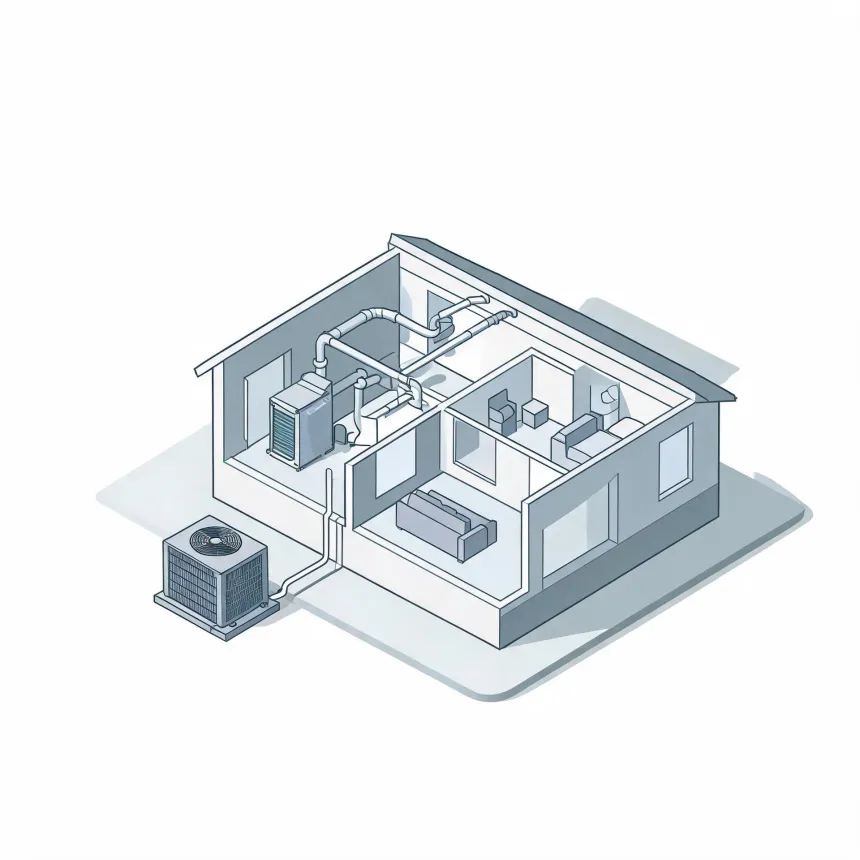
Isometric line illustration of a cutaway house showing interior rooms, a furnace or air handler with ductwork, and an outdoor condenser unit beside the building.
Your air conditioner works hardest from June through August.

NOAA nClimDiv, 1991–2020 normals

Cooling runs about three months here, June through August.

A system that sits idle most of the year doesn't need to be the top of the lineup to last.

Half the homes here were built in 1960 or earlier. The new system has to match the house, not the year on it.

Half the homes here were built by 1960
Cooling runs June through August
Summer afternoons average 82°F
Power here is cheapIowa homes paid 13.40 cents per kilowatt-hour in 2024, so the top-tier model pays back slower here.

Boone County sits in climate zone 5A, where winters set the bigger demand but summers still get humid enough that a new AC has to be sized with that in mind. Any split system under 45,000 Btu/h installed here now has to meet a federal minimum of 13.4 SEER2. That floor applies everywhere in the country, not just here, so it narrows the field before you even start comparing brands. Nothing stops you from going above it. But anything offered to you should already clear that number, and it's worth checking the label to be sure it does.

Get it installed before June, not during it

Cooling in Boone County starts in June. A new system put in during May goes in on a normal schedule, with time to size it and match it to your ducts, instead of getting squeezed in once the heat has already started.

Find a contractor
A man in a dark long-sleeve shirt and tan work pants, seen from behind, carries a canvas tool bag up porch steps toward a dark green front door beside a potted shrub.
A gray residential air conditioner condenser unit mounted on a concrete pad in an open grass field.

What you're actually paying for

Labor is the biggest line on an install quote, and most of it goes into things you never see once the panels are back on. Setting the line set, pulling a vacuum on it, checking the charge against the manufacturer's numbers, confirming static pressure in the ducts. Skipping any of that doesn't show up on install day. It shows up later as a compressor that failed early or a house that never quite feels dry. The equipment itself is a smaller piece of the total than most people guess. A condenser and coil matched to each other and set up right will outlast a cheaper pair installed fast, even before anything breaks. What drives the number on the quote is mostly labor done carefully, not the unit sitting on the truck.

The old unit gets hauled away

Whoever installs the new system disconnects the old condenser and furnace or coil, recovers the refrigerant from the lines, and takes the equipment with them. Refrigerant can't legally be vented into the air, so it has to be pulled out and stored before anything gets unhooked. The old pad and line set sometimes get reused, depending on what the new system needs.

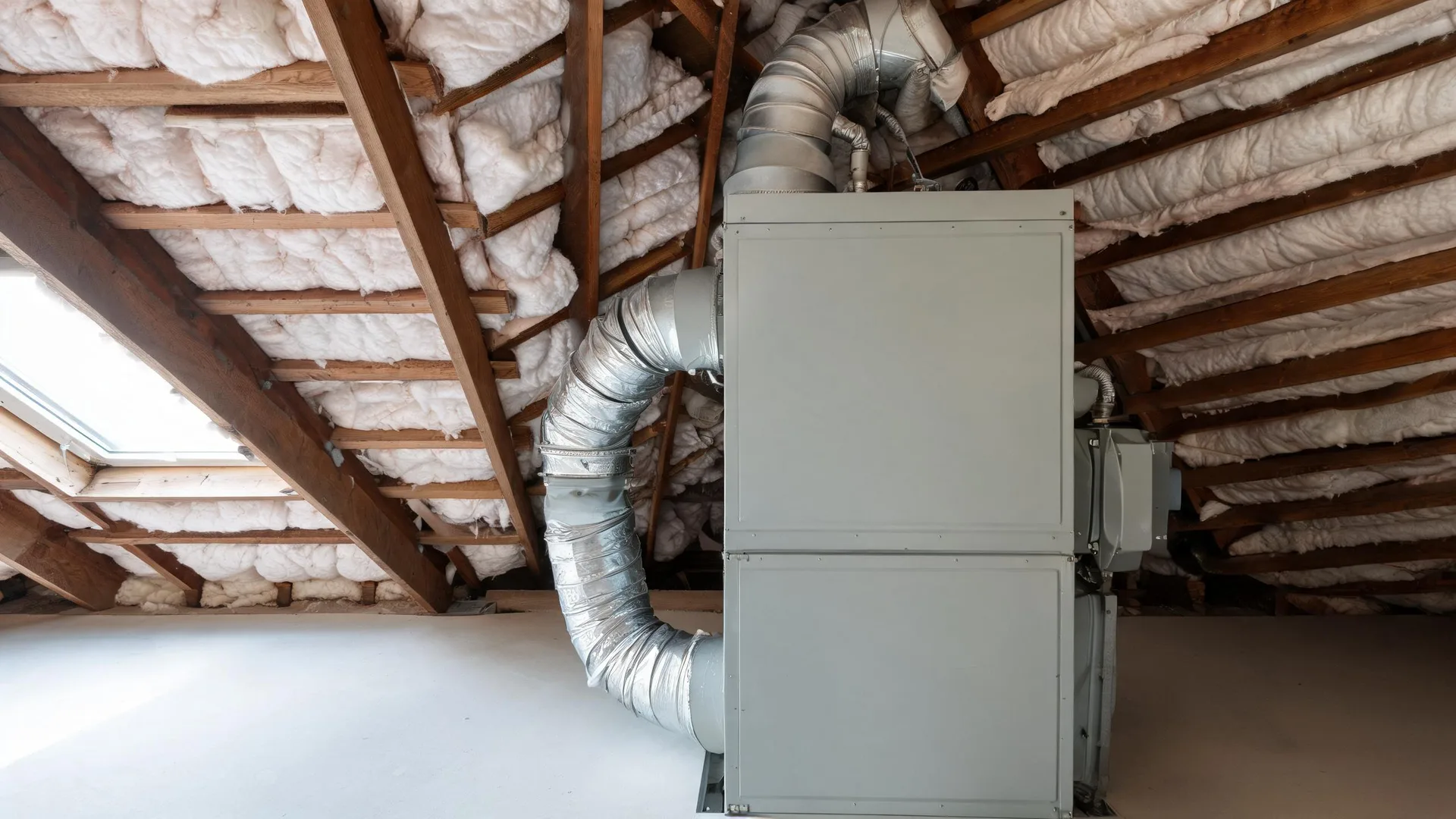
The ductwork decides what fits

A new condenser still has to push air through the ducts already in the house. If those ducts were sized for the old system, a different tonnage or a different blower can mean air moving too fast or too slow through them, even with a good unit on the pad. Whoever does the install should check duct sizing and the line set before assuming the old setup carries over as is.

Overhead view of a gray residential air conditioning condenser unit mounted on a concrete pad beside a house with asphalt shingle roofing.

Going above the federal minimum saves little here, about $20 a year.

  • A higher-efficiency unit$160 a year
  • A new unit at the federal minimum, 13.4 SEER2$180 a year

Estimates for a typical Boone County home, from EIA household energy data, Iowa fuel prices and NOAA climate normals. Your home will differ.

Sizing an AC isn't about matching the old tonnage and moving on. It comes from a load calculation, a room by room look at square footage, window area, insulation, ceiling height, and how much shade the house gets, that adds up to how much heat actually needs to leave the house on a hot day. A unit sized too big cools the air fast and shuts off before it pulls the humidity down, so the house feels cold and damp at once. One sized too small runs constantly and still can't catch up on the worst days, which wears on the compressor long before it should quit. Bigger is not safer here. The right size is the one that matches the load calculation, not the biggest number on the lot.