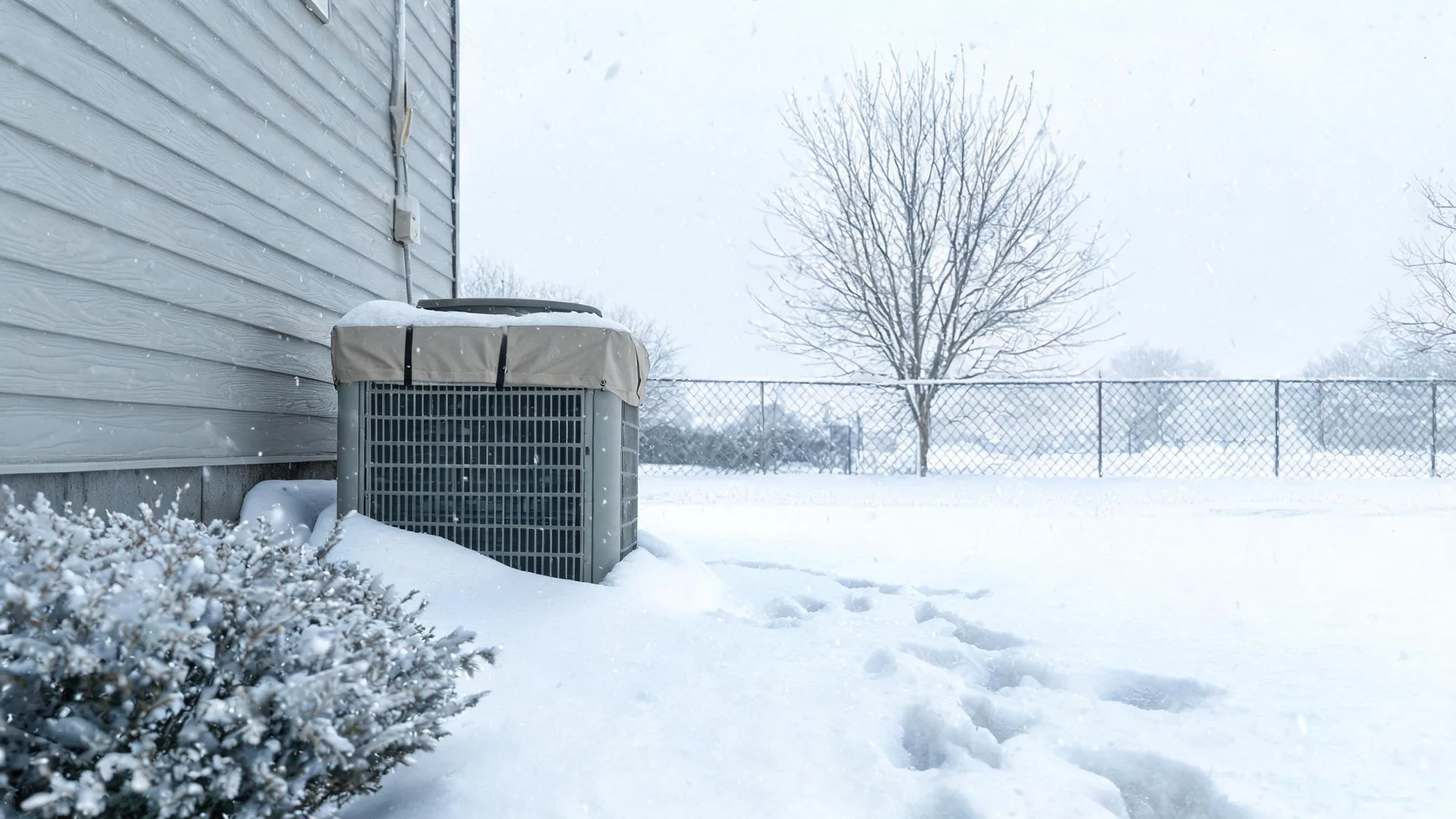
An overhead view of a residential air conditioning condenser unit mounted on a concrete pad next to a house with vinyl siding.

AC Installation in Carroll, IA

Tell us about the job

Takes about a minute. No obligation.

New system or replacementCentral ACCarroll County, IA
Step 1 of 2

What ZIP code is the job in?

Most homes here run on gas

Utility gas heats 58% of homes in Carroll County, and electricity covers another 23.6%. If your furnace is gas, a new AC system just adds cooling onto what's already there, using the same ducts and the same gas line for heat.


The AC install itself doesn't change with the fuel

Central air works the same whether the furnace behind it burns gas or runs on electric heat strip. What matters for your install is the ductwork and the electrical already in your house, not what heats it.

3 months
June through August, your air conditioner is on duty
82°F
the average summer afternoon it cools against
15 hail events
in ten years, and hail bends the fins on outdoor coils
13.4 SEER2
the federal minimum any new unit must meet
Isometric cutaway illustration of a house interior showing ducted HVAC piping, an indoor air handler unit, and an outdoor condenser with fan connected by a line, rendered in grey tones on a white background.
Your air conditioner works hardest from June through August.

NOAA nClimDiv, 1991–2020 normals

Half the homes in Carroll County went up in 1964 or earlier.

A new AC system has to match the ducts and electrical already in that house, not the other way around.

At 13.4 cents a kWh, the highest-SEER unit isn't where your money goes furthest

Power costs 13.4 cents a kWh statewide
Cooling runs June through August
Summer afternoons average 82°F
Three months of real work a yearAfternoon highs average 82°F in June, July and August, the only months cooling runs.

Carroll County sits in climate zone 5A, a cool zone where furnaces carry more of the load than AC does. Even so, any split-system air conditioner installed here under 45,000 Btu/h has to meet 13.4 SEER2 at minimum, since that's the federal floor for units built from 2023 on. That rules out the older, lower-efficiency units some contractors may still have on a shelf. It doesn't mean you need to go above code. A system rated right at 13.4 SEER2 is still a legal, fully compliant install, and matching it to your ductwork matters more than chasing a higher number.

Install before June, not during it

Cooling in Carroll County runs June through August. Put the install in before June and it happens on your schedule, with the crew and the date you picked, instead of competing for a spot once the season's already started.

Find a contractor
A gray metal air conditioning condenser unit mounted on a concrete pad in a flat grassy field under a partly cloudy sky.

What happens to the old system

Whoever installs the new system still has to deal with the old one. Refrigerant in that outdoor unit can't just be vented, it has to be recovered into a tank with the right equipment before the lines get cut. That part isn't optional, and a contractor who skips it is cutting a corner that's against the law to cut. Once the charge is out, the old condenser and coil get hauled off, usually scrapped for the metal. Indoors, if the coil sits on top of the furnace, swapping it means working inside that plenum, and whoever does it should seal it back up as tight as they found it. A rushed removal can leave gaps in the ductwork right at the connection, and that's air that never makes it to a vent.

The coil and the condenser have to match

An outdoor condenser and the indoor coil are rated as a pair. Put a new condenser on an old coil and the system can't hit the capacity or efficiency it's rated for, no matter how good the condenser is. Replacing both at once costs more than the condenser alone, but it's what actually makes the new equipment perform like it's supposed to.

Duct work hides until someone opens the walls

A quote built on a quick look at the furnace can change once a contractor gets into the attic or crawlspace and finds ducts that are too small, crushed, or leaking at the joints. Sealing or resizing that ductwork adds to the job, but skipping it means the new system never delivers the air it's rated to move, no matter how well it's installed.

Overhead view of an air conditioning condenser unit on a concrete pad next to a house with asphalt shingle roofing and vinyl siding.

Going above the federal minimum saves little here, about $20 a year.

  • A higher-efficiency unit$150 a year
  • A new unit at the federal minimum, 13.4 SEER2$170 a year

Estimates for a typical Carroll County home, from EIA household energy data, Iowa fuel prices and NOAA climate normals. Your home will differ.

Install day starts with the old equipment coming out. The refrigerant gets recovered into a tank, the lines get disconnected, and the old condenser is hauled off the pad. The new condenser goes down, the lines get run to the coil, and every joint gets connected. Before any refrigerant goes in, the system gets pressure tested. That test is checking for a leak at a joint that would otherwise show up as lost cooling months down the road, not that afternoon. Once the pressure holds, the lines get evacuated to pull out moisture and air, then the system is charged to the weight the manufacturer specs for that line length. Last comes startup. The tech checks the temperature split across the coil, confirms the blower is moving enough air, and makes sure the thermostat is reading the right equipment before calling the job finished.