





A dark two-story house with a wide covered front porch, framed by large leafy trees, behind a trimmed hedge and a striped mowed lawn.

AC Installation in Cedar Rapids, IA

Tell us about the job

Takes about a minute. No obligation.

New system or replacementCentral ACLinn County, IA
Step 1 of 2

What ZIP code is the job in?

Linn County saw 344 severe weather events between 2015 and 2024. Most of that was wind and hail: 156 damaging wind events and 139 hail events, with 17 tornadoes and 30 winter storms mixed in. An outdoor condenser sits outside through all of it, exposed to whatever hail or wind comes through. Statewide, 15% of Iowa households lost power for a day or more in 2024. A new system is worth planning around that, not just around the heat.

3 months
June through August, your air conditioner is on duty
82°F
the average summer afternoon it cools against
139 hail events
in ten years, and hail bends the fins on outdoor coils
13.4 SEER2
the federal minimum any new unit must meet
Isometric illustration of a cutaway house showing interior ductwork, an indoor air handler and furniture, connected by lines to an outdoor condenser unit on a pad.
Your air conditioner works hardest from June through August.

NOAA nClimDiv, 1991–2020 normals

Cooling runs June through August here.

Install before June and the job happens on your schedule, not during the first hot week.

Most homes here run on gas, so cooling is the only piece you're adding

74% of homes heat with gas
Cooling runs June through August
Summer afternoons average 82°F

Linn County falls under zone 5A in the 2021 energy code, a cool zone where heating carries most of the load but humidity still counts against it. Any split-system air conditioner installed here, under 45,000 Btu an hour, has to meet 13.4 SEER2 if it was built after January 1, 2023. That number is a federal floor, not a target to hit if you want better performance against the humidity. It narrows what a contractor can legally put in, so the comparison between units is really a comparison above that line. A system bought new today meets it already; the question is how far past it you want to go.

Plan the install around what the weather here actually does

Pick where the new condenser goes with wind and hail in mind, and ask what happens to heat and hot water if the power goes out. Both are easier to plan before install day than after a storm.

Find a contractor
A man in a dark jacket, tan work pants and cap, seen from behind, carries a canvas tool bag up concrete steps toward a dark green front door beside a potted shrub.
A gray residential air conditioning condenser unit mounted on a concrete pad outdoors, surrounded by green grass under a partly cloudy blue sky.

Three months of work, in weather that doesn't go easy

Three months a year here is short next to other places, but those three months ask a lot of a condenser. Afternoons average 82°F through June, July and August, and the dew point averages 63°F the same stretch, which means the air stays heavy even when the temperature alone doesn't look extreme. A condenser working against that kind of humidity runs longer to pull the same heat out of a house than it would in dry air. It also sits outside through whatever the season brings, hail and wind included, on the days it isn't running at all. A short season doesn't mean less wear. It means the wear happens in a tighter window, on a unit that's exposed year round.

Sizing comes from a load calculation, not the old unit's tonnage

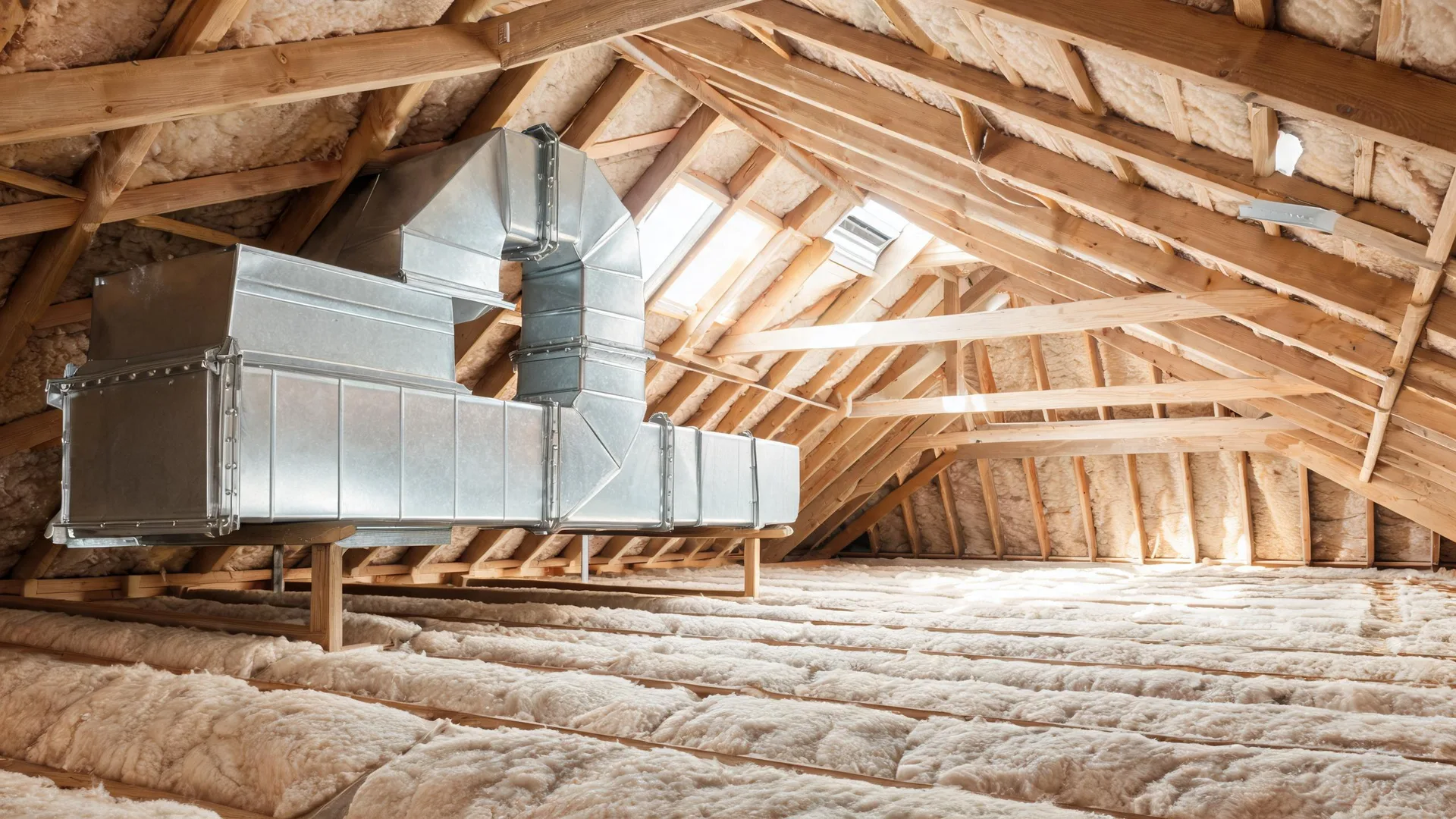
A contractor works out the right size by looking at square footage, window area and orientation, insulation levels, ceiling height and how much duct runs through unconditioned space. Swapping in whatever size was there before just copies a guess that may have been wrong from the start.

Oversized cools fast but leaves the air wet

A unit that's too big shuts off before it finishes pulling moisture out of the air, so the house feels clammy even at the right temperature. It also cycles on and off more, which wears the compressor harder over the years than a unit that runs in longer, steady stretches.

An outdoor air conditioning condenser unit mounted on a concrete pad next to a blue-sided residential house at sunset.

Going above the federal minimum saves little here, about $20 a year.

  • A higher-efficiency unit$140 a year
  • A new unit at the federal minimum, 13.4 SEER2$160 a year

Estimates for a typical Linn County home, from EIA household energy data, Iowa fuel prices and NOAA climate normals. Your home will differ.

A contractor starts outside, running a line set between the new condenser pad and the indoor coil, usually tying into the same path the old lines took. Indoors, the coil sits in the plenum above or beside the furnace, and that part has to match the condenser or the system won't perform the way it's rated to. The refrigerant lines get connected, then pulled down to a vacuum to clear out air and moisture before any refrigerant goes in, since either one left behind will damage the compressor over time. Electrical work follows: a dedicated circuit and disconnect box at the condenser, low-voltage control wire run back to the thermostat. Once it's charged and powered, the contractor checks refrigerant pressure against the manufacturer's spec, not just whether cold air is coming out of the vents. The last step is airflow, confirming each room is getting what the duct design calls for before calling the job done.