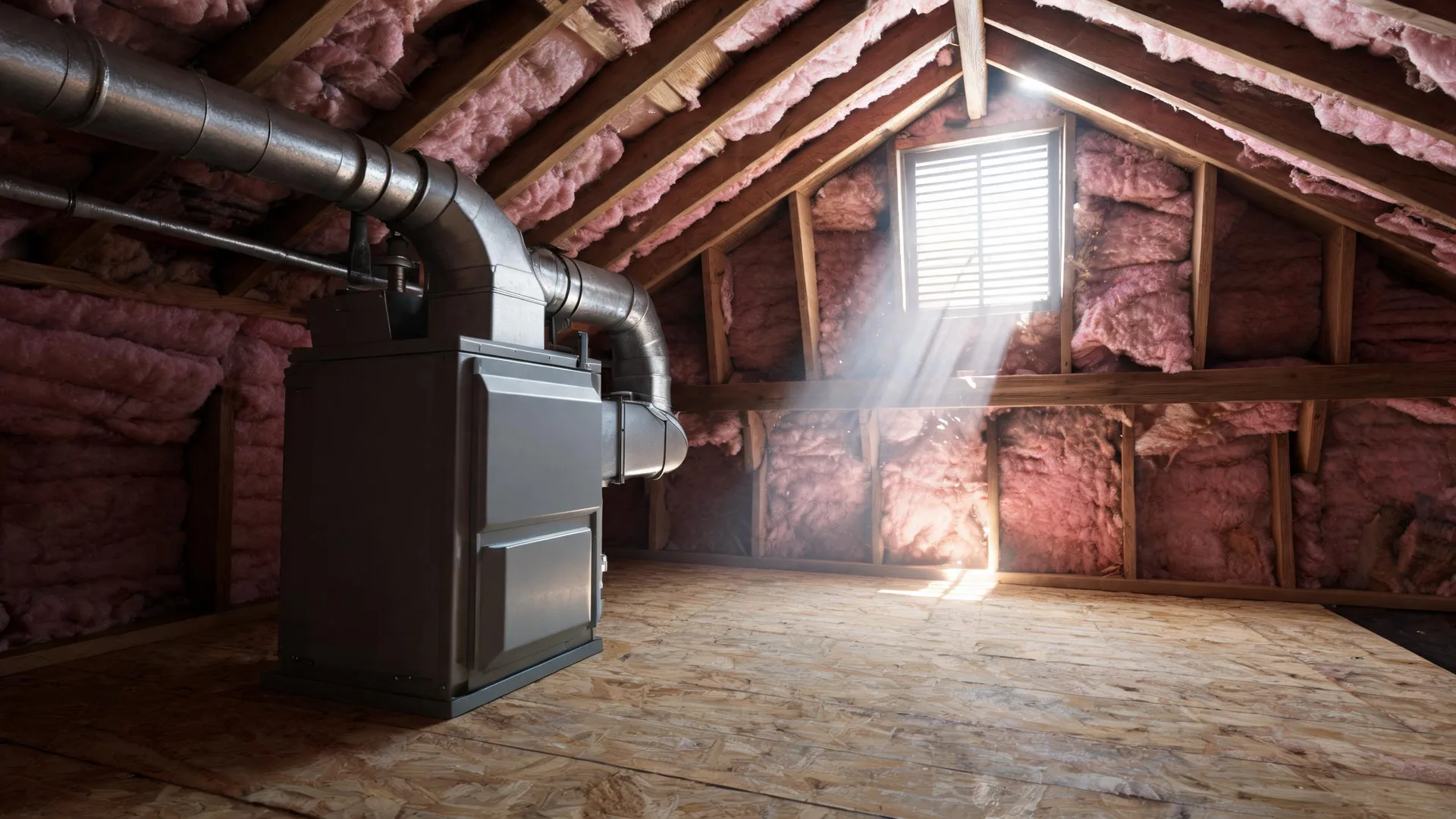
Gas heat is the norm here
Utility gas heats 54.1% of homes in Jackson County, with another 28.7% running on bottled or LP gas. Electric heat makes up just 10.4%. A furnace paired with an AC coil is the setup most contractors here work on.
Takes about a minute. No obligation.
Utility gas heats 54.1% of homes in Jackson County, with another 28.7% running on bottled or LP gas. Electric heat makes up just 10.4%. A furnace paired with an AC coil is the setup most contractors here work on.
If your home already has a gas furnace, adding or replacing central air usually means matching a new coil and condenser to that furnace rather than rethinking the whole system. The furnace's blower moves the cold air, so the two have to be sized to work together.

NOAA nClimDiv, 1991–2020 normals
Half the homes in Jackson County were built in 1970 or earlier.
A new AC has to match the ductwork and furnace already in your house, not the other way around.



Cooling in Jackson County runs June through August, so May is the month to get a new system in. Wait until the heat is already running and you're choosing from whatever unit is in stock, with a crew that's booked solid. Replace it in May and the install happens on your schedule instead of during a breakdown. It also gives the new condenser and coil a chance to settle in before they have to run every day.
Cooling here runs June through August, with afternoons averaging 82°F. That's a short season and a modest load. A mid-range system handles it without strain, and the parts that fail from overwork in hotter climates just don't see that kind of wear here. Heating is still the bigger job in this zone, so put the money where the system actually works hardest.
Find a contractor
A system that's too big cools the room fast and shuts off before it ever pulls the moisture out of the air. The house feels clammy even at the right temperature, and the compressor spends its life starting and stopping instead of running a steady cycle, which wears on it more than long runtimes do. Too small, and it runs constantly trying to catch up and still falls behind on the hottest days. Getting it right starts with a heat load calculation, room by room, looking at square footage, window area, insulation and shade, not just matching whatever size is already out there. The furnace's blower has to move enough air across the new coil too, so the coil and condenser get sized together with what's already in place, not picked off a chart alone.
A contractor should be able to tell you the actual heat load number for your house, not just the tonnage of the unit they're quoting. If they size it off the old equipment or a square footage rule of thumb without asking about windows, insulation or shade, they skipped the step that matters most.
A new condenser moving more or less air than the old one needs ducts that can actually carry it. Ask whether they checked duct size and condition or just assumed the existing runs will work. Undersized or leaky ducts will hold back even a correctly sized system.
Estimates for a typical Jackson County home, from EIA household energy data, Iowa fuel prices and NOAA climate normals. Your home will differ.
Install day starts with the old equipment coming out, not the new one going in. The condenser outside gets disconnected and hauled off, and the coil sitting on top of the furnace comes out too, along with the old refrigerant lines. A contractor will run new line set if the old lines don't match what the new system needs, then set the new coil in place and the condenser on its pad outside. From there it's wiring, refrigerant lines, and a vacuum pulled on the system to clear out air and moisture before any refrigerant goes in. The last step is firing it up and checking refrigerant charge, airflow across the coil, and temperature drop at the vents. A system that's wired and charged right runs quiet from the first cycle, so that final check matters as much as anything done earlier in the day.