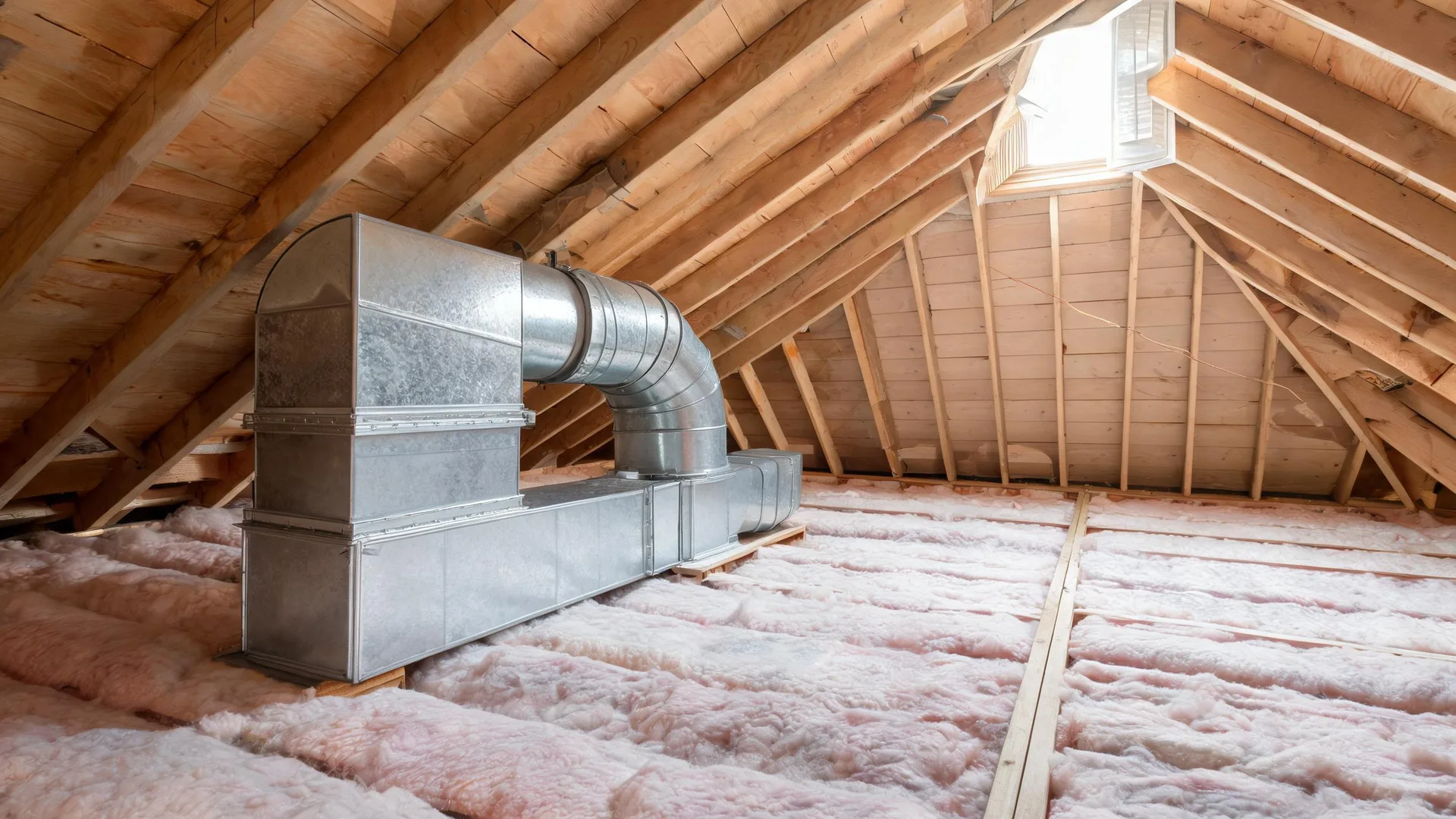
Gas furnaces are the local standard
Utility gas heats 71.1% of homes in Cerro Gordo County. Most central air conditioning here gets paired with a gas furnace, since the two share the same ductwork and blower.
Takes about a minute. No obligation.
Utility gas heats 71.1% of homes in Cerro Gordo County. Most central air conditioning here gets paired with a gas furnace, since the two share the same ductwork and blower.
If your home has a gas furnace, the ducts and blower that move its heat in winter are the same ones that will carry cold air in summer. A new AC installation ties into what's already there rather than starting from scratch.

NOAA nClimDiv, 1991–2020 normals
Half the homes in Cerro Gordo County were built in 1959 or earlier.
A new AC in a house that old has to work with the ductwork already in the walls, not a clean slate.




Cerro Gordo County falls in climate zone 6A, which is built around winter cold more than summer heat. But the AC going in still has to meet a federal efficiency floor. Any split-system central air conditioner under 45,000 Btu/h made from 2023 on has to be rated at least 13.4 SEER2. That rules out the older, lower-rated units some contractors might otherwise have sitting around. Whatever gets paired with your furnace this year will meet that minimum or it can't be sold new.
Electricity in Iowa runs 13.40 cents per kilowatt-hour, cheaper than most of the country. That changes the math on a new AC. A high-efficiency model still costs more up front, and here it takes longer to earn that back in lower bills. The bigger question is whether the unit is sized right for your ducts and built to hold up through a Mason City winter sitting idle. Get a system picked for your house, not just for its SEER2 number.
Find a contractor
Cooling runs three months here, June through August, with afternoon highs averaging 80°F. The rest of the year this unit sits idle while the furnace does the work. That's a light load, and a standard size matched to your ducts will handle it without strain. There's no case here for paying more for extra capacity or a higher efficiency rating than the house needs.
The indoor coil has to match the furnace's blower and the outdoor condenser, both in capacity and in the refrigerant it's built for. If the coil is the wrong size or type for either side, the whole system runs worse and can wear out faster. A straight swap only works when the old coil was sized right to begin with.
A contractor sizes the new system to the house, not the other way around. If the ducts are undersized or leaky, a bigger or higher-rated condenser won't fix that, and installing one without addressing the ducts first wastes money. Sealing or modifying ductwork, where it's needed, is part of the job, not an upsell.
Estimates for a typical Cerro Gordo County home, from EIA household energy data, Iowa fuel prices and NOAA climate normals. Your home will differ.
Installation starts with a look at what's already there before anyone touches the old unit. The contractor checks the existing ductwork, the electrical disconnect, and where the line set will run between the indoor coil and the outdoor condenser. Once the old condenser comes out, the new one gets set on a pad outside, level and clear of the wall so air can pull through the coil fins. Inside, the new coil goes in above or below the furnace, and the line set gets connected, evacuated, and charged with refrigerant to the manufacturer's spec. The system then gets tested running, checking the temperature drop across the coil and the pressures in the lines, before anyone calls the job done. A condenser and coil that aren't matched, or a charge that's off even a little, will show up later as a system that runs longer than it should and never quite keeps up.