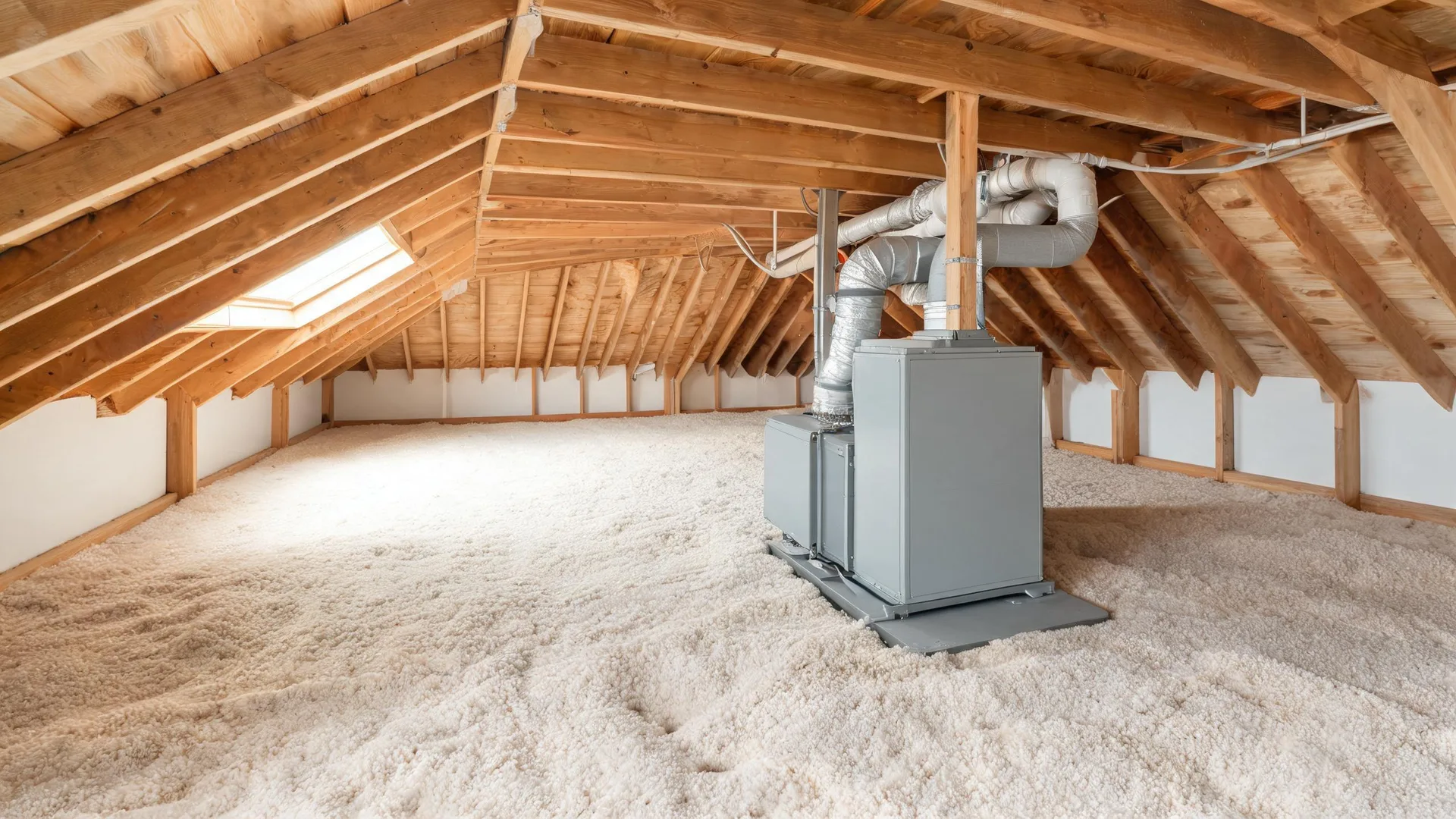
Most of Muscatine County heats with gas
Utility gas heats 70.1% of homes here, with electricity and propane making up most of the rest. A gas furnace paired with a separate AC system is the setup most contractors here see all the time.
Takes about a minute. No obligation.
Utility gas heats 70.1% of homes here, with electricity and propane making up most of the rest. A gas furnace paired with a separate AC system is the setup most contractors here see all the time.
If your furnace runs on gas, a new AC unit just needs to match up with the furnace and ductwork already in place. The coil and the blower have to work with what's there, so the contractor will size the system around that furnace rather than starting from scratch.

NOAA nClimDiv, 1991–2020 normals
Half the homes in Muscatine County were built in 1970 or earlier.
A system going into a house that old has to be sized to the ductwork already there, not the other way around.



Electricity in Iowa runs 13.40 cents per kilowatthour, below what most of the country pays. That changes the math on which AC to install. A higher-SEER2 unit still uses less power than a standard one, but at this rate it takes longer to make up the difference in cost between the two systems. That doesn't mean efficiency is wasted here, it means it shouldn't be the only thing driving the choice. How well the unit matches your ductwork and furnace, and how it holds up over the years, counts for more in a place where the power bill was never the biggest part of the picture.
Muscatine County falls in climate zone 5A, and any split-system AC installed here, if it's rated below 45,000 Btu/h, has to meet a federal minimum of 13.4 SEER2. That sets the floor on what a contractor can install. A federal tax credit is available for qualifying high-efficiency equipment, worth checking before you settle on a system.
Find a contractorThree months of the year, June through August, this system runs here, with afternoon highs averaging 83 degrees. That's a short, steady season, not the kind of heat load that wears out a compressor early or pushes anyone toward a bigger unit. Wind and hail show up in the county's records more than the heat does. Either can take out a condenser sitting outside. That's a reason to ask about the cabinet and the coil guard, not a reason to size up.
A contractor should size the system by running a load calculation on the house, checking the windows, the insulation, the square footage, not by matching whatever is already sitting outside. If someone quotes a tonnage before looking at the ductwork, that number is a guess.
The condenser outside is only part of the system. The coil inside has to match it, and the blower in the furnace has to move enough air across that coil. A mismatched coil can leave the system short on capacity or make it freeze up, no matter how good the outdoor unit is.
Estimates for a typical Muscatine County home, from EIA household energy data, Iowa fuel prices and NOAA climate normals. Your home will differ.
Installation day starts with the old unit coming out, not the new one going in. The refrigerant gets recovered from the lines first. It can't just be vented, that part is the law. Once the old condenser and coil are disconnected, the contractor sets the new condenser on its pad outside and runs new line set if the old one doesn't match the new refrigerant or size. Inside, the coil goes in above or beside the furnace, and that connection gets checked for airflow before anything else happens. The lines get brazed, then pressure tested so there are no leaks, then the system gets evacuated to pull out moisture and air before refrigerant goes back in. Last comes startup. The contractor checks the charge, checks the airflow across the coil, and makes sure the thermostat is actually talking to the new equipment. Skipping any of that is how a new system ends up freezing a coil or short cycling in its first season.