





A lit residential street at dusk featuring large two-story brick houses with glowing windows, mature trees, and a street lamp.

AC Installation in Newton, IA

Tell us about the job

Takes about a minute. No obligation.

New system or replacementCentral ACJasper County, IA
Step 1 of 2

What ZIP code is the job in?

Gas furnaces are the common setup in Jasper County, with utility gas heating 56 percent of homes here. Electricity and LP gas make up most of the rest, at 21 percent and 19.9 percent. If your house already has a gas furnace paired with an AC unit, replacing that AC with another one built to work off the same furnace blower and ductwork is usually the most straightforward path. The new unit just needs to match up with what's already in place, same refrigerant lines, same duct connections, same general footprint. If your home runs on electric heat instead, a contractor can tell you whether a straight AC or a heat pump setup makes more sense for the cooling side.

3 months
June through August, your air conditioner is on duty
83°F
the average summer afternoon it cools against
54 hail events
in ten years, and hail bends the fins on outdoor coils
13.4 SEER2
the federal minimum any new unit must meet
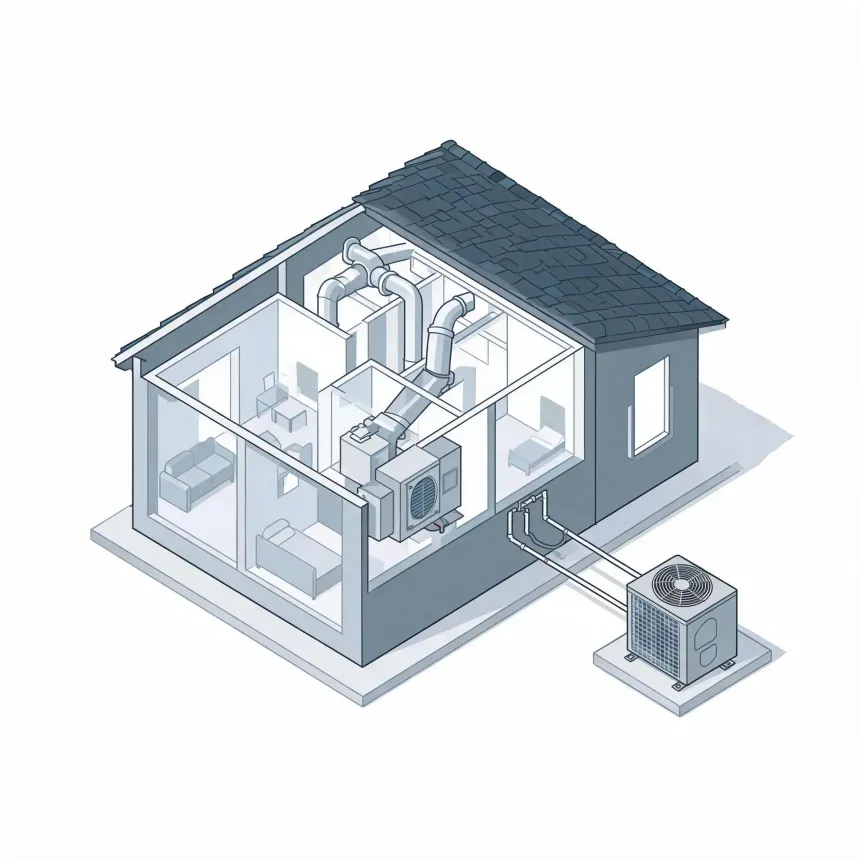
Isometric cutaway illustration of a small house showing interior rooms with furniture, an indoor air handler with ducts in the attic space, and refrigerant lines running to an outdoor condenser unit on a pad.
Your air conditioner works hardest from June through August.

NOAA nClimDiv, 1991–2020 normals

Cooling runs about three months here, June through August.

A standard-sized system built for an 83°F afternoon handles this fine.

Half the homes here were built by 1965, and the AC has to fit that house

Half the homes here were built by 1965
Cooling runs June through August
Summer afternoons average 83°F
Built for 13.40 cents a kilowatt-hourElectricity here runs cheaper than most of the country, so the highest-efficiency model isn't always the one that pays off fastest.

Ask what size unit they're proposing and how they got that number. A contractor should walk the house, room by room, not just measure square footage, before quoting a system. The right size cools evenly and shuts off at regular intervals. One that's too big cools the air fast then shuts off before it pulls the moisture out, so the house feels clammy even at the right temperature. Ask too what happens to the existing ductwork and whether it was ever tested for leaks, since a new outdoor unit still has to push air through the same ducts. If the quote includes a new coil, ask whether it matches the furnace or air handler already in place, since mismatched parts strain the system and shorten its life.

Go with the standard fit

A standard size and efficiency fit fine here. There's no local reason to go bigger or pricier.

Find a contractor
A gray residential air conditioner condenser unit mounted on a concrete pad in an open grass field.

The label is a lab number, not a promise

That number on the label is an efficiency rating, measured over months of running, not one hot afternoon. A higher rated unit pulls more cooling out of the same amount of electricity. It does that with a bigger coil and a compressor that runs differently, and that costs more to buy. That extra cost only comes back through lower bills, and only if the unit runs long enough and often enough to earn it back. The rating also assumes the unit is sized right and hooked to ducts that hold air. An oversized unit shuts off before it ever runs long enough to hit its rated number. A leaky duct loses cooled air before it reaches a room, no matter what the label says. The label tells you what the equipment can do under good conditions. It doesn't tell you what you'll get out of it on your ductwork, in your house.

The old unit gets disconnected and hauled off

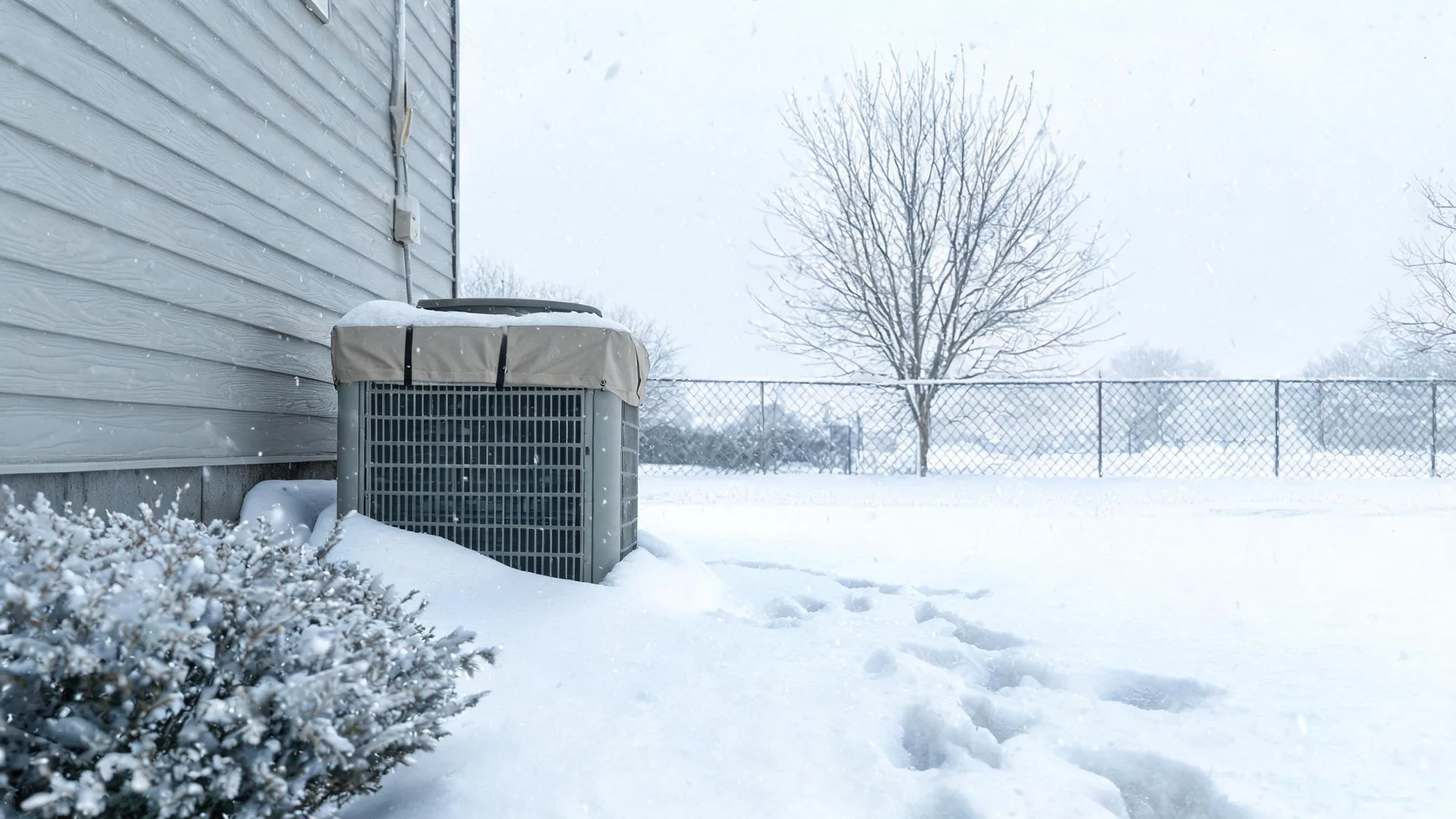
A contractor recovers the refrigerant from the old outdoor unit before touching anything, since venting it into the air is against the law. Once that's done, the lines get disconnected, the unit gets unbolted from its pad, and it leaves with them when the job's done. The old pad usually stays. The new unit sets right on it if it's still level and solid.

What's left behind matters more than what's hauled away

The refrigerant lines running to the old unit get checked before the new one connects to them. Lines sized for the old system don't always match what the new one needs, and a mismatch there can keep the new unit from running the way it's built to. The electrical disconnect box by the pad gets checked too. If it was rated for the old unit's draw, it needs to be swapped so the new one runs safely.

Overhead view of an air conditioning condenser unit on a concrete pad next to a house with asphalt shingle roofing and vinyl siding.

Going above the federal minimum saves little here, about $20 a year.

  • A higher-efficiency unit$170 a year
  • A new unit at the federal minimum, 13.4 SEER2$190 a year

Estimates for a typical Jasper County home, from EIA household energy data, Iowa fuel prices and NOAA climate normals. Your home will differ.

Most of the work happens outside and at the furnace, not in the living space. The old indoor coil sits in a cabinet above or beside the furnace, and swapping it means opening that cabinet and disconnecting it from the plenum before the new one goes in. That joint gets sealed back up tight, since any gap there leaks conditioned air into the attic or closet instead of the house. Outside, the new unit gets set, the lines get connected, and the whole system gets charged with refrigerant to the amount that unit calls for, not just topped off. Once it's running, a contractor checks the temperature split between the air going into the return and the air coming out of a supply vent. That split tells them the system is actually moving heat the way it should, not just running.