






A quiet suburban street at twilight featuring two-story brick homes with illuminated windows and large trees lining the sidewalk.

AC Installation in Oelwein, IA

Tell us about the job

Takes about a minute. No obligation.

New system or replacementCentral ACFayette County, IA
Step 1 of 2

What ZIP code is the job in?

Gas furnace and central air is the setup you'll find in most Oelwein homes. Utility gas heats close to half the houses in Fayette County, with LP gas running a lot of the rest, and electricity a distant third. When gas handles the heating, the AC side is almost always a central air unit paired with that furnace, sharing the same ductwork and the same thermostat. If your house already has gas heat, adding or replacing central air means matching into a system that's already there, not building something new. That's usually the straightforward path, and it's worth telling the installer what you have before they quote anything.

3 months
June through August, your air conditioner is on duty
80°F
the average summer afternoon it cools against
24 hail events
in ten years, and hail bends the fins on outdoor coils
13.4 SEER2
the federal minimum any new unit must meet
Isometric cutaway illustration of a single-story house showing interior rooms, ceiling ductwork, an indoor air handler, and an outdoor condenser unit connected by lines, in gray and white tones on a white background.
Your air conditioner works hardest from June through August.

NOAA nClimDiv, 1991–2020 normals

Half the homes in Fayette County were built in 1954 or earlier.

A new AC has to match the ductwork already in your house, not the other way around.

Get it done in May, before Fayette County hits three months of 80-degree afternoons

Cooling runs June through August
Summer afternoons average 80°F
43 damaging wind events from 2015 to 2024
Three months of work a yearAfternoons here average 80°F through June, July and August, then the AC sits idle the rest of the year.

The size of the unit matters more than almost anything else on the invoice. A system has to be sized to the house, the windows, and the duct run, not just picked off a shelf. Getting that sizing right takes a load calculation, not a guess based on the old unit. Bigger isn't better here. An oversized unit cools the air fast, shuts off, and leaves the humidity behind, which makes the house feel clammy even at the right temperature. If the ductwork is undersized or leaky, that gets priced in too, since the new unit has to push air through whatever is already in the walls and attic. A higher-rated unit costs more up front and asks less of the compressor over its life. Where the line set runs, whether the electrical panel can take the new load, and how much pad work the outdoor unit needs all shape the final number before anyone talks about the equipment itself.

Cheap power means fit matters more than the efficiency rating

Electricity in Iowa runs 13.40 cents per kilowatthour, cheaper than most of the country. That changes the math on a new system. The highest-efficiency unit on the shelf will cost more and take longer to earn that back in lower bills here than it would somewhere with pricier power. Sizing it right and matching it to your ductwork is what keeps it running well for years. That matters more than chasing the top efficiency number.

Find a contractor
A gray residential air conditioner condenser unit mounted on a concrete pad in an open grass field.

Match the unit to the ducts you have, not the ones you wish you had

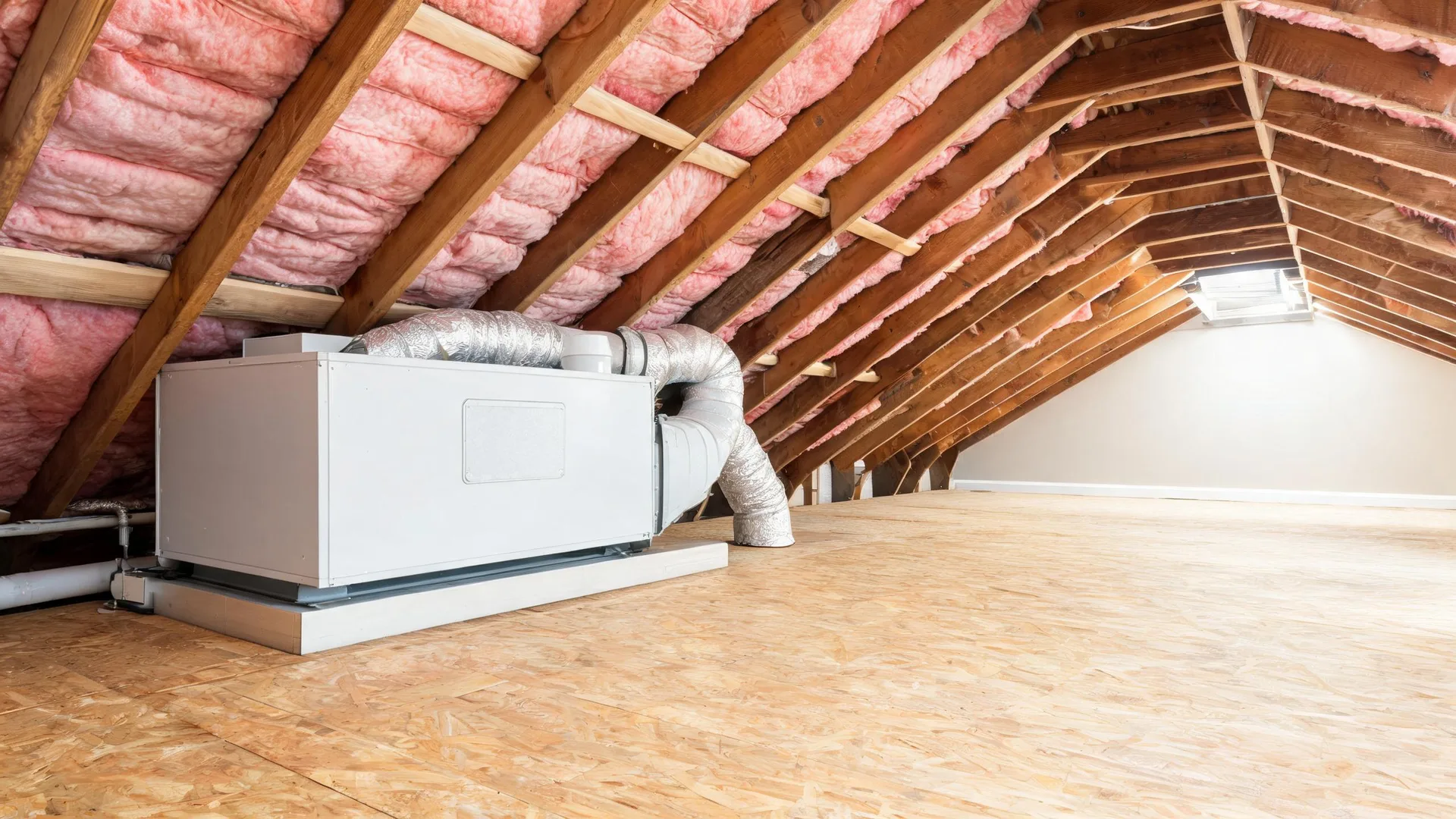
Before the installer shows up, find out when your ductwork went in, if you can. Older duct runs were sized for the furnace blower of their day, and that is not always the airflow a new AC needs to move. Matching the unit to the house means checking that the existing ducts can handle what the new system is rated for, not just setting the new unit down and connecting it to whatever is already there. That check belongs in the quote, before anyone orders equipment.

The old unit gets disconnected, not just unplugged

The refrigerant in the old system has to be recovered by the installer before anything is cut loose or hauled away. That refrigerant can't be vented into the air, so it gets pulled out with a recovery machine first. Once that's done, the line set gets disconnected, the electrical whip gets capped, and the old unit comes off the pad.

The pad and line set usually stay

Most jobs reuse the concrete pad the old unit sat on, unless it's cracked or too small for the new unit's footprint. The line set connecting the outdoor unit to the indoor coil often gets replaced rather than reused, since old line sets can have residue or the wrong diameter for the new system's refrigerant charge. Whether it's reused or swapped is something the installer checks on site, not something decided ahead of time.

Aerial view of a square outdoor air conditioning condenser unit on a concrete pad beside a house wall with a sliding glass door.

Going above the federal minimum saves little here, about $10 a year.

  • A higher-efficiency unit$120 a year
  • A new unit at the federal minimum, 13.4 SEER2$130 a year

Estimates for a typical Fayette County home, from EIA household energy data, Iowa fuel prices and NOAA climate normals. Your home will differ.

A load calculation looks at more than square footage. It accounts for how many windows face the sun, how much shade the house gets, how high the ceilings run, and how well the attic and walls hold heat in or out. Houses the same size can need different tonnage because of those details. Skip the calculation and go by the old unit's size, and you just carry forward whatever mistake was made last time, or the wrong size for a house that's had windows or insulation changed since that unit went in. The math also has to account for the ductwork moving the air, not just the compressor making cold refrigerant. A unit sized right for the house but choked by narrow or leaky ducts won't deliver the cooling it's rated for. Getting the size right the first time is what keeps every room at the right temperature instead of some too cold and others never catching up.