




A row of dark-sided single-story houses behind a tall trimmed hedge and a large tree, with a mown lawn and a paved path under an overcast sky.

AC Installation in Pella, IA

Tell us about the job

Takes about a minute. No obligation.

New system or replacementCentral ACMarion County, IA
Step 1 of 2

What ZIP code is the job in?

Gas furnaces are the common pairing for central air here, since 60.1% of homes in Marion County heat with utility gas. A new AC installation usually ties into that setup, sharing the blower and the ductwork already in place. Electricity heats 18.8% of homes and LP gas another 18.2%, and either of those can still pair with central air without trouble. If your home already has ductwork sized for a gas furnace, matching a new AC to it is the straightforward route.

3 months
June through August, your air conditioner is on duty
83°F
the average summer afternoon it cools against
70 hail events
in ten years, and hail bends the fins on outdoor coils
13.4 SEER2
the federal minimum any new unit must meet
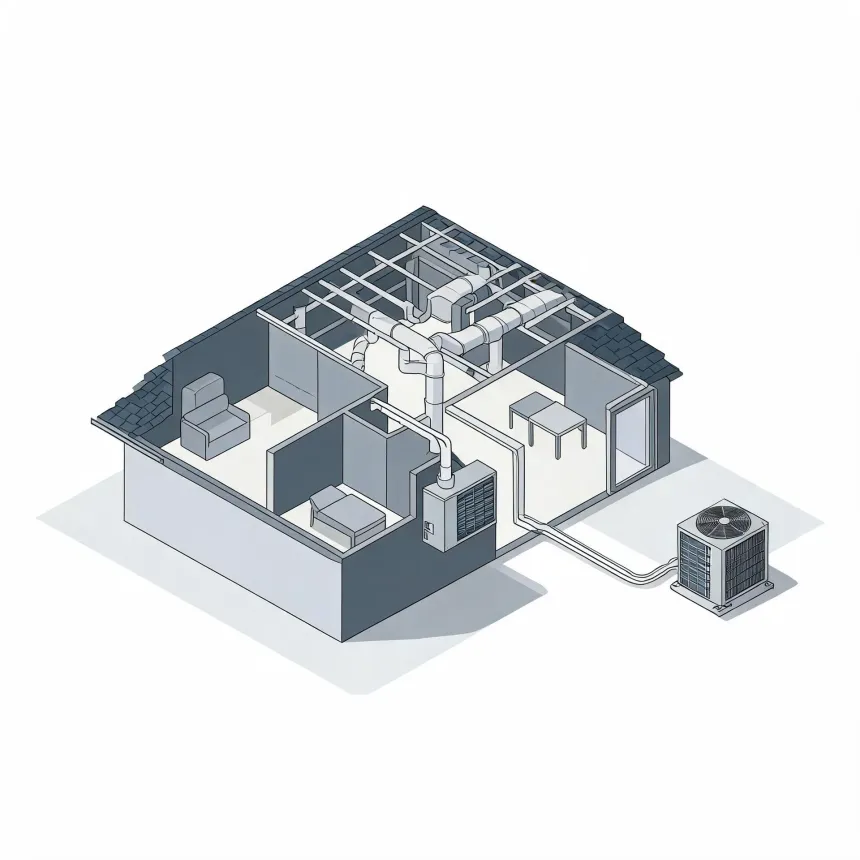
Isometric cutaway illustration of a house showing attic ductwork, an indoor air handler, and an outdoor condenser unit connected by lines.
Your air conditioner works hardest from June through August.

NOAA nClimDiv, 1991–2020 normals

Marion County homes split evenly between built before 1975 and after.

No pattern in the housing stock here calls for upsizing a system or stepping up efficiency beyond standard.

At 13.4 cents a kWh, the payback on a premium efficiency jump stretches out

Power costs 13.4 cents a kWh statewide
Cooling runs June through August
Summer afternoons average 83°F
Have it ready before JuneCooling runs June through August in Marion County, so May is the time to put in a new system.

Marion County falls under zone 5A, and any split-system AC under 45,000 Btu/h put in now has to meet 13.4 SEER2 at minimum, since that's the federal floor for units built from 2023 on. That rules out the older, less efficient units some contractors might still have sitting in a warehouse. It doesn't rule out going higher. A contractor can install above 13.4 SEER2 if the price makes sense to you, but nothing about this zone or this county requires it. The federal tax credit for qualifying high-efficiency equipment is worth checking against whatever unit you're considering, since it can offset some of that jump if you decide to make it.

A standard AC, installed before June

Three months of cooling and an afternoon average of 83 degrees doesn't call for anything beyond a standard system. Get it installed before June and it'll handle the summer load the way it's built to.

Find a contractor
A gray residential air conditioning condenser unit mounted on a concrete pad outdoors, surrounded by green grass under a partly cloudy blue sky.

The old unit comes out, not just off

The old condenser doesn't need to be running for the new one to go in, and most of the time it isn't. A contractor disconnects the refrigerant lines, pulls the electrical whip, and the unit gets hauled off. If the system is old enough, the refrigerant inside it is one a contractor has to recover rather than vent, so that gets drawn out before the unit is disconnected. The indoor coil usually gets swapped too, even though it can outlast the condenser, because matching an old coil to a new condenser means they're never rated to work together properly. Whoever installs the new system should also flush or replace the line set rather than reuse it as is. Old refrigerant lines carry oil residue and sometimes debris that can contaminate a new compressor, and a compressor that fails early is almost always traced back to something left behind in the lines.

Sizing comes from a load calculation, not the old unit's tag

A contractor works out the right size by looking at square footage, window area, insulation, and ceiling height, then runs that through a load calculation. Matching whatever size was there before skips that step, and whoever installed that one may have made the same guess.

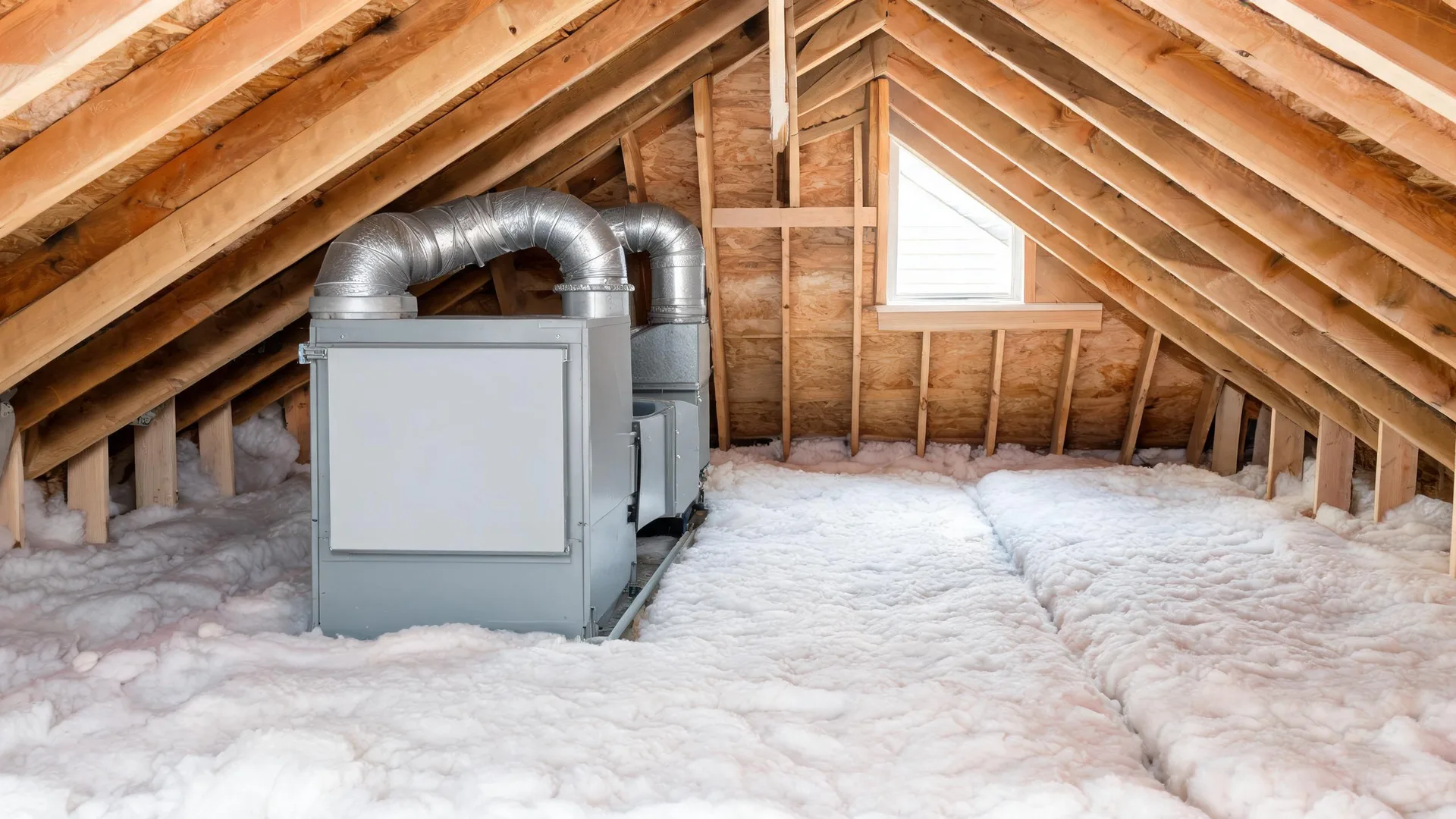
Oversized cools the room but not the air

A system that's too big chills the space fast and shuts off before it pulls moisture out of the air. The room feels cool but damp. An undersized system runs constantly and still can't catch up on the hottest afternoons. The right size runs long enough to dry the air out and still keeps up.

Overhead view of a gray outdoor AC condenser unit on a concrete pad beside a mulched garden bed and a house with vinyl siding.

A higher-efficiency unit would save about $30 a year to run in Marion County compared with a new unit at the federal minimum.

  • A higher-efficiency unit$180 a year
  • A new unit at the federal minimum, 13.4 SEER2$210 a year

Estimates for a typical Marion County home, from EIA household energy data, Iowa fuel prices and NOAA climate normals. Your home will differ.

Installation day starts outside. The crew sets the new condenser pad, runs new line set if the old one wasn't reused, and connects the electrical whip before anything gets charged with refrigerant. Indoors, the coil goes in above the furnace or air handler. That connection has to be sealed tight, since a weak joint there turns into a slow leak later. Once everything is connected, the system gets evacuated to pull moisture and air out of the lines, then charged to the exact weight the manufacturer specs, not just until the pressure looks right. The last step is startup. A contractor checks refrigerant pressures, airflow across the coil, and the temperature split between the air going in and the air coming out. Skip that last check and the system runs, but nobody actually knows if it's running right.