A two-story dark-sided house with a covered front porch behind a trimmed hedge, framed by large green trees, photographed from ground level with blurred grass in the foreground.

AC Installation in Sioux Center, IA

Tell us about the job

Takes about a minute. No obligation.

New system or replacementCentral ACSioux County, IA
Step 1 of 2

What ZIP code is the job in?

Gas furnaces are the common pairing here

Utility gas heats 47% of homes in Sioux County, more than any other fuel. An AC installation in a home like that usually means a new condenser and coil working alongside the existing gas furnace, since the furnace blower moves the cooled air.


Electric heat changes the job a little

Electricity heats 39.9% of homes here, often through a heat pump or electric furnace. If that's your setup, a contractor sizing your AC needs to know what's already running the air handler before quoting the install.

3 months
June through August, your air conditioner is on duty
82°F
the average summer afternoon it cools against
42 hail events
in ten years, and hail bends the fins on outdoor coils
13.4 SEER2
the federal minimum any new unit must meet
Isometric cutaway illustration of a single-story house showing interior rooms with furniture, attic ductwork connected to an indoor air handler, and an outdoor condenser unit on a pad linked by refrigerant lines.
Your air conditioner works hardest from June through August.

NOAA nClimDiv, 1991–2020 normals

A bigger condenser doesn't cool a house faster, it just cycles on and off more.

Short cycling leaves the air damp and makes the compressor work harder than it should.

At 13.4 cents a kWh, the payback on a high-efficiency unit stretches out

Power costs 13.4 cents a kWh statewide
Cooling runs June through August
Summer afternoons average 82°F

Sioux County sees its share of rough weather, with dozens of wind and hail events over the past decade plus a handful of tornadoes. None of that changes what size or efficiency rating your AC should be. A standard condenser sized to your home's square footage handles the heat load the same way it would anywhere else in Iowa. What the weather does affect is the power behind it, since storms here can knock it out. A contractor can walk you through surge protection or backup options if that's a concern, separate from the install itself.

Reliability first

Power is cheaper here, so the most efficient model takes longer to pay off. Reliability and fit matter more.

Find a contractor
A man in a cap, navy T-shirt and brown work pants, seen from behind, climbs porch steps toward a dark green paneled front door while carrying a canvas tool bag.
An outdoor residential air conditioning condenser unit mounted on a concrete pad, surrounded by gravel with a blue sky in the background.

The house came first, the AC after

Half the homes in Sioux County were built in 1973 or earlier. A house that age was almost never built with central air, so the ductwork, if it's there at all, was sized for a furnace blower, not for cooling. Whoever installs your new condenser has to work with what's already run through the walls and the attic, not a blank slate. That's worth knowing going in, especially if you're comparing quotes that size the system off square footage alone.

The old condenser doesn't just get left in the yard

A contractor doing the install disconnects the old condenser, recovers the refrigerant from the lines, and hauls the unit away. Refrigerant can't legally be vented into the air, so it gets captured with a recovery machine before anything is cut loose or unbolted.

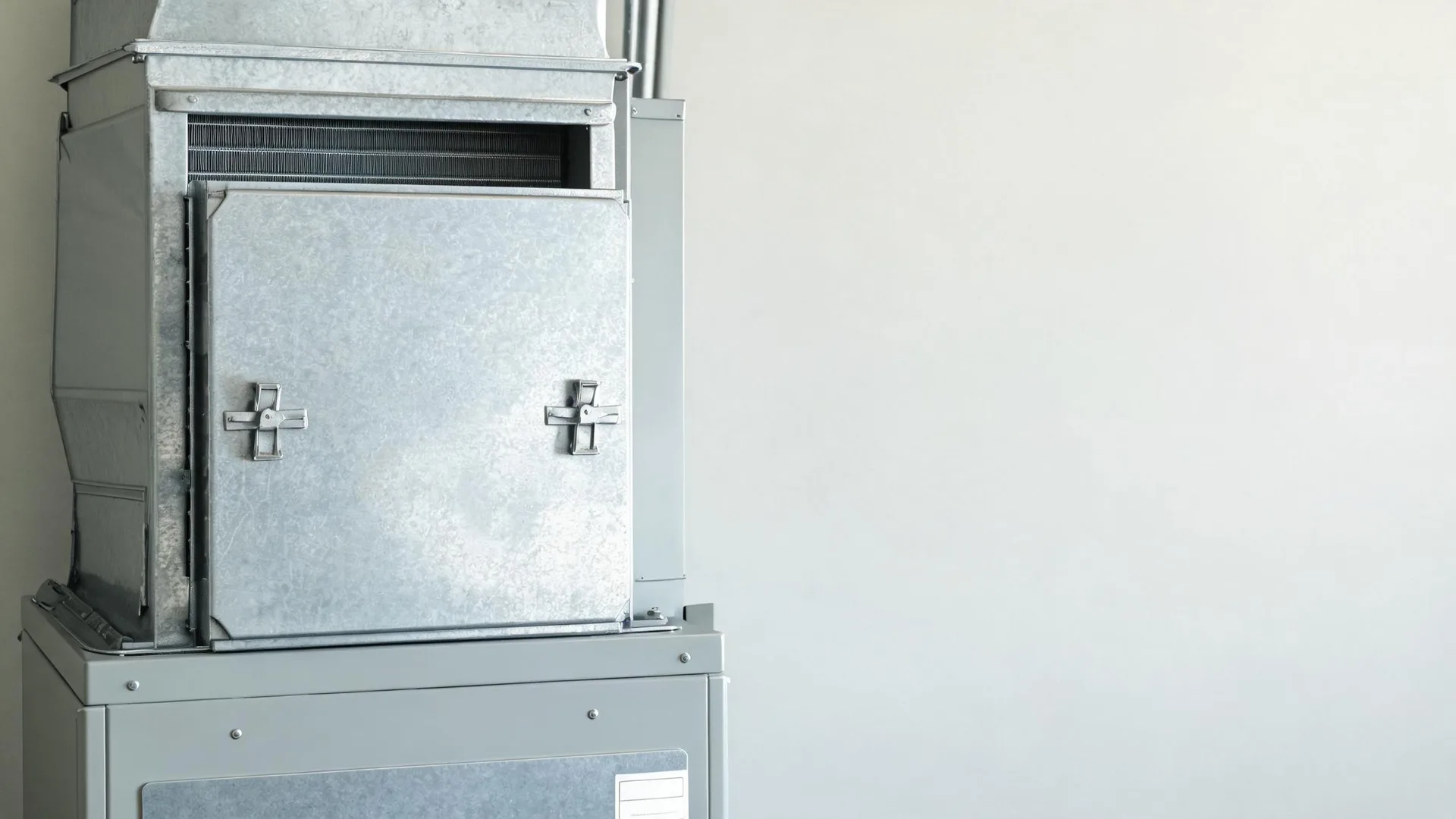
The coil inside comes out too

If the evaporator coil sits in the plenum above the furnace, that gets swapped along with the condenser outside. Matching a new condenser to an old coil usually means running it at the wrong charge, so most installs replace both halves of the system at the same time.

An outdoor air conditioning condenser unit positioned beside a blue-sided house at sunset.

Going above the federal minimum saves little here, about $20 a year.

  • A higher-efficiency unit$140 a year
  • A new unit at the federal minimum, 13.4 SEER2$160 a year

Estimates for a typical Sioux County home, from EIA household energy data, Iowa fuel prices and NOAA climate normals. Your home will differ.

Installation day starts with the old system coming out, then the new parts go in, and most of the day is spent on connections rather than the equipment itself. The condenser gets set on a pad outside and leveled, since a unit that sits crooked wears its compressor mounts faster. Copper lines get run or reused between the condenser and the coil, then the whole system gets pressure tested to make sure there's no leak before any refrigerant goes in. Once it holds pressure, the lines get evacuated to pull out moisture and air, because either one left behind will damage the compressor over time. The last step is charging the system to the exact weight the manufacturer specifies, then running it to check the temperature drop across the coil and the airflow at the vents.